Postage free from 99€ (DE)
High customer satisfaction


 DE | €
- Scooter 50-850cc
- Bushing for lever seat lock Royal Alloy, for JPS, TG 125-350cc

Genuine Royal Alloy bushing for the seat lock lever. The component is used in the seat mechanism of Royal Alloy JPS and TG models and serves as a precisely fitting locating element within the lever mounting.
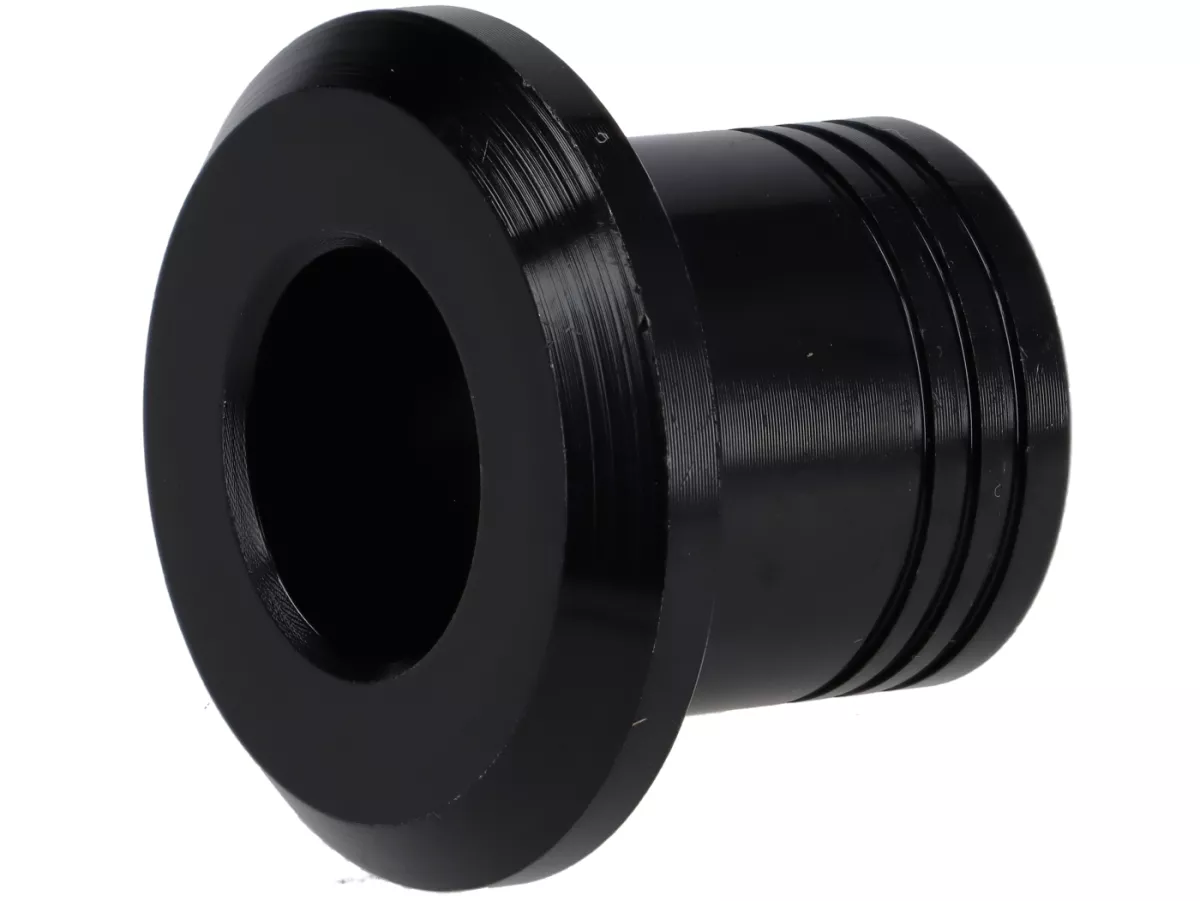
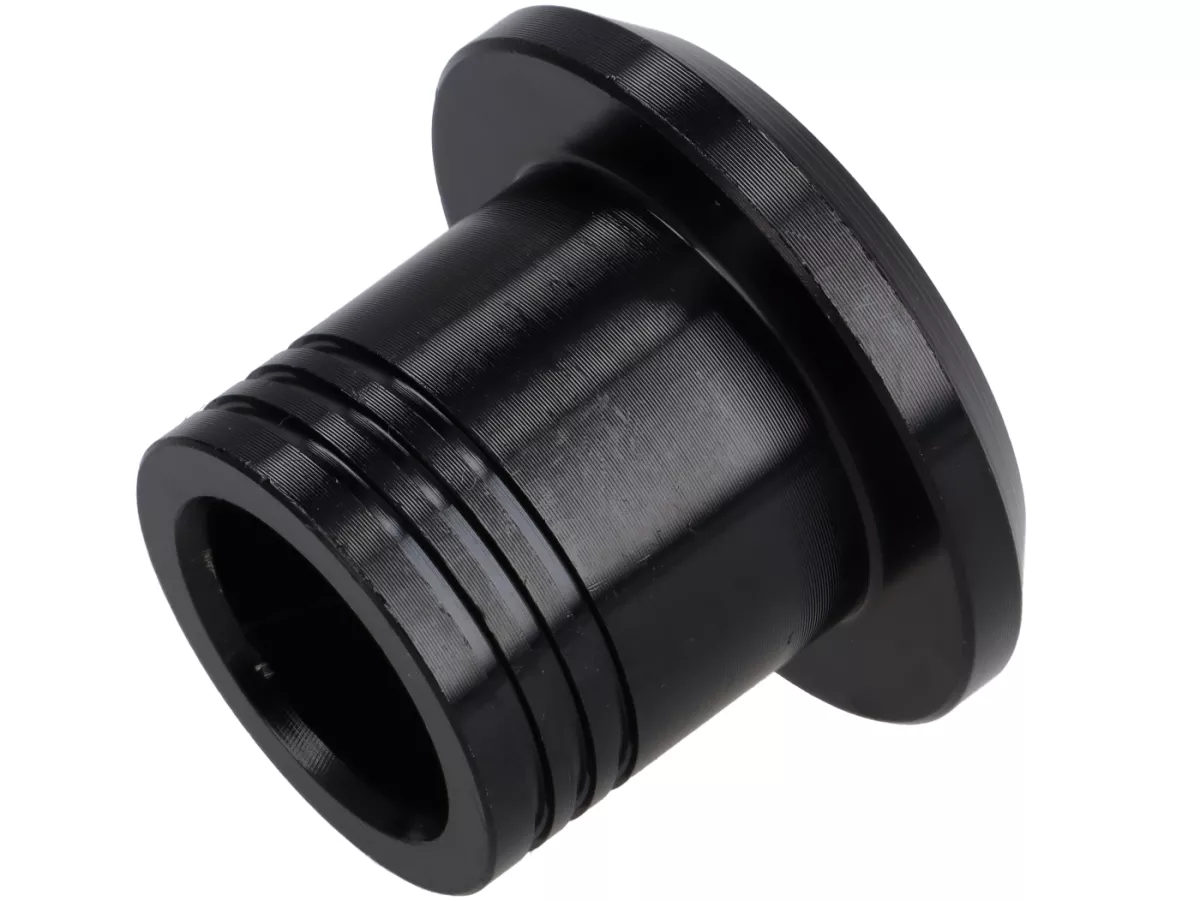
The black bushing has a cylindrical basic shape with an enlarged flange on one side. A continuous central bore and several circumferential profile grooves are characteristic features of its construction.
The bushing is available as an individual replacement part under Royal Alloy original part number 0312030003-01-001. This allows a damaged or missing bushing to be replaced without having to replace the complete seat lock lever.
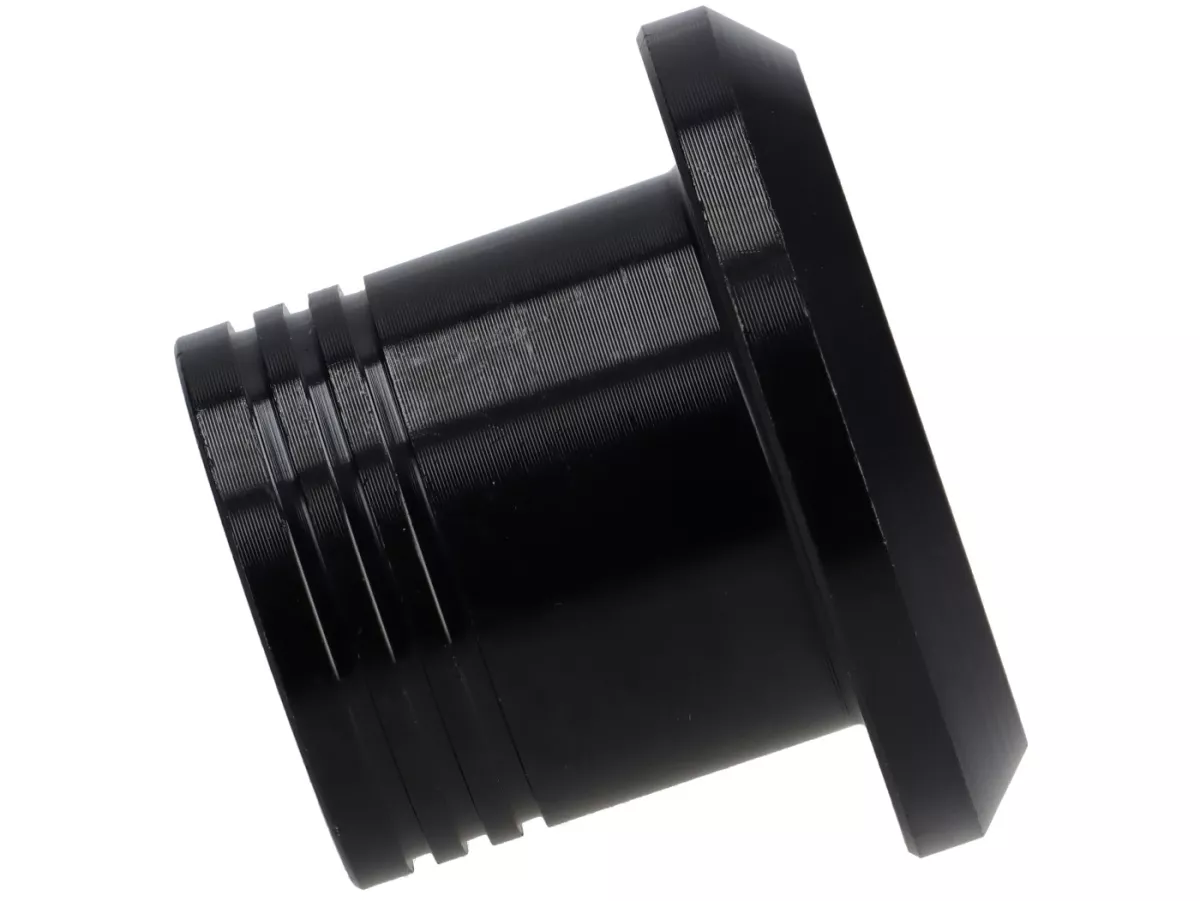
The bushing consists of an elongated, hollow cylindrical body. At one end there is a significantly enlarged, disc-shaped flange with a larger outside diameter than the cylindrical shaft.
The flange forms an annular contact surface and limits the insertion depth of the bushing in the corresponding mounting point. The integrated shoulder creates a defined separation between the inserted shaft and the external flange.
The front face of the flange is largely flat. A circular opening is located in its centre and leads into the hollow interior of the bushing.
The outer edge of the flange has a uniform circumferential contour. Fine, parallel machining marks are visible on the side surface.
The central opening extends through the entire bushing. It is visible both on the flange side and at the opposite end of the cylindrical shaft.
The bore forms the internal locating area of the component. Its concentric arrangement in relation to the outer contour creates a uniform wall thickness in the cylindrical body.
The bushing is designed for its intended installation position on the seat lock lever. The exact mechanical arrangement depends on the respective version of the Royal Alloy seat mechanism.
The cylindrical shaft has a largely smooth outer surface over most of its length. Several narrow circumferential grooves are located near the end facing away from the flange.
The grooves run parallel to each other and are separated by annular ribs. This creates a stepped surface profile in the rear section of the bushing.
The profiling forms part of the outer insertion contour. It clearly distinguishes this area from the smooth shaft section directly behind the flange.
The free end of the shaft also has an annular design. The central bore remains open throughout the entire length of the component.
The bushing is finished entirely in black. The surface has a slight sheen and fine circumferential structures that are particularly visible on the cylindrical shaft and around the outer circumference of the flange.
The component has a one-piece construction. The flange, shaft and profiled end section form a single continuous component.
There are no additional mounting holes, screw heads or separately attached connecting elements on the visible surfaces.
The combination of a cylindrical outer contour, continuous internal bore and flange on one side is designed for the bushing's intended position within the seat locking mechanism.
The bushing is intended for the corresponding versions of the seat locking mechanism. The exact vehicle application should be checked using Royal Alloy original part number 0312030003-01-001 and the relevant spare parts catalogue.
Before installation, the mounting point of the seat lock lever should be checked for damage, contamination and signs of wear.
The bushing must be installed in the intended orientation. Attention should be paid to the correct position of the enlarged flange and the profiled end of the shaft.
The circumferential profile grooves must not be damaged during installation. The bushing should be positioned in the corresponding mounting point without tilting.
After assembly, the movement of the seat lock lever should be checked. The seat must lock correctly and be capable of being released again using the designated operating mechanism.
The genuine Royal Alloy bushing allows this individual component within the seat locking mechanism to be replaced separately. Its characteristic design with a wide flange, continuous bore and profiled shaft corresponds to the intended replacement part construction.