Postage free from 99€ (DE)
High customer satisfaction


 DE | €
- Vespa Classic
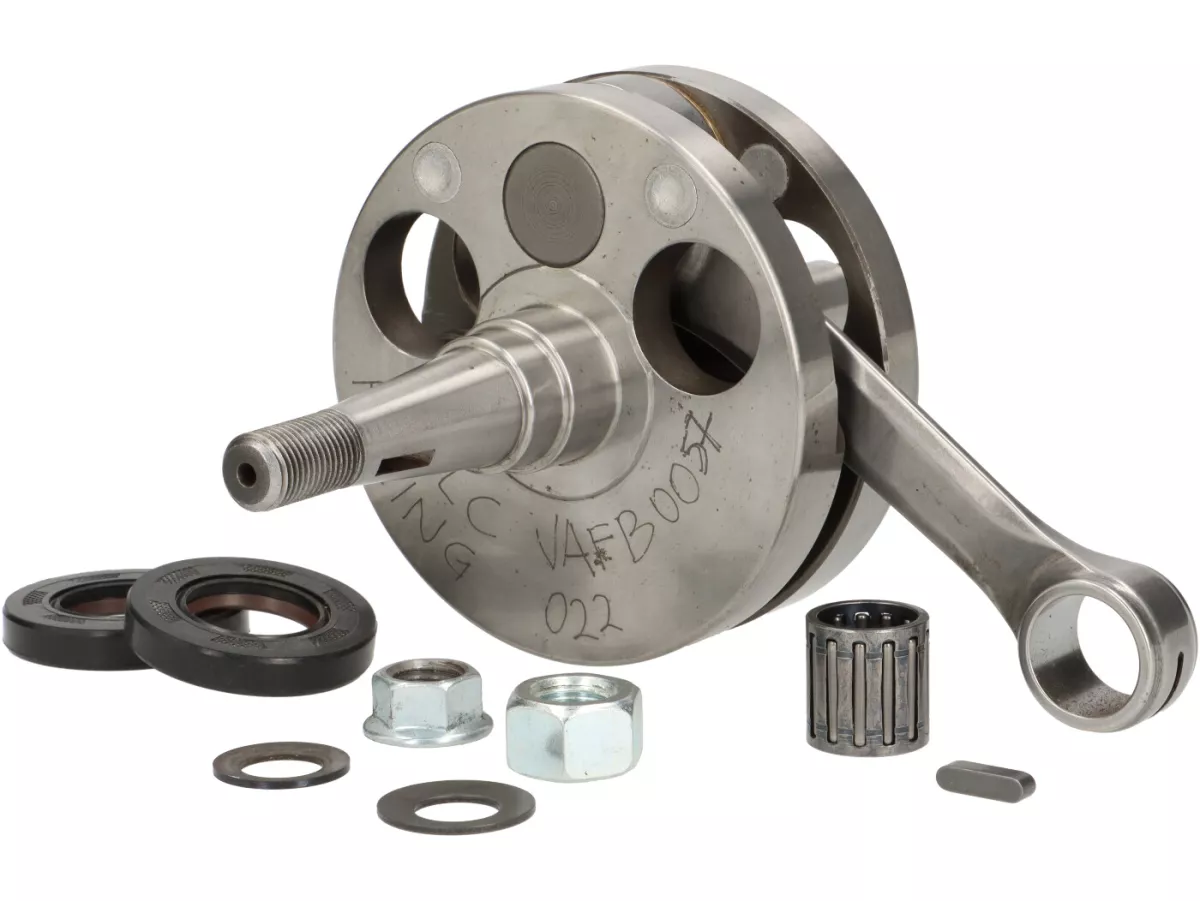
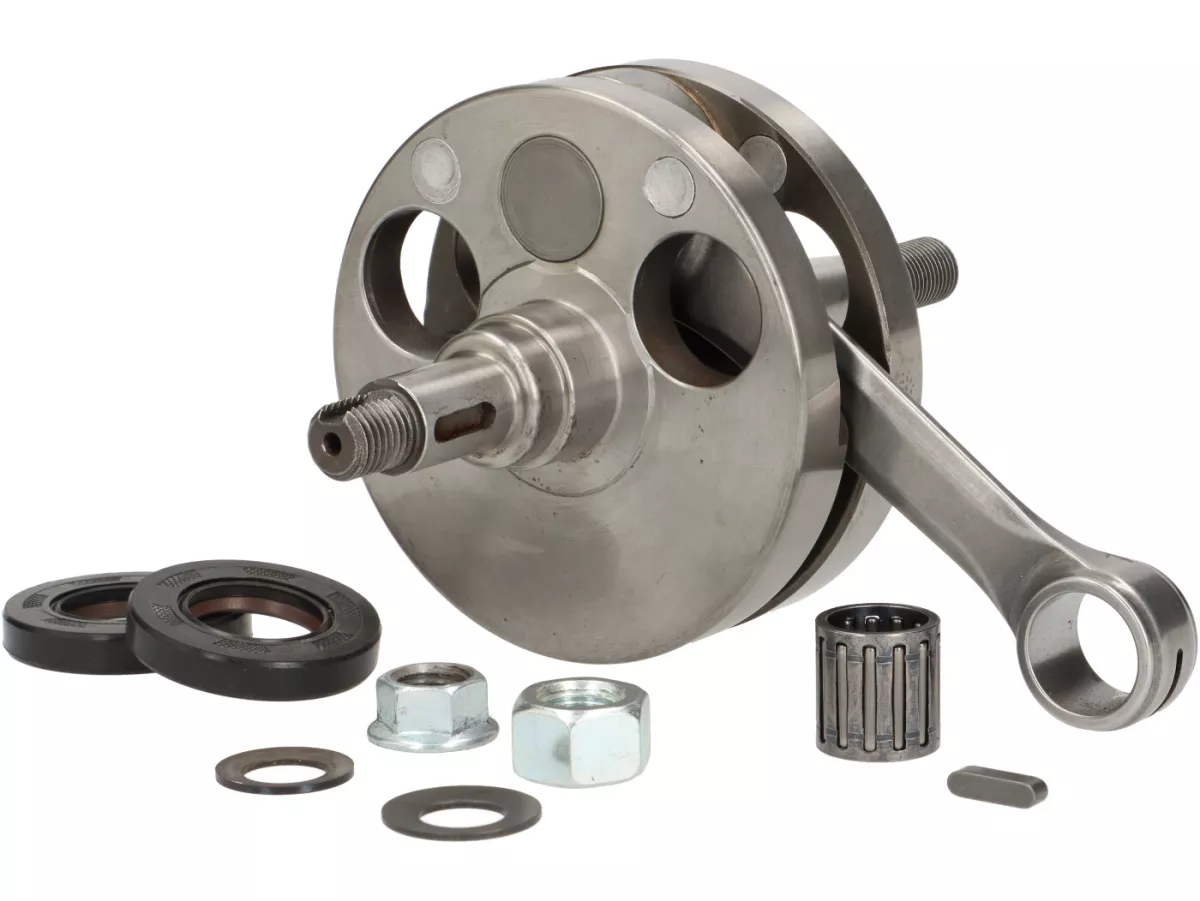
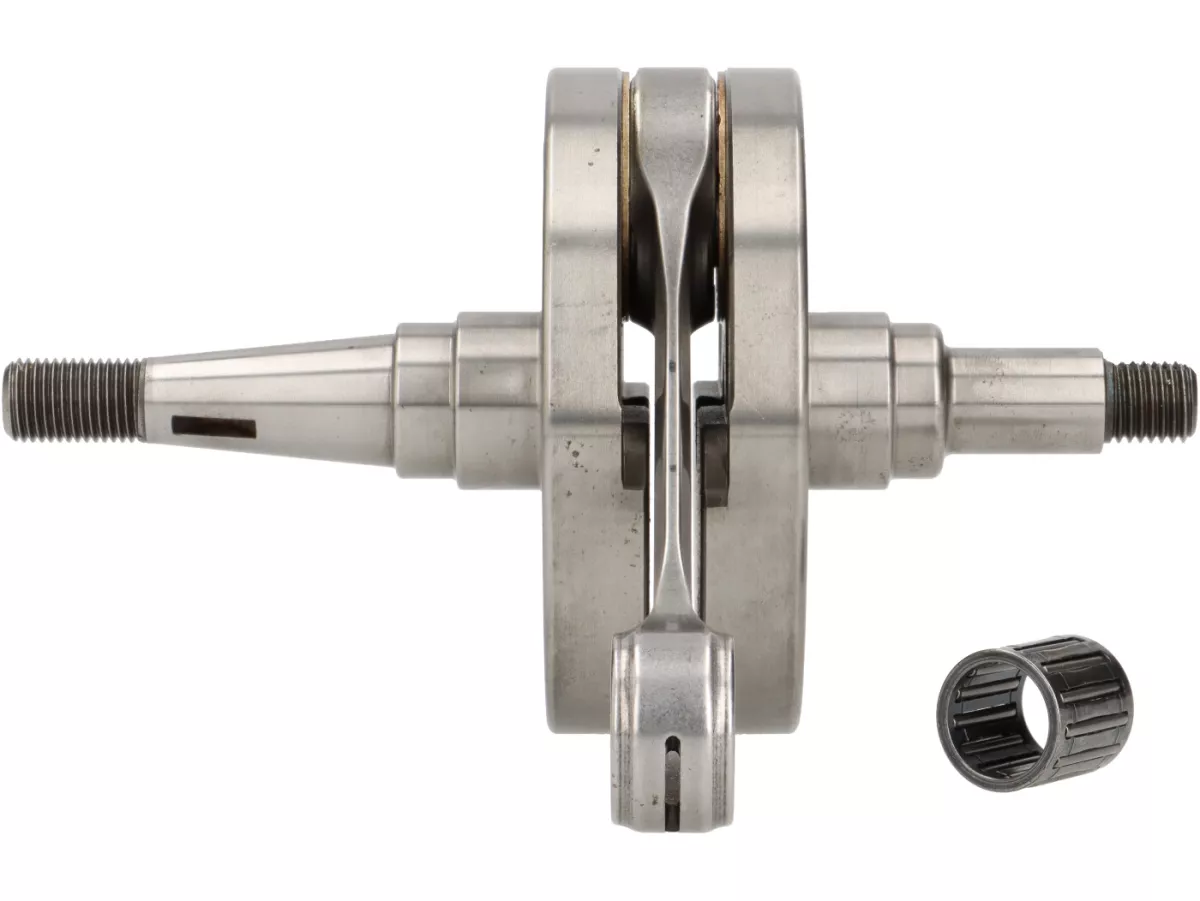
- Crankshaft - CC CORSA, Wideframe, Faro Basso, Stroke=57mm, Connecting Rod=110mm - Vespa 1953-1959, VM, VN, ACMA, VB1T, VGL1T, VL1T

For Vespa Wideframe engines with a CC Corsa 160-cm³ cylinder kit and engine configurations tuned to a 57-mm stroke.
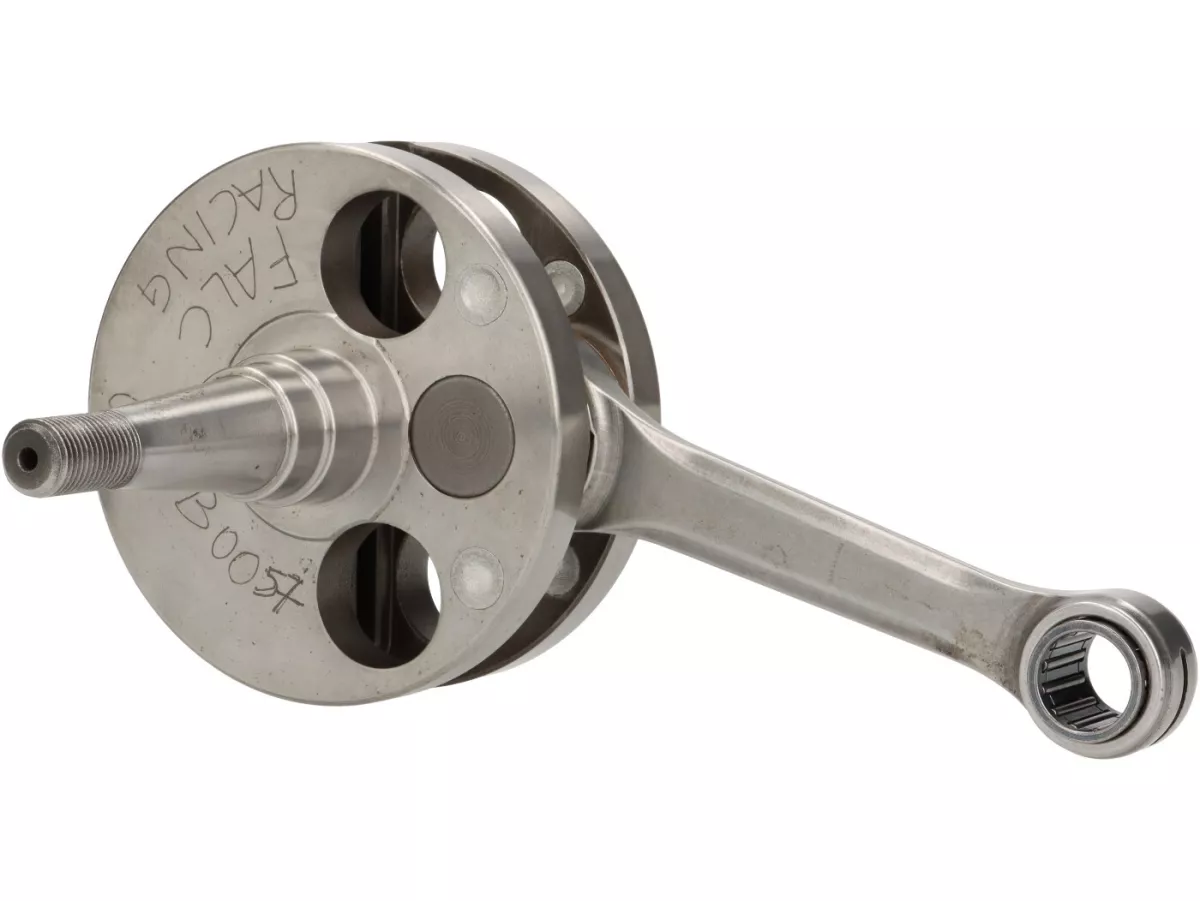
The CC Corsa crankshaft is part of Gabriele Cagni’s high-performance Wideframe engine concept and is manufactured by Falc Racing in Italy. It is available with a 57 mm stroke for the CC Corsa 160-cm³ cylinder kit and with a 60 mm stroke for the CC Corsa 175-cm³ cylinder kit.
Both versions are designed to withstand the significantly higher loads of modern wideframe engines. Common features include a Primatist connecting rod, a heavy-duty press fit at the crankpin, special shaft seals, and a reinforced M12 thread for the pole wheel nut.
Falc Racing Made in Italy 57 or 60 mm stroke Primatist connecting rod M12 pole plate thread Check the pole wheel
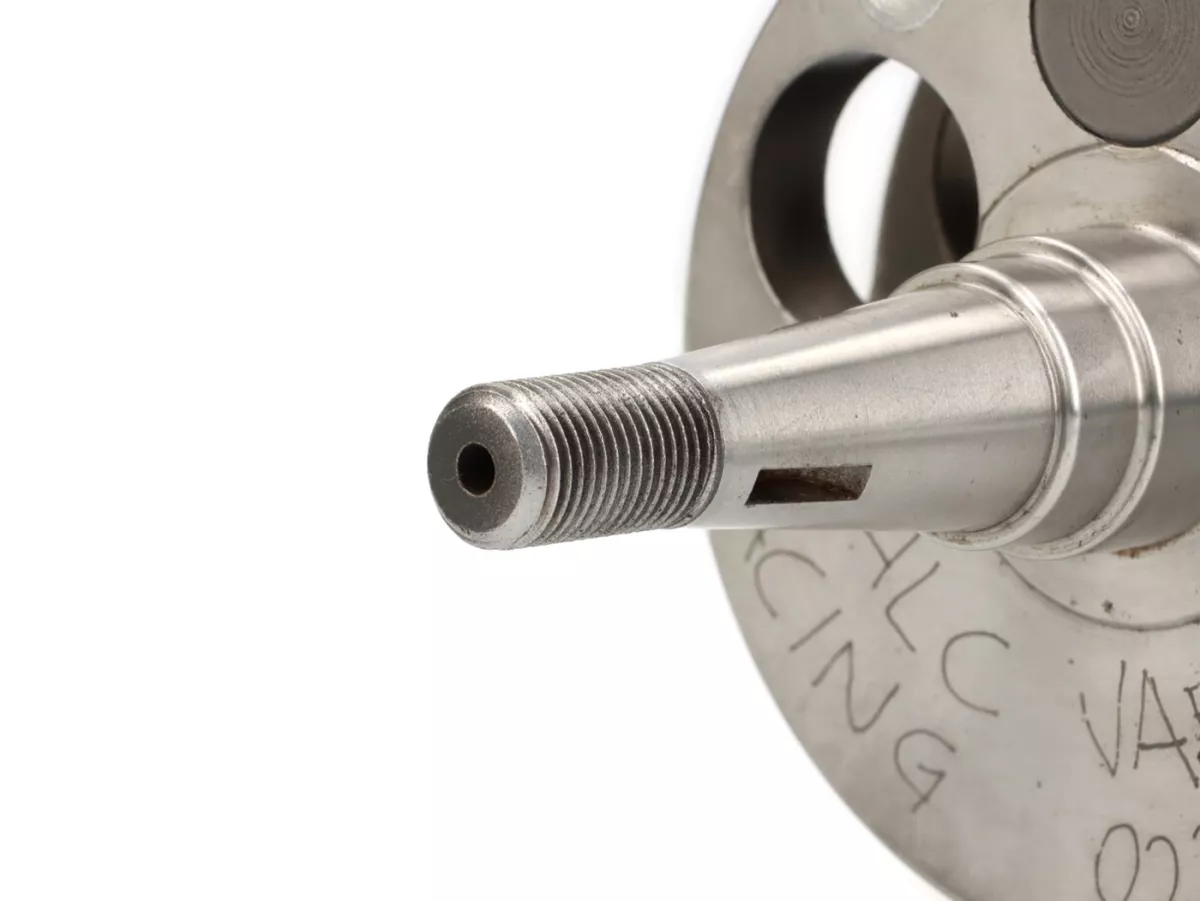
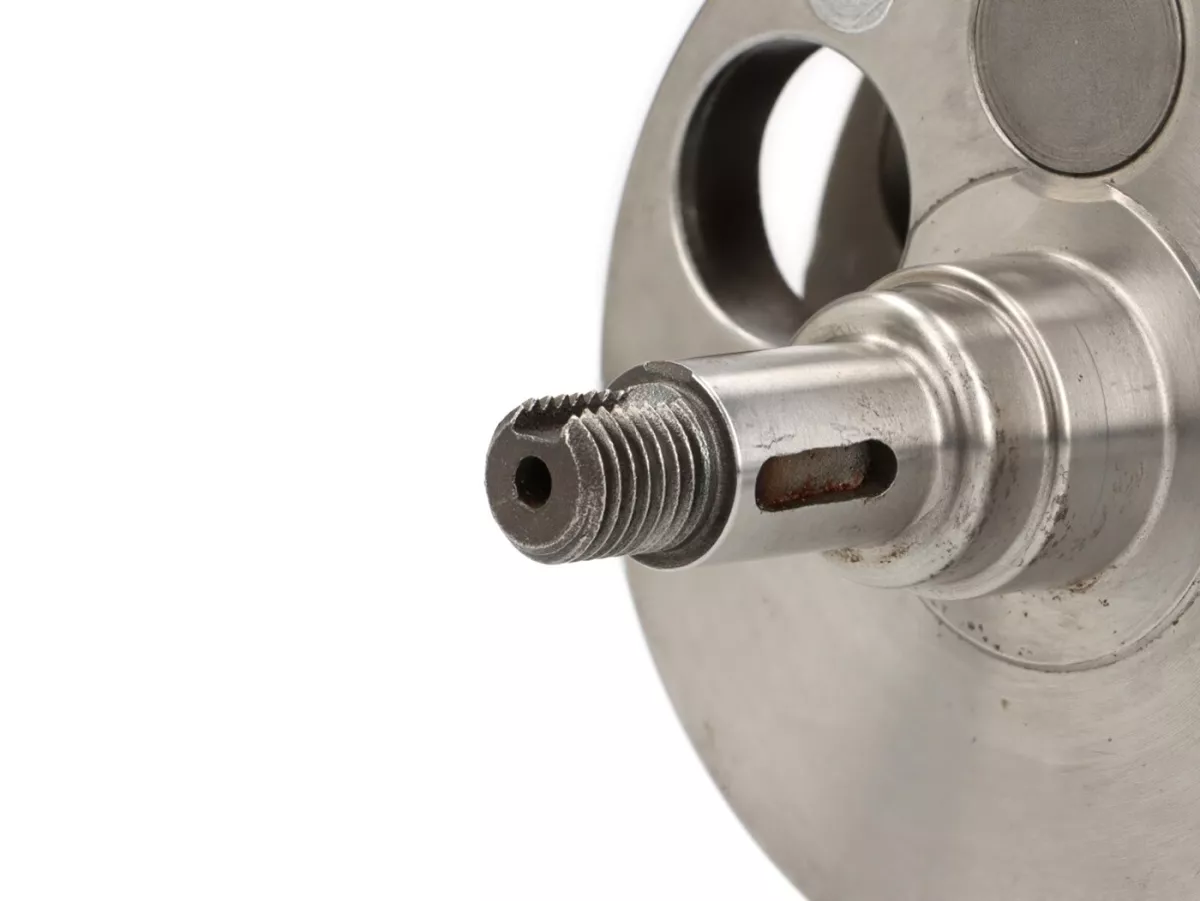
Both crankshafts feature a reinforced M12 thread on the alternator side. Original Wideframe crankshafts typically use a smaller M10 thread here.
Due to the larger thread diameter, the inner edge of the pole wheel bore may come into contact with the thread before the pole wheel is fully seated on the crankshaft taper. This occurs particularly frequently with VAPE pole wheels, but can also affect other pole wheel designs.
In this case, the entrance to the tapered bore must be chamfered slightly more deeply over the first millimeter. The adjustment can be made easily:
Only the front edge at the entrance to the pole wheel bore should be machined. The load-bearing conical surface must not be altered.
Before finally tightening the pole wheel nut, check that the pole wheel is seated fully on the cone and is not abutting the M12 thread.
Gabriele Cagni, founder of CC Corsa from Emilia-Romagna, has fundamentally refined the classic wide-frame engine concept in collaboration with Falc Racing. The cylinder, exhaust, and crankshaft are designed as an integrated system so that the significantly increased engine power can be utilized over the long term.
With the appropriate engine setup, the CC Corsa cylinder kits enable rear-wheel power outputs of more than 20 PS. This allows a Vespa Wideframe to achieve a performance level that was not intended with the original engine components. The crankshaft, in particular, must reliably handle the higher torque, increased RPM, and severe load fluctuations.
| Version | Stroke | Connecting rod | Intended Use |
|---|---|---|---|
| CC Corsa 160 | 57 mm | Primatist | CC Corsa 160-cm³ cylinder kit and correspondingly tuned engines |
| CC Corsa 175 | 60 mm | Primatist, 110 mm long | CC Corsa 175-cm³ cylinder kit and correspondingly tuned long-stroke engines |
When ordering, you must select the stroke variant that matches the cylinder kit and engine configuration being used.
The original Wideframe crankshaft is relatively slender in design. The narrow crank arms provide very little material around the crankpin. With significantly increased torque, it is therefore particularly challenging to achieve a sufficiently high press fit between the crankpin and the crank arms.
If this connection is not strong enough, the crank arms can twist relative to one another under load. As a result, the crankshaft no longer runs true, placing additional stress on the bearings, shaft seals, pistons, and cylinders.
Falc Racing addresses this design limitation through careful material selection, precise machining, and a robust press fit. The quality of the base material is particularly crucial for the narrow Wideframe crankshaft webs.
The crankshaft with a 57 mm stroke is designed for the CC Corsa 160-cm³ cylinder kit. It provides the stroke specified for this engine design and combines it with the stability required for increased power.
The 160-cm³ kit uses a comparatively heavy Polini or Rotax piston. The crankshaft is tuned to this engine design and accounts for the resulting higher inertial forces.
It can also be used in other wide-frame engines, provided that the cylinder, piston position, valve timing, connecting rod length, and crankcase clearance are designed for a 57 mm stroke.
The version with a 60 mm stroke and 110 mm connecting rod length was developed for the CC Corsa 175-cm³ cylinder kit. The longer stroke increases the displacement and enhances the high-torque character of the 175-cm³ design.
The 110-mm-long connecting rod improves the stroke-to-crank ratio. As a result, the piston is subjected to less lateral pressure against the cylinder bore. This reduces the load on the compression side of the piston and promotes smoother engine operation.
The Malossi piston used in the 175-cm³ kit is lighter than the piston in the 160-cm³ kit. As a result, no additional heavy-metal weights are required to balance the 175-cm³ crankshaft.
Both crankshafts are equipped with a Primatist connecting rod. The connecting rod is designed for the power and RPM levels of CC Corsa engines and withstands the high tensile, compressive, and cyclic loads of a high-performance two-stroke engine.
In the 60-mm version, the connecting rod length is 110 mm. The stroke, connecting rod length, cylinder height, and piston of the CC Corsa 175 are coordinated with one another within the engine design.
The larger M12 thread has a greater load-bearing cross-section than the original M10 thread. This is a significant design advantage, particularly for high-performance engines, high RPMs, and lightweight sport pole wheels.
The larger thread diameter is also the reason why the bore of some pole wheels must be slightly reworked at the entrance. This is not a defect in the pole wheel or the crankshaft, but rather an adjustment to accommodate the reinforced pole wheel mounting.
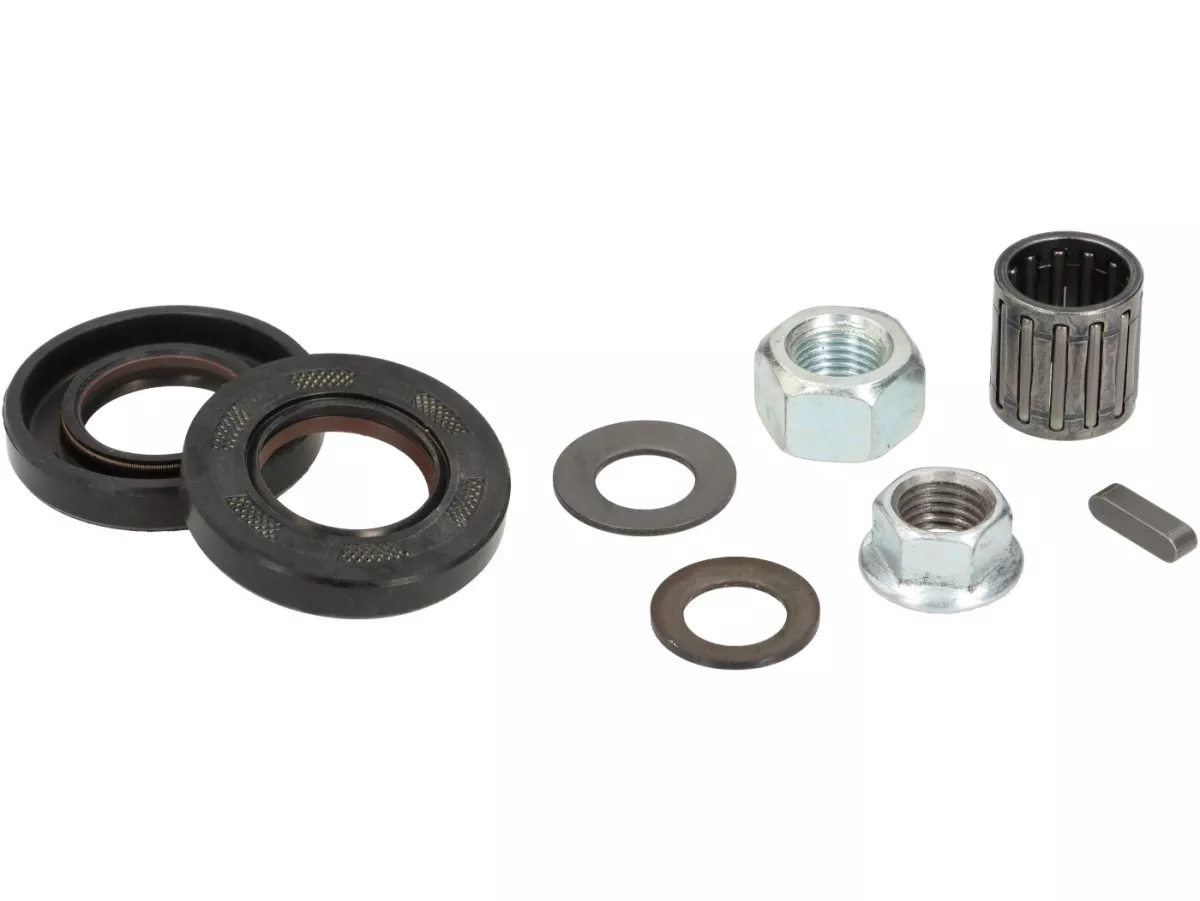
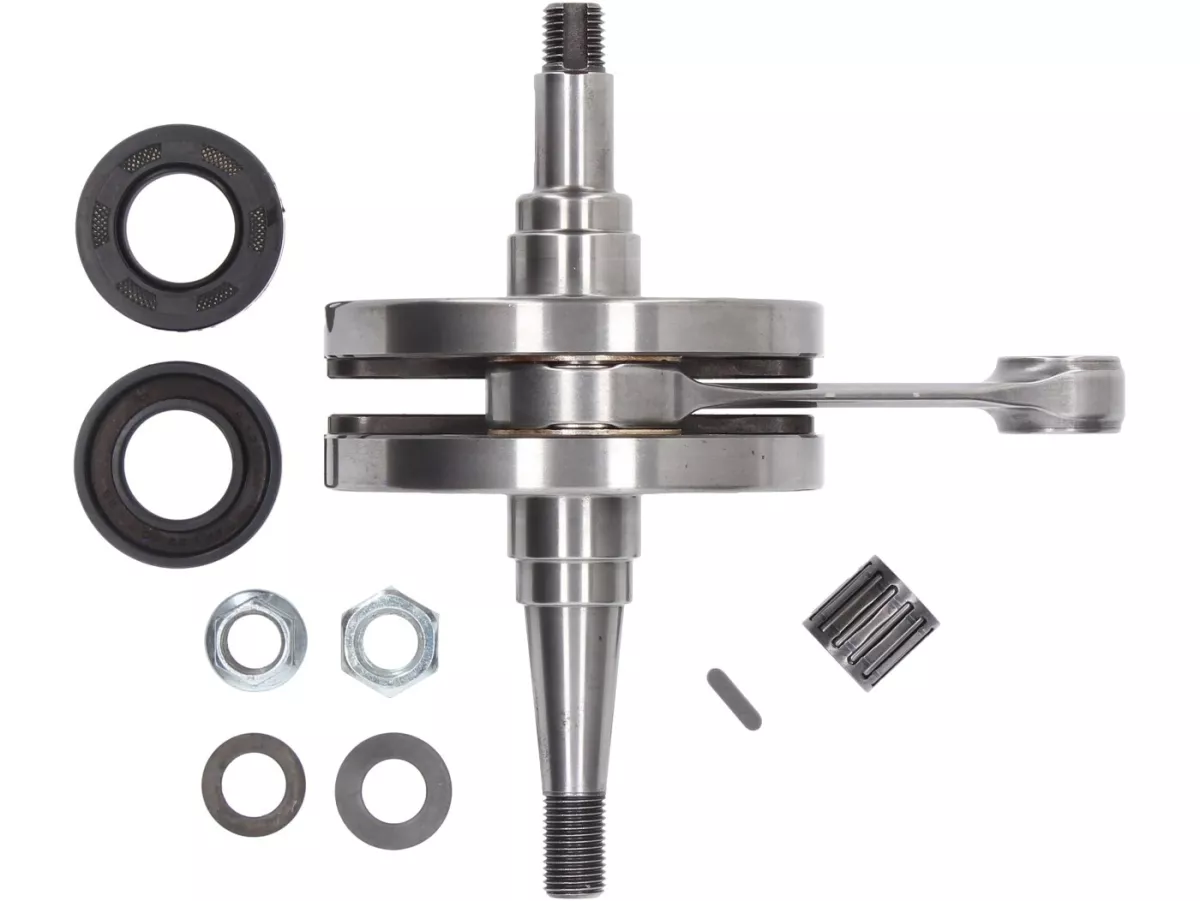
The scope of delivery includes special shaft seals measuring 22 x 40 x 7 mm. They do not have a conventional outer metal jacket but are inserted directly into the designated bore in the motor housing.
Due to the thickness of their metal jacket, conventional shaft seals can cause lateral stress on the crankshaft bearings when the motor housing is bolted together. Such preload increases friction and can lead to overheating and premature bearing failure.
The included sealing rings eliminate this additional material thickness. This allows the crankshaft bearings to be installed without unnecessary lateral stress.
| Manufacturer | CC Corsa |
|---|---|
| Manufacturer | Falc Racing, Italy |
| Stroke Options | 57 mm and 60 mm |
| Application 57 mm | CC Corsa 160-cm³ cylinder kit |
| Application 60 mm | CC Corsa 175-cm³ cylinder kit |
| Connecting Rod | Primatist |
| Connecting rod length of the 60-mm version | 110 mm |
| Flywheel thread | M12, reinforced version replacing the original M10 thread |
| Shaft seals | 22 x 40 x 7 mm, special design without an outer metal jacket |
| Vehicle range | Vespa Wideframe, circa 1952–1959 |
| Models | including VM, VN, VL, VB1T, VGL1T, and corresponding ACMA models |
CC-Corsa engines with displacements of 160 and 175 cm³ have already been used over distances exceeding 10,000 km in road and touring applications. Even multi-day events with long daily stages demonstrate that the design is not solely geared toward short-term peak performance.
At the Rallye des 3 Massifs, specially prepared vehicles covered more than 1,000 km in four days and secured podium finishes. The crankshaft manufactured by Falc Racing is an essential component of this robust overall design.
CC-Corsa crankshafts can also be used outside of the complete 160- or 175-cm³ kits. This requires that the cylinder, piston, connecting rod length, valve timing, and engine case match the respective stroke.
For custom engine builds, particular attention must be paid to checking piston position, compression edge, exhaust and intake valve timing, as well as the crankshaft’s free rotation.
The CC Corsa crankshaft is designed for wide-frame engines whose power output is significantly higher than the original production level. The 57-mm version complements the CC Corsa 160-cm³ kit, while the 60-mm version with 110-mm connecting rods is tailored to the 175-cm³ configuration.
Common to both variants are the Primatist connecting rod, the special shaft seals, the high-strength press fit, and the reinforced M12 thread for the pole wheel nut. For some flywheels, particularly VAPE models, the leading edge of the tapered bore must therefore be slightly chamfered. This minor adjustment can be done by hand, with a Dremel, or on a lathe.