Postage free from 99€ (DE)
High customer satisfaction


 DE | €
- Vespa Classic
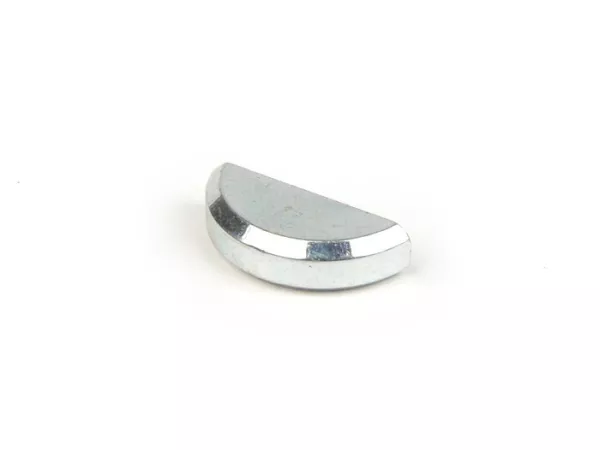
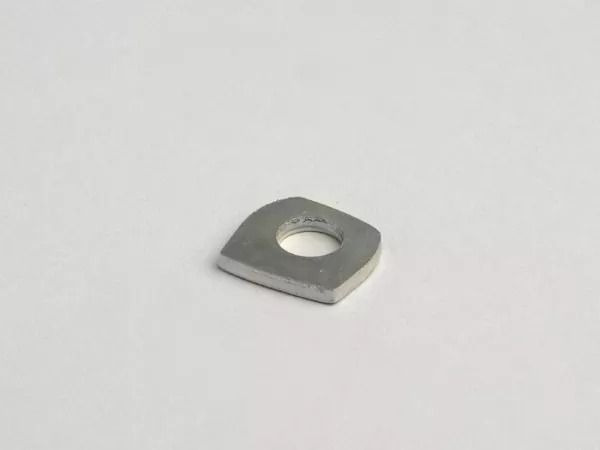
- Crescent wedge clutch -POLINI 4x6.5mm- Vespa (1946-2016) Wideframe/Largeframe PX, Cosa, T5, Rally, Sprint, TS, GT, GTR, Super, VBB, VBA, V1-V33, VM, VN, VB, VL

| Version | Reinforced, calibrated feather key exclusively for the clutch |
|---|---|
| Area of application | Vespa PX engines with classic clutch, suitable for many PX, LML and Motovespa derivatives |
| Material | High-strength steel alloy, optimized for wear and fatigue |
| Accurate fit | Calibrated production for a clean fit in the groove of the crankshaft and clutch hub |
The reinforced POLINI feather key is the small but crucial connection between the crankshaft and clutch hub on the Vespa PX engine. As a precisely calibrated half-moon key, it positions the clutch securely on the crankshaft stub
Reinforced feather key for clutch Calibrated contour For standard and tuning engines Made in Italy
The version with POLINI code 230.0408 has been specially developed for theclutch side of Vespa PX engines. It replaces the original clutch wedge and is therefore not used on the primary gear, but only on the clutch hub. It fits for:
POLINI uses a high-strength steel alloy and precise calibration of the half-moon contour for the Vespa feather keys. This reduces the notch effect, prevents chipping of the key surfaces and ensures a backlash-free fit in the crankshaft and clutch keyway. Unfortunately, it does not have the geometry of the original key with large radii, which makes installation somewhat more difficult.
Important: The design of the Woodruff key is not intended to transmit the engine torque. Its task is to centerthe clutch in positionon the crankshaft stub so that the clutch nut can be tightened to the specified torque without the crankshaft turning. The actual frictional connection is created via the contact pressure of the clutch nut.
1) The feather key is not a torque support
The sole purpose of the feather key in the Vespa clutch is to lock the clutch and crankshaft against each other when tightening the nut so that the tightening torque can be applied cleanly to the stub. It is not intended to transmit engine torque when the bike is being ridden. If the force were to pass through the key, the keyway in the crankshaft would be worn out within a very short time. The frictional connection between the clutch and crankshaft is created entirely via the clean stub contact and the correct tightening torque of the nut.
2) Key must not stand up during installation
When sliding on the clutch, ensure that the key remains flat in its groove and does not stand up. If the key rises slightly, the clutch is no longer in full contact with the crankshaft stub, but is only supported by the raised key. If the nut is then tightened to full torque, the force acts selectively over the key - in practice, this almost always results in a cracked clutch hub or a destroyed keyway. If in doubt, remove the clutch again, check the seat of the feather key and only then finally fit it.
Note: POLINI offers another reinforced feather key for Vespa Smallframe and Piaggio Ape (clutch, primary, pole wheel) under code 230.0406. For Vespa PX clutches, however, only the version 230.0408 described here is available.