Postage free from 99€ (DE)
High customer satisfaction
Shipping today with order in 13 h 18 min


 DE | €
- Scooter 50-850cc
- Royal Alloy Engine Bolt Cover for GP, GT, TG, JPS 125–350 cc

Genuine Royal Alloy cover cap for the engine bolt in the engine mounting area. The black cover closes the designated opening and conceals the fastening area behind it. It is used on Royal Alloy models from the GP, GT, JPS and TG ranges.
The cover cap is a separate component of the engine mounting system and serves as the outer closure of the corresponding mounting point. It protects the covered area from direct contamination and provides a closed surface.
With Royal Alloy original part number 0306030002-02-001, a damaged, lost or incorrectly fitting cover cap can be replaced specifically.
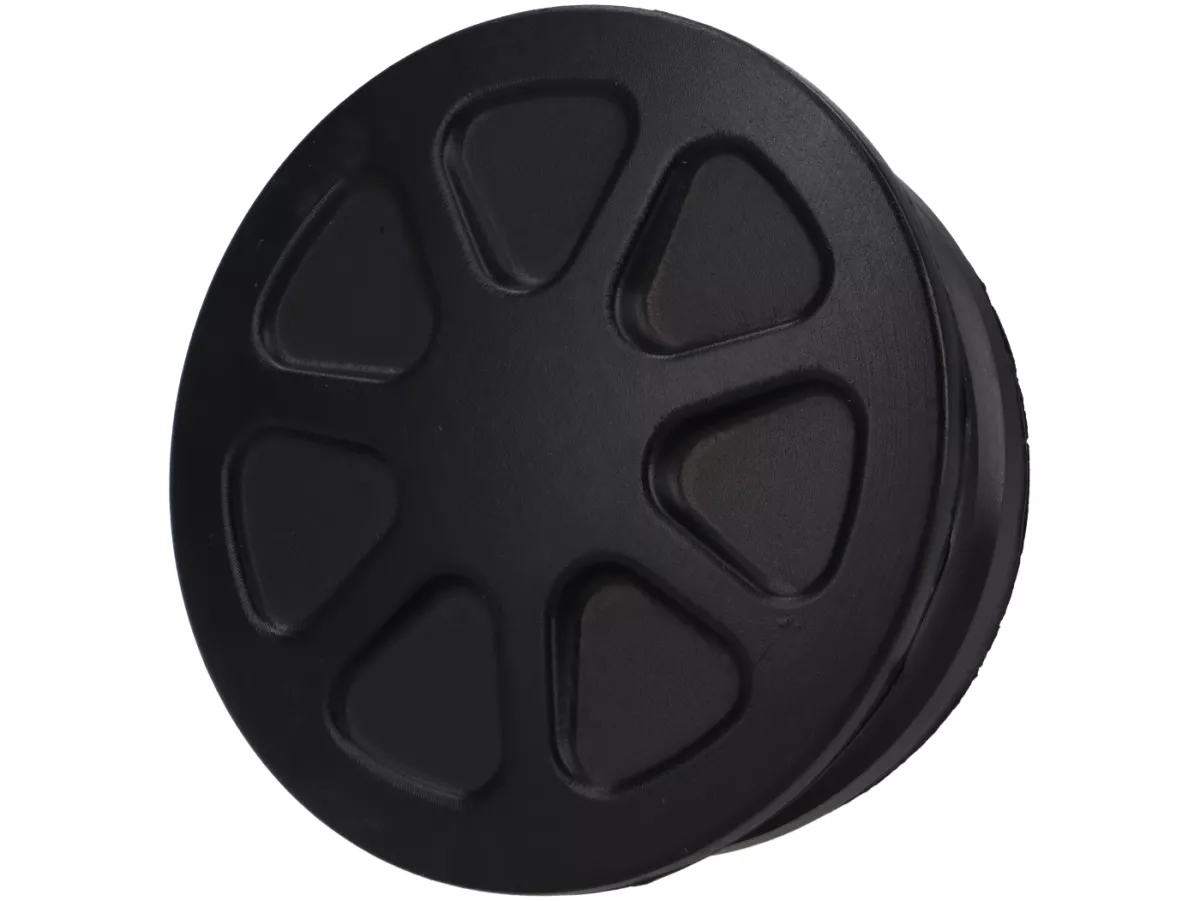
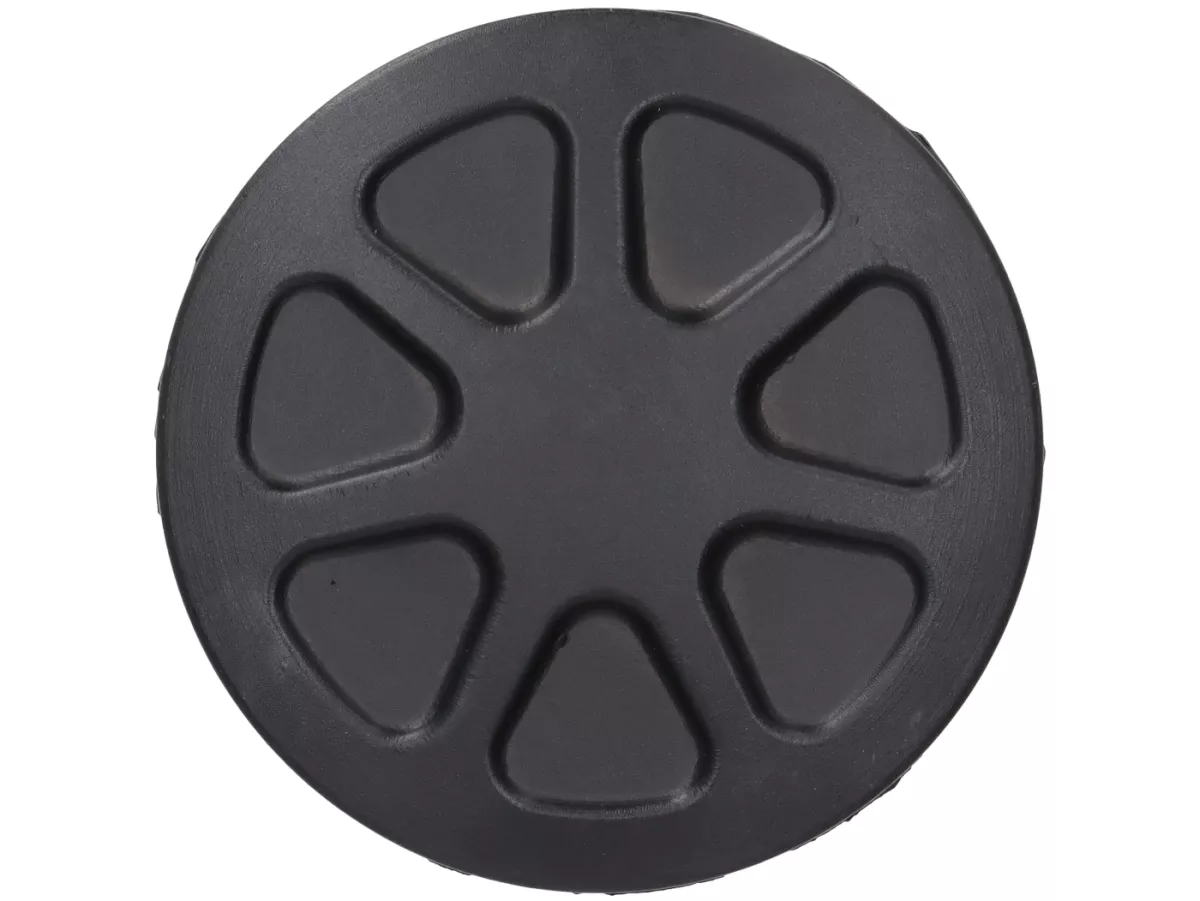
The visible outer side has a circular basic shape with a wide circumferential edge. The surface is black and has a finely textured, largely matt finish.
A characteristic feature is the seven recesses evenly distributed around the circumference. They have a rounded, approximately triangular shape and are arranged radially around the closed central area.
Wide ribs run between the recesses and connect towards the centre. This creates a star-shaped surface structure with seven radial sections.
The recesses are closed and have no through-openings. They form the outer contour of the cover cap without exposing the fastening area behind it.
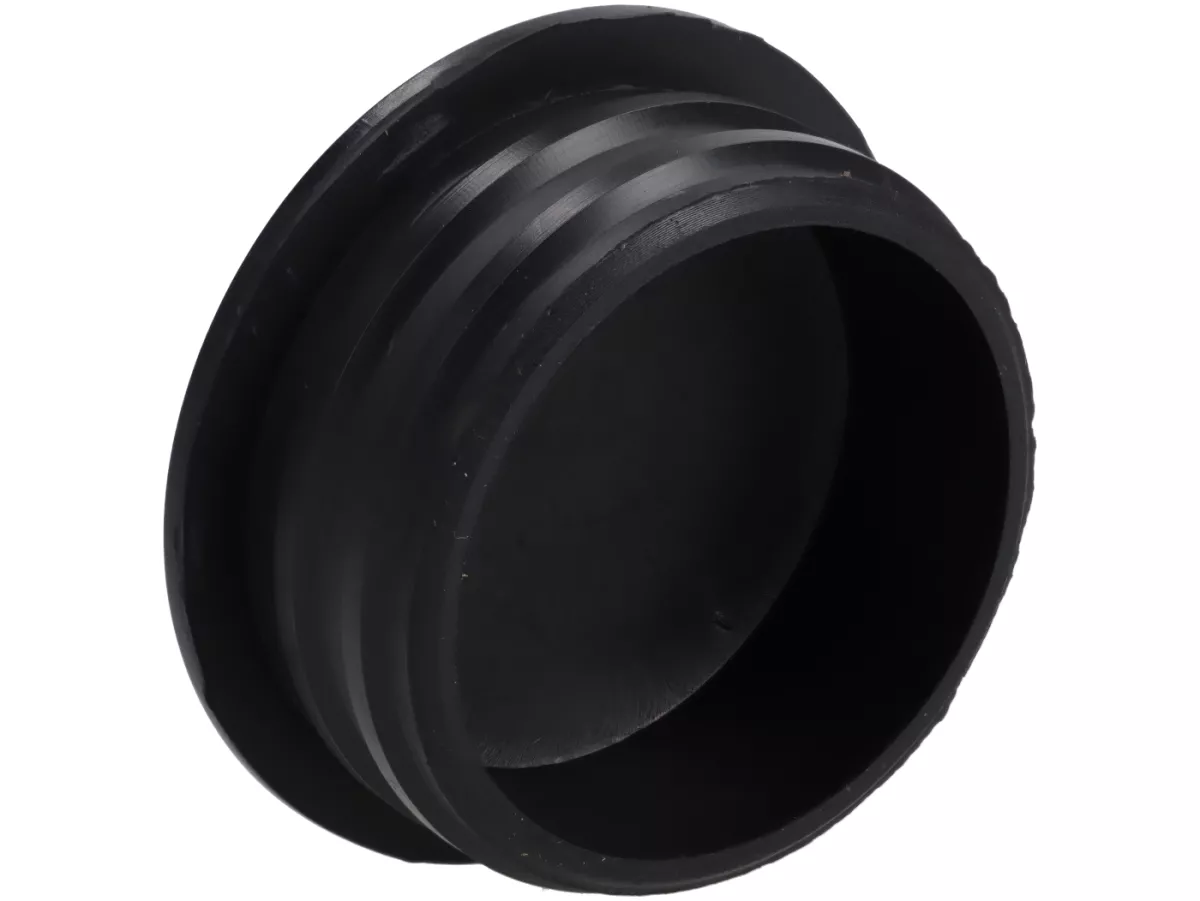
A cylindrical insertion section is located on the rear. Its diameter is smaller than that of the outer cover surface and allows the cap to fit into the designated opening.
The outer wall of the insertion section has several circumferential, ring-shaped raised and recessed sections. These form a profiled contact surface for the adjoining mounting point.
The wide edge of the front cover surface extends beyond the cylindrical insertion section. When installed, this edge forms the visible outer closure.
The design does not require any visible screw connection on the front face. Positioning is achieved via the insertion section and its circumferential outer contour.
The rear of the cover cap is open and features a deep cylindrical cavity. The inner area is limited by the closed rear side of the front cover surface.
This design allows the cap to be fitted over the designated area of the engine bolt mounting point without requiring an additional opening in the visible front face.
The inner wall is predominantly smooth. The circumferential edge of the rear opening forms the end of the insertion section.
The cover cap does not perform a load-bearing function within the engine mounting system. The mechanical mounting of the engine continues to be provided by the designated bolts and connecting elements.
The engine mounting area contains fastening elements that connect the engine to the corresponding frame structure. The cover cap conceals the designated outer area of this connection.
Its closed front face limits the direct accumulation of dirt on the covered fastening area. At the same time, it provides a uniform closure of the mounting point.
The black finish is designed for discreet integration with the adjacent components. The seven radially arranged recesses define the visible surface structure.
Suitable for the corresponding vehicle versions with the designated engine bolt mounting point. The exact application should be checked using Royal Alloy original part number 0306030002-02-001 and the relevant spare parts catalogue.
Before fitting the cover cap, the designated mounting point should be checked for dirt and damage.
The mounting surface must be free of foreign objects so that the cylindrical insertion section can be positioned correctly.
The cover cap is aligned with the open side facing the mounting point and inserted evenly. Care must be taken not to damage the circumferential profile ribs.
After installation, the outer edge should sit evenly against the surrounding area. The cap must not be tilted and must fit securely in the designated mounting point.
If the insertion contour is damaged or deformed, the cover cap should be replaced if a secure fit can no longer be ensured.
The genuine Royal Alloy cover cap restores the intended closure of the engine bolt mounting point. The combination of a closed front face, seven radial recesses and a profiled insertion section corresponds to the structural design of the replacement part.