Postage free from 99€ (DE)
High customer satisfaction
Shipping today with order in 13 h 17 min


 DE | €
- Scooter 50-850cc
- Royal Alloy Main Stand Stop Rubber, for GP, TG, GT, JPS 125–350 cc

Genuine Royal Alloy main stand rubber stop for GP, GT, JPS and TG models. The rubber stop is part of the standard main stand assembly and serves as an elastic stop when the main stand is retracted. It cushions contact at the intended stop point and reduces the resulting mechanical impact and contact noise.
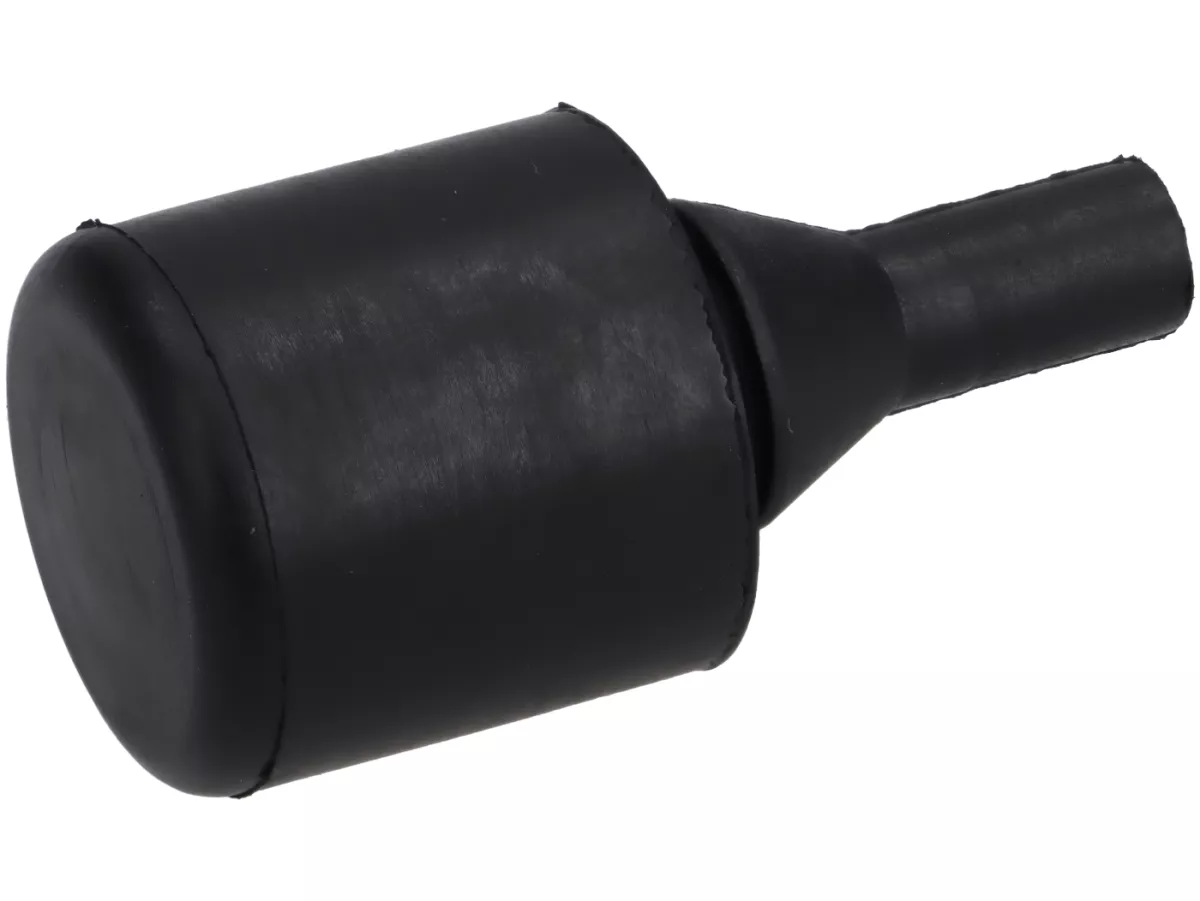
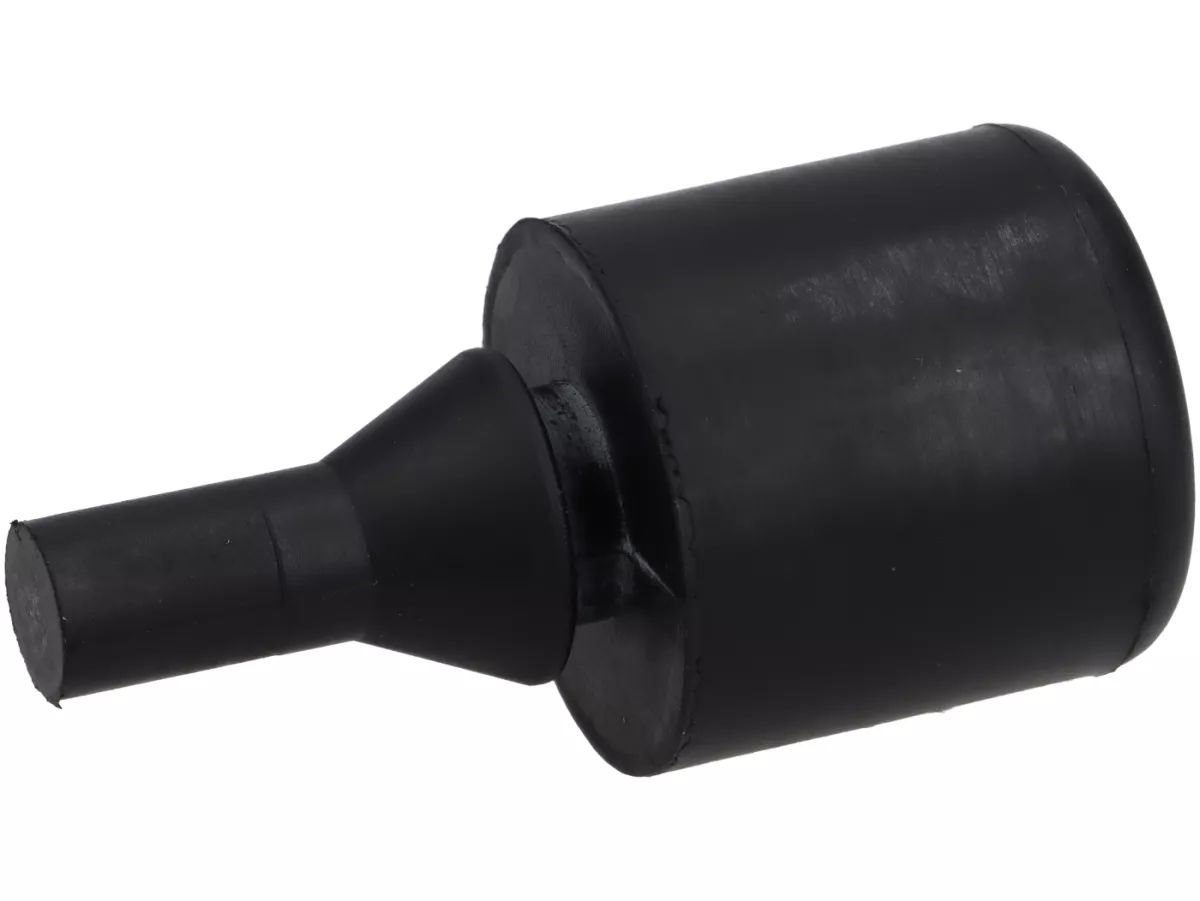
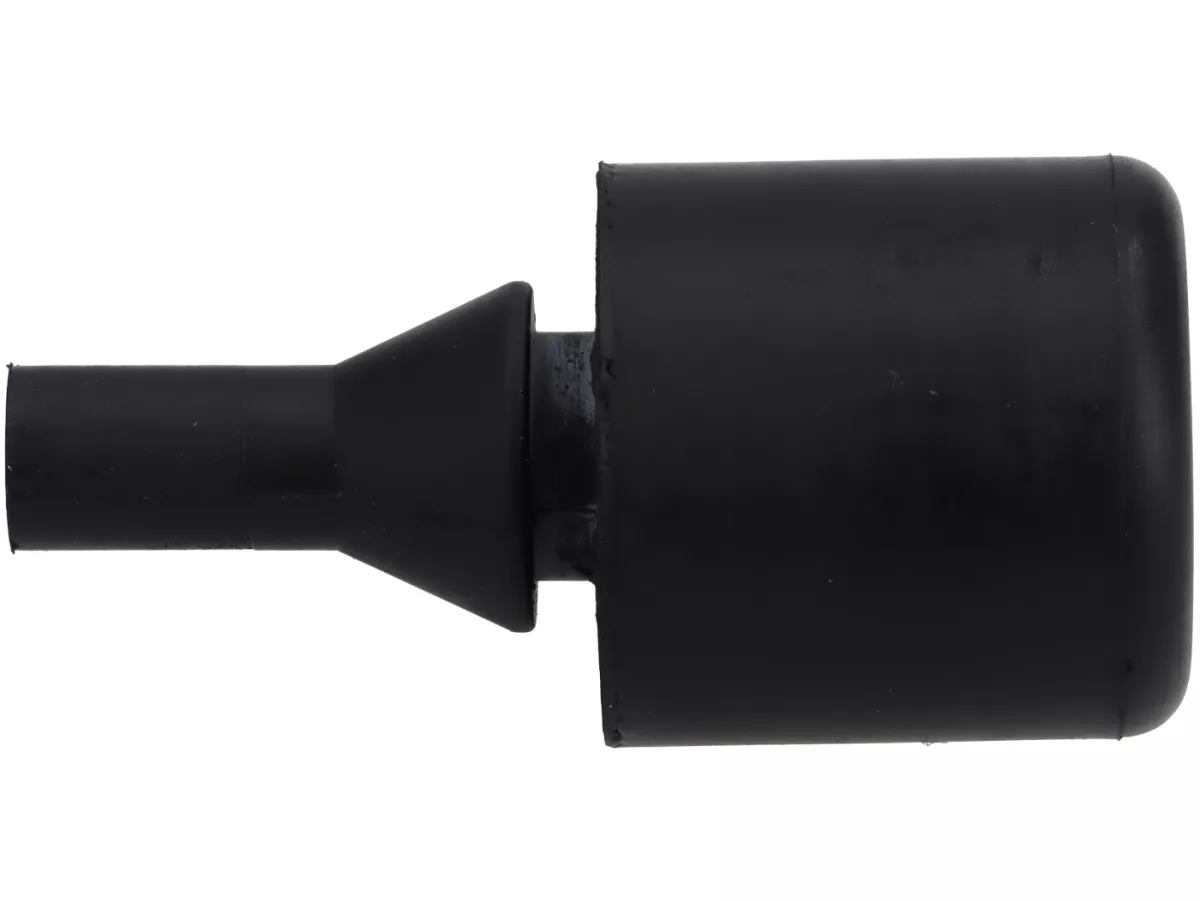
The component has a characteristic two-part shape: a large cylindrical stop body and a significantly narrower mounting pin. Both sections are connected by a tapered transition. The black rubber construction allows elastic deformation when the main stand comes into contact with the stop.
When retracted, the main stand is pulled into its intended resting position by its return springs. Without a suitable stop, the metal components involved could come into direct contact with each other.
The main stand rubber stop provides an elastic contact surface at this point. When the end position is reached, the rubber body is compressed and absorbs part of the resulting impact energy.
This helps reduce harsh impact noise and direct metal-to-metal contact. At the same time, the contact point is protected against the repeated loads that occur when the main stand is retracted and deployed.
The rubber stop is not a load-bearing component for the vehicle when it is resting on the main stand. Its function is to cushion the stop within the main stand mechanism.
The product images show a black rubber buffer with a comparatively large cylindrical main body. The closed end face of the stop body is slightly domed and has a rounded outer edge.
This design provides a continuous elastic contact surface. Under corresponding compressive load, the large rubber body can deform and subsequently return to its original shape.
A narrow mounting pin is located at the opposite end. Between this pin and the actual stop body is a tapered section. A narrow neck area is also visible, separating the two sections of the component.
The stepped geometry is designed to position the rubber stop at its intended mounting point. The exact installation position is determined by the main stand construction of the respective vehicle.
The main stand rubber stop carries Royal Alloy original part number 0306060008-02-001. In English-language spare parts catalogues, the component is listed as “Buffer Rubber, Main Stand”.
In the corresponding spare parts diagrams, the rubber stop is shown as part of the main stand assembly. It is listed together with the main stand, return springs, main stand pivot, bearing bush and other mounting components.
The rubber stop is available as an individual replacement part. This allows a damaged or missing rubber buffer to be replaced without having to replace the complete main stand.
The main stand rubber stop is used on various Royal Alloy models from 125 to 350 cc. Exact compatibility should be checked using the original part number and the vehicle-specific spare parts diagram.
The rubber stop is subjected to mechanical stress every time the main stand is retracted. Repeated compressive loads, ageing and external influences can cause the material to lose its original elasticity over time.
Typical signs of a worn main stand stop include cracks in the rubber, a permanently deformed contact surface, missing sections of material or a damaged mounting pin.
A noticeably harsher impact noise when retracting the main stand can also indicate a damaged or missing rubber buffer. The return springs and the other components of the main stand mechanism should also be inspected in this case.
Before installation, the intended mounting point should be checked for damage and contamination. The mounting pin must be fully and securely seated in the corresponding holder.
After replacement, check that the main stand moves freely, reliably returns to its resting position and that the rubber buffer makes contact at the intended point.
The genuine Royal Alloy main stand rubber stop 0306060008-02-001 allows targeted replacement of a small but functionally important component. It restores the elastic contact surface within the main stand mechanism and helps prevent unnecessary metal-to-metal impact when the stand is retracted.