Postage free from 99€ (DE)
High customer satisfaction
Shipping today with order in 13 h 10 min


 DE | €
- Scooter 50-850cc
- Royal Alloy Rubber Frame Buffers for GP, GT, TG, and JPS 125–350 cc

Genuine Royal Alloy rubber buffer for the vehicle frame of GP, GT, JPS and TG models. The component is part of the standard frame construction and is used in the engine mounting area. Its purpose is to provide elastic properties within the intended connection and to reduce the transmission of vibrations between the components involved.
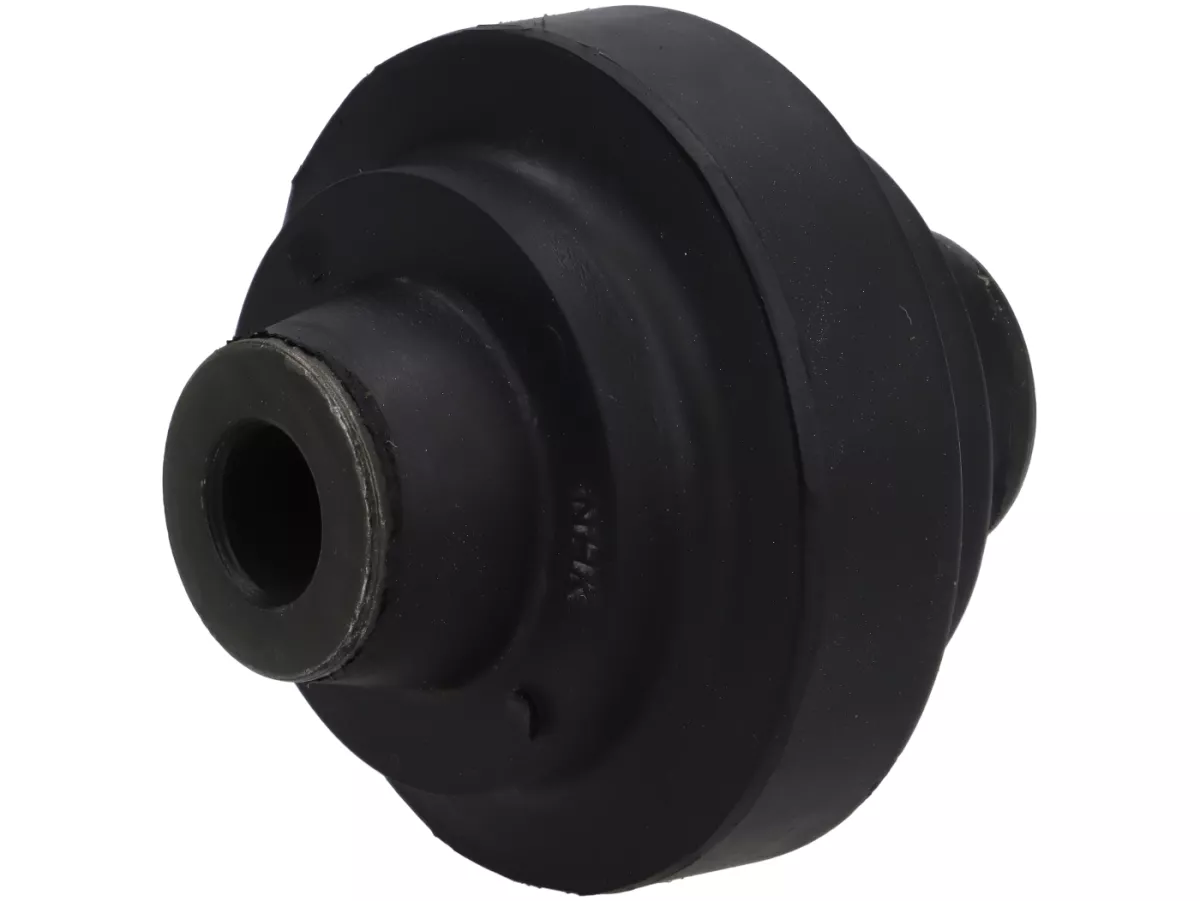
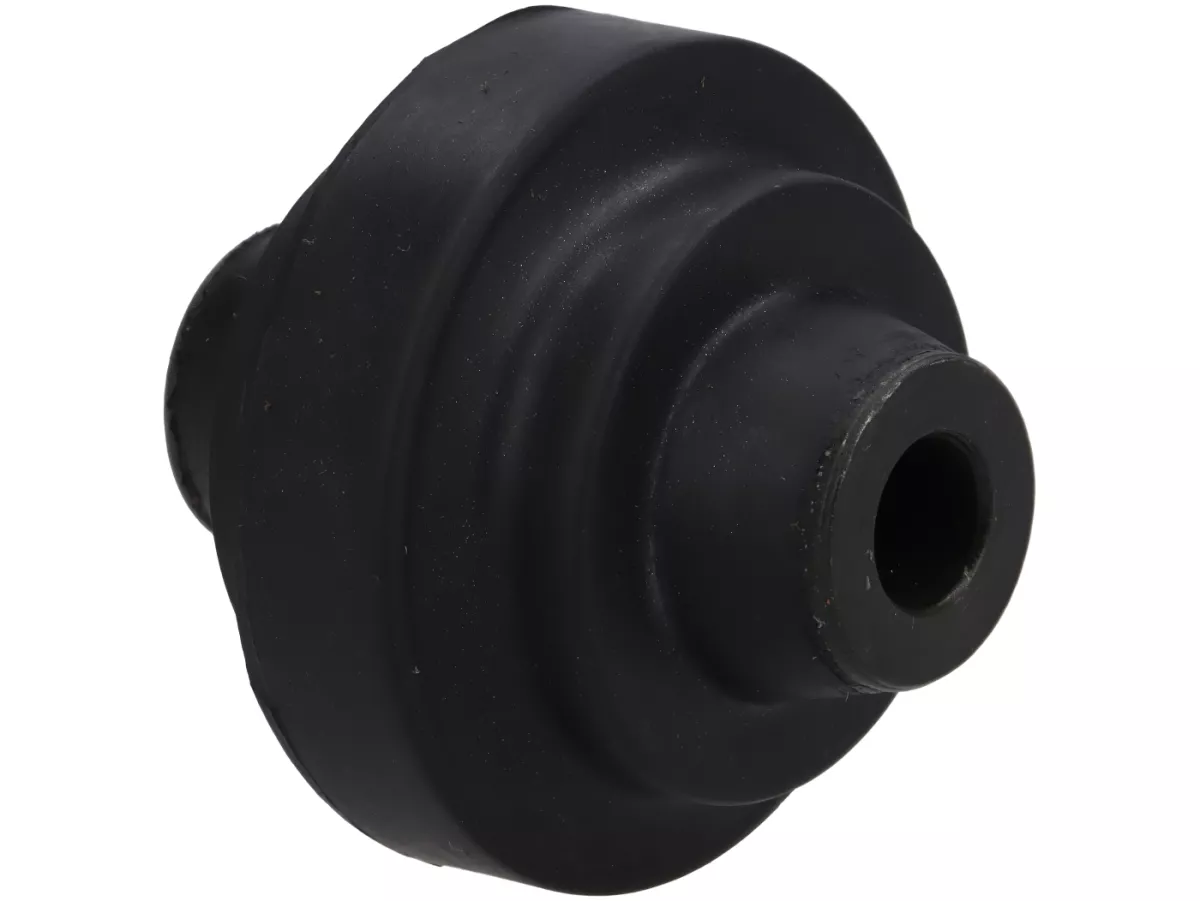
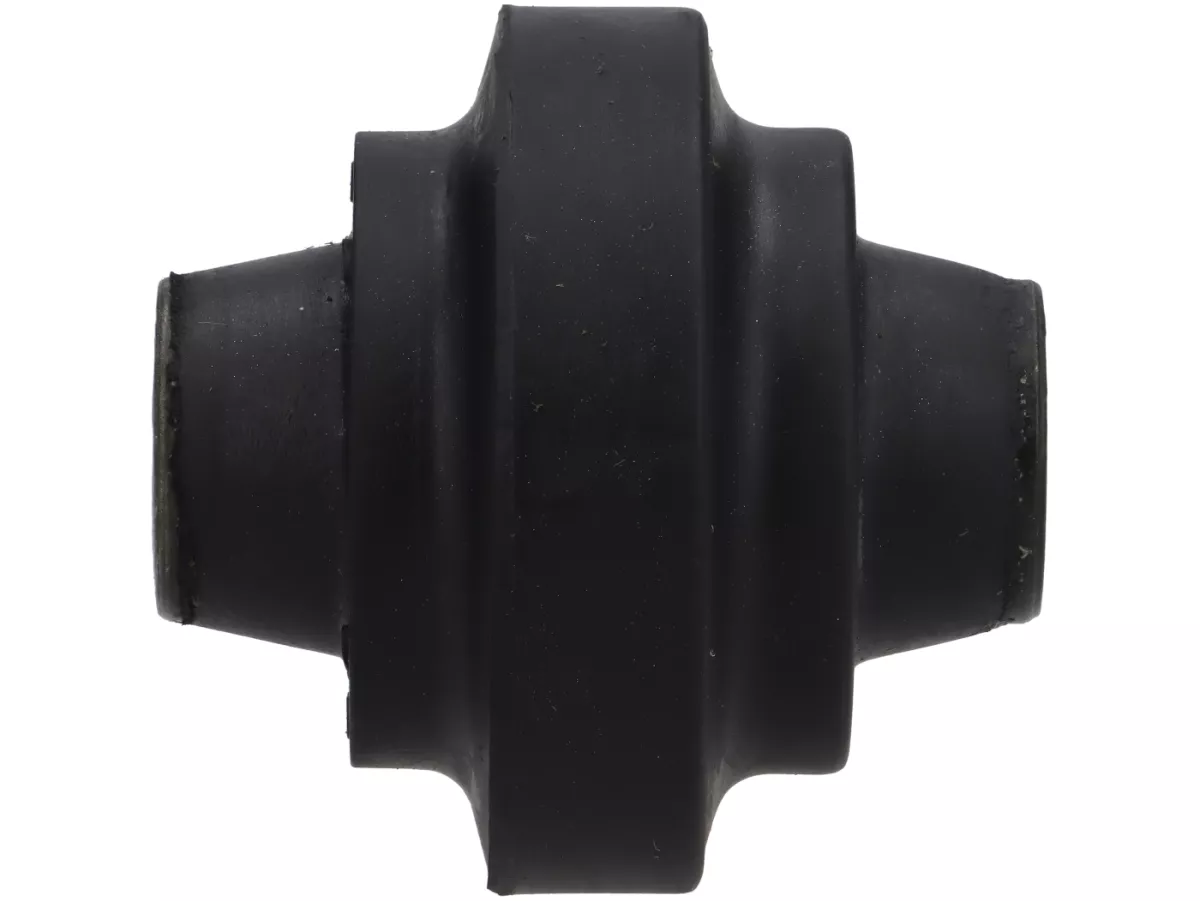
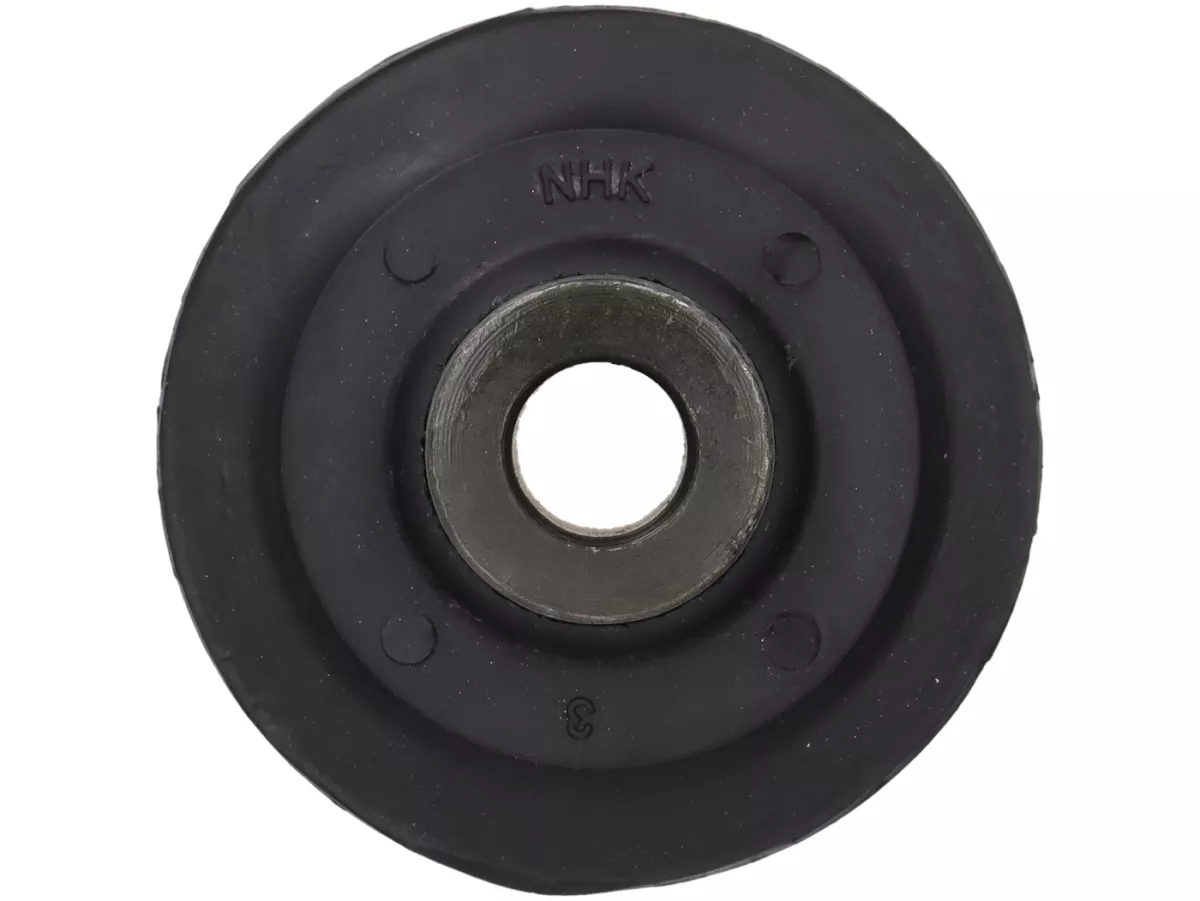
The rubber buffer is designed as a rotationally symmetrical rubber-metal element. A large cylindrical rubber body forms the central section. Narrower, likewise cylindrical sections extend from both sides. A continuous central opening accommodates the corresponding mounting bolt.
During operation, a scooter is subjected to various mechanical loads. Particularly in the engine mounting area, vibrations and alternating forces can act on the connecting components.
Rubber buffers are used to provide an elastic connection in such assemblies. Unlike a completely rigid metal connection, the rubber body can deform within its design limits under load.
This property allows elastic isolation between the connected components. As a result, the direct transmission of vibrations and structure-borne noise can be reduced.
The actual damping effect depends on the installation situation, the direction of load and the properties of the rubber material used.
The product images show a black rubber body with a pronounced enlarged central section. The outer contour features several stepped sections with rounded transitions leading to the narrower sections on either side.
A metal inner sleeve is visible around the central through-hole. It accommodates the mounting bolt and provides a defined contact surface within the bolted connection.
The combination of an elastic rubber body and metal sleeve makes it possible to combine vibration isolation and mechanical fastening functions within a single component.
The wide central rubber section clearly distinguishes this component from a simple cylindrical rubber bush. Its stepped geometry provides different outer contours designed for the intended installation position.
The rubber buffer carries Royal Alloy original part number 0306030001-02-001. In English-language spare parts catalogues, the component is listed as a “Frame Buffer Block”.
The spare parts diagrams assign the rubber buffer to the frame assembly. It is shown together with components of the engine mounting system, mounting shafts and other connecting elements.
When repairing an engine mounting system, it is important that the specified elastic connecting elements are in proper condition. Damaged or hardened rubber buffers may partially lose their original properties.
The genuine Royal Alloy replacement part allows the relevant rubber buffer to be replaced individually without having to replace the complete frame or engine mounting assembly.
The rubber buffer is used on various Royal Alloy models from 125 to 350 cc. Exact compatibility with the respective vehicle version should be checked using the original part number and the corresponding spare parts diagram.
Rubber buffers are subjected to continuous mechanical stress during vehicle operation. As the component ages, the elastic properties of the material can change.
During maintenance and repair work on the engine mounting system, the rubber buffer should therefore be inspected for visible damage. This includes, in particular, cracks in the rubber body, deformation, material separation and damage around the metal inner sleeve.
Noticeable hardening or significant yielding of the material can also indicate a worn rubber buffer.
When replacing the component, ensure that it is correctly seated in the intended mounting position. The metal inner sleeve must interact correctly with the corresponding mounting components.
Installation should be carried out according to the vehicle-specific workshop documentation. Particular attention should be paid to the position of the connecting components and the specified tightening torques.
The genuine Royal Alloy rubber buffer 0306030001-02-001 is a functional replacement part for the elastic connection within the frame and engine mounting construction. Its combination of a stepped rubber body and metal inner sleeve corresponds to the intended design of the standard component.