Postage free from 99€ (DE)
High customer satisfaction


 DE | €
- Scooter 50-850cc
- Royal Alloy banjo bolt, M10 x 1.00 for GP, JPS, TG 125–350cc

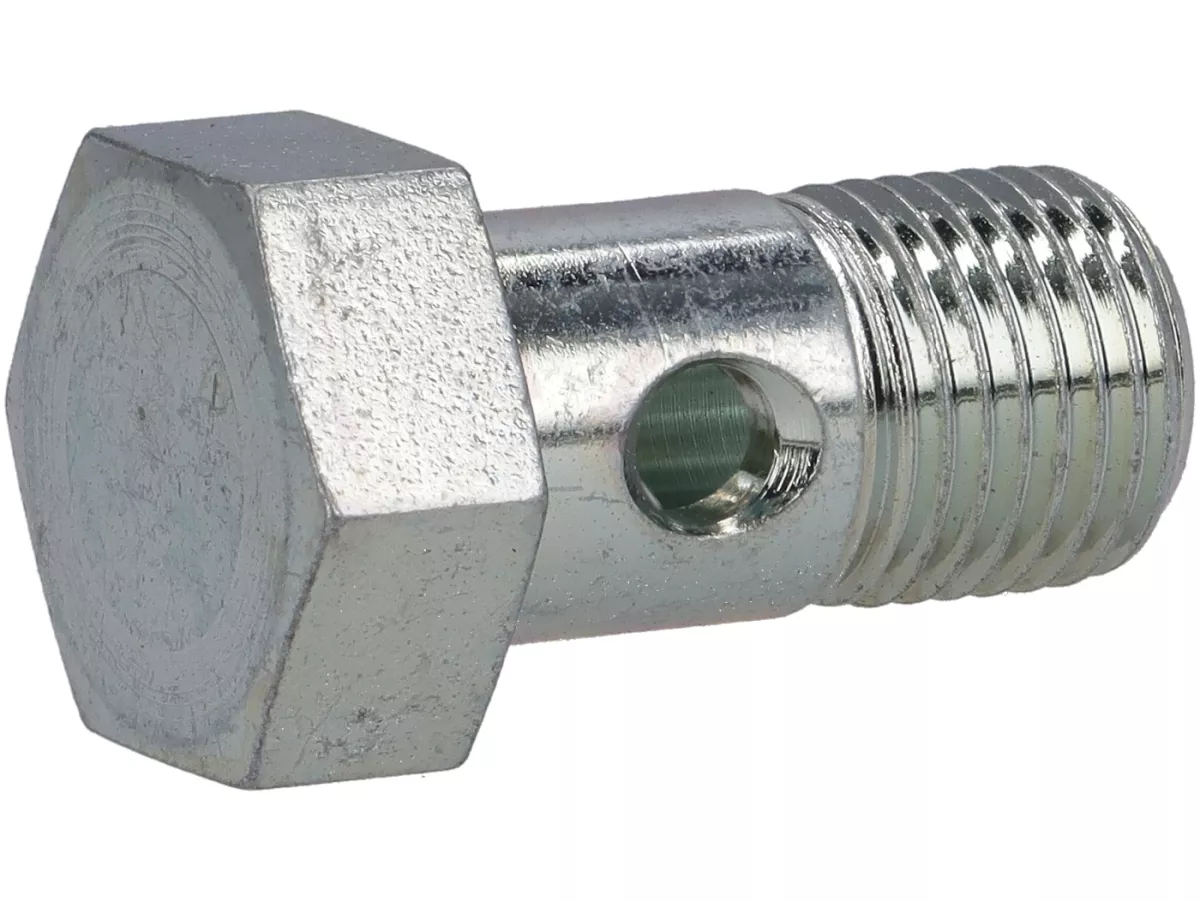
Genuine Royal Alloy banjo bolt for securing hydraulic brake lines. The bolt features an M10 x 1.00 metric fine thread and provides the connection between a brake line and the corresponding hydraulic port.
The banjo bolt is used on various Royal Alloy models from the GP, JPS and TG ranges with 125 to 350cc. It corresponds to the original component design and is suitable as a replacement during maintenance or repairs to the hydraulic brake system.
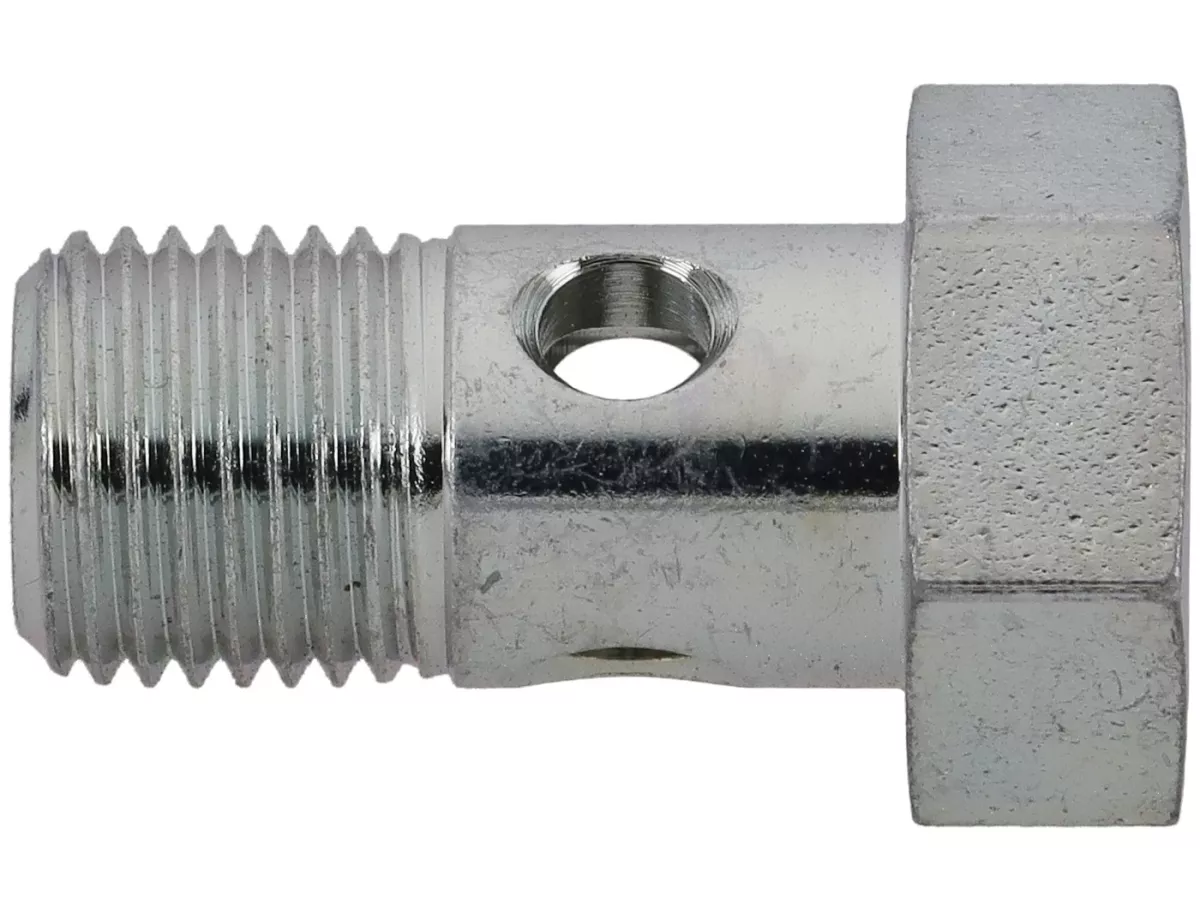
Unlike a conventional fastening bolt, the banjo bolt features an internal fluid channel. This is connected to the outer connection area by a bore running transversely to the bolt axis.
When installing a brake line with a ring fitting, also known as a banjo fitting, the bolt is passed through the fitting eye and screwed into the corresponding threaded port.
Brake fluid can flow between the brake line and the connected hydraulic component through the central longitudinal bore and the lateral cross bore.
The banjo bolt therefore performs two functions: it mechanically secures the ring fitting while simultaneously providing the required hydraulic passage.
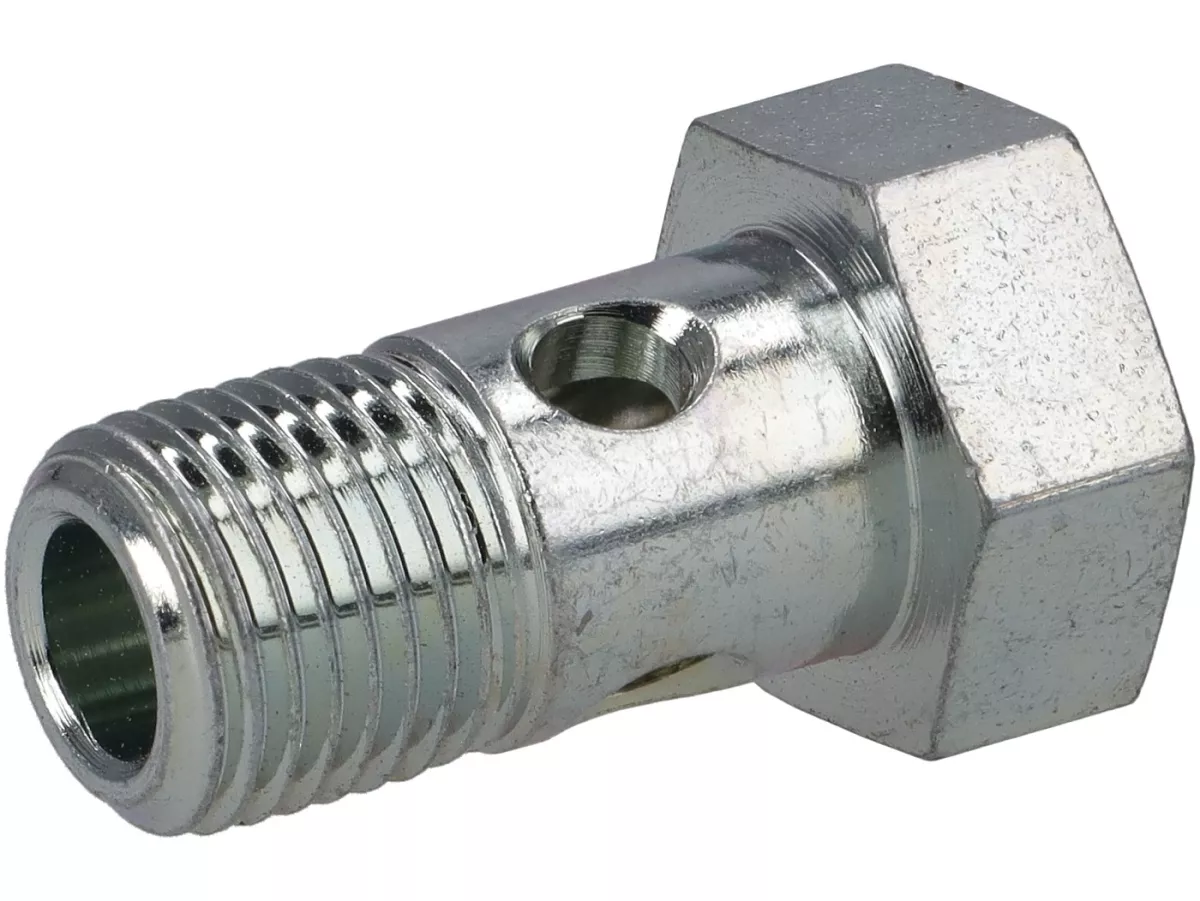
The Royal Alloy banjo bolt features a solid hexagonal head for installation with a suitable spanner or socket. This is followed by a cylindrical shank with a lateral through bore.
The M10 x 1.00 external thread is located at the front end of the shank. The thread pitch is 1.00 mm and must match the thread of the intended connection.
The bolt has a metallic silver finish. Different machining structures are visible on the surfaces. The cylindrical shank and bores show characteristics of machining processes.
The opening at the threaded end is connected to the internal fluid channel.
Application depends on the specific model variant and brake system configuration. For clear identification, the Royal Alloy original part number should be compared with the existing component or the corresponding spare parts catalogue.
A banjo fitting is sealed using suitable sealing washers between the respective mating surfaces. The seals specified for the particular brake system must be used during installation.
Before installation, the connection thread, sealing surfaces and brake line banjo fitting must be checked for damage. The bores in the banjo bolt must be free from contamination.
The bolt must be tightened to the torque specified by the vehicle manufacturer. Insufficient or excessive tightening torque can affect the sealing of the connection or damage its components.
After work on the hydraulic brake system, the system must be bled according to the manufacturer's specifications and checked for leaks and correct operation.
As the banjo bolt is part of a safety-relevant braking system, replacement should be carried out by appropriately qualified personnel.
The genuine Royal Alloy banjo bolt allows the hydraulic connection bolt to be replaced separately without having to replace the complete brake line or the connected hydraulic component.