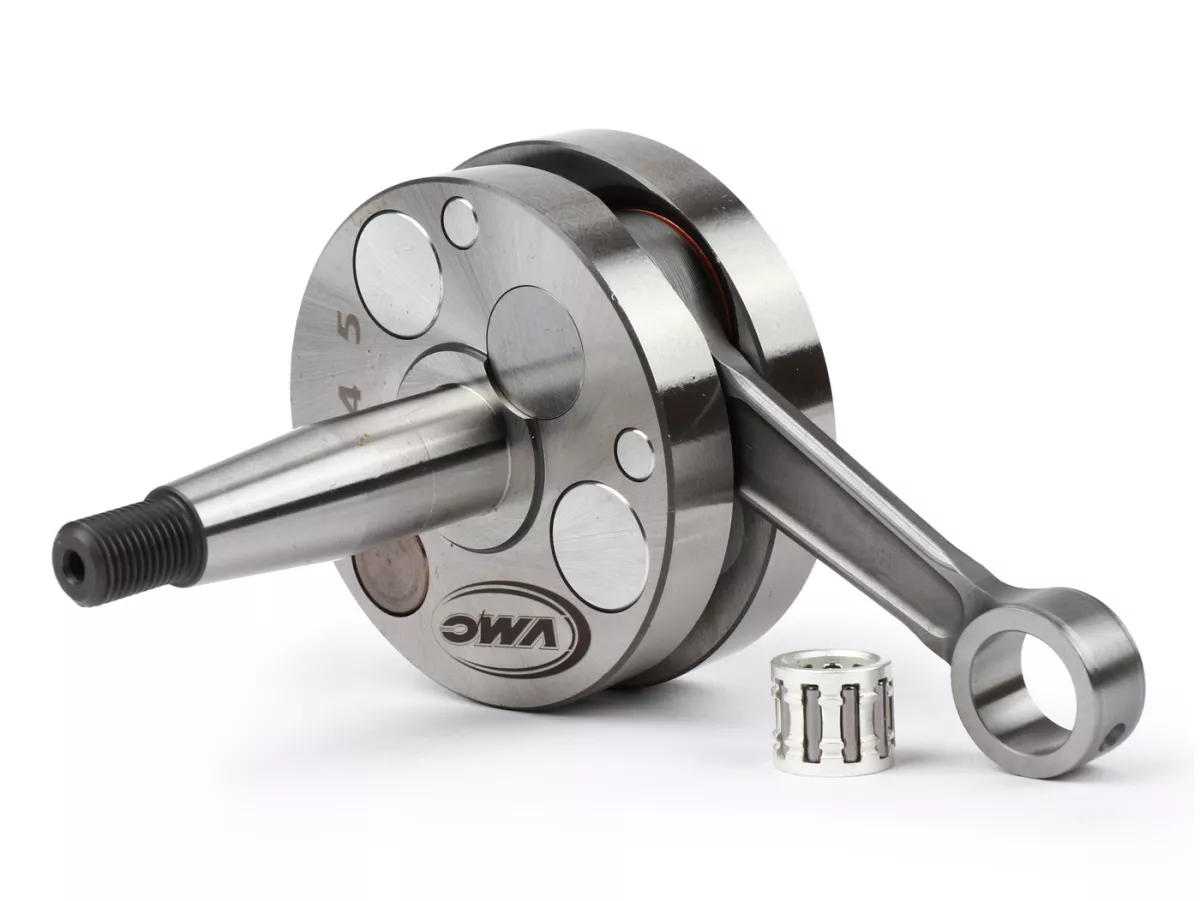
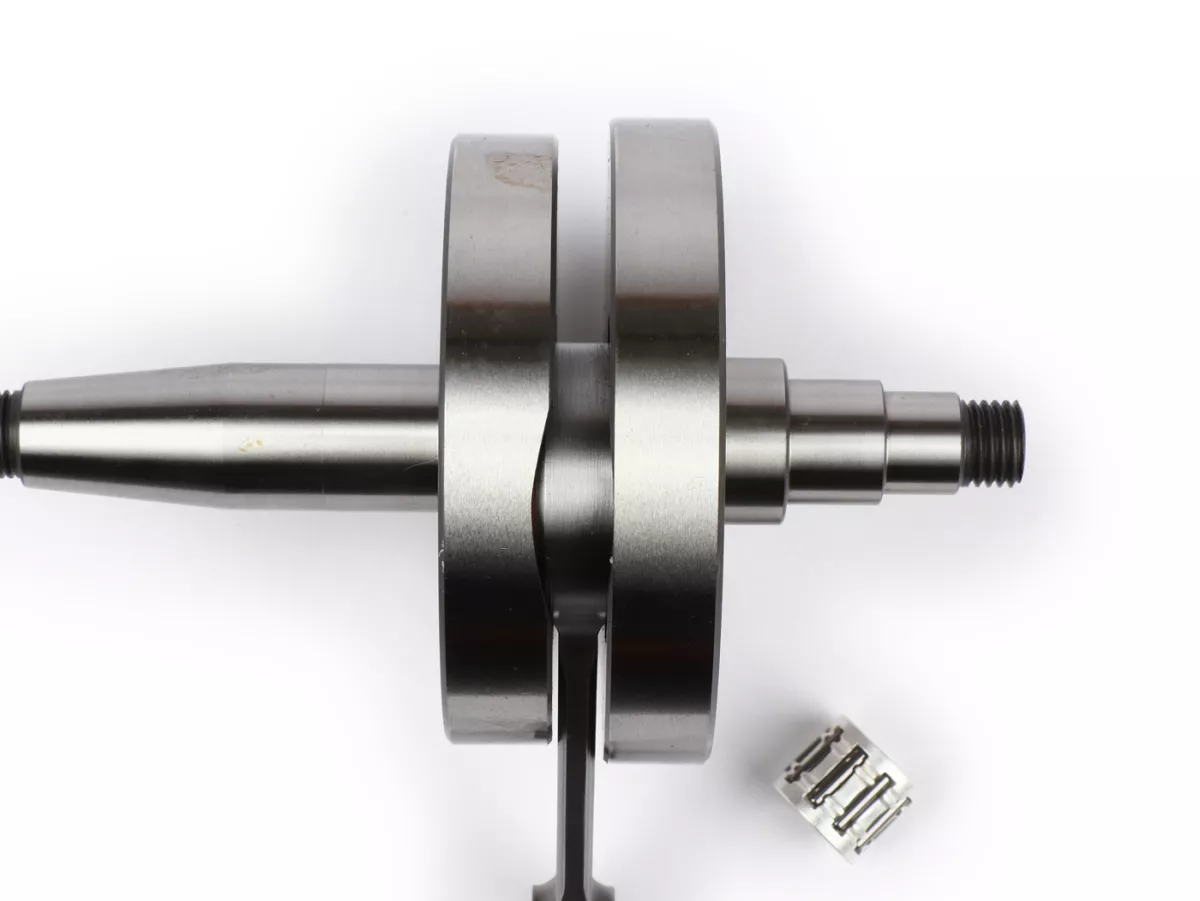
VMC RACING Solid-Flange Crankshaft 45/87 – for high-performance small-frame diaphragm engines
45 mm stroke, 87 mm CNC connecting rod, and 20 mm diameter cone – designed for compact and performance-oriented Vespa small-frame setups
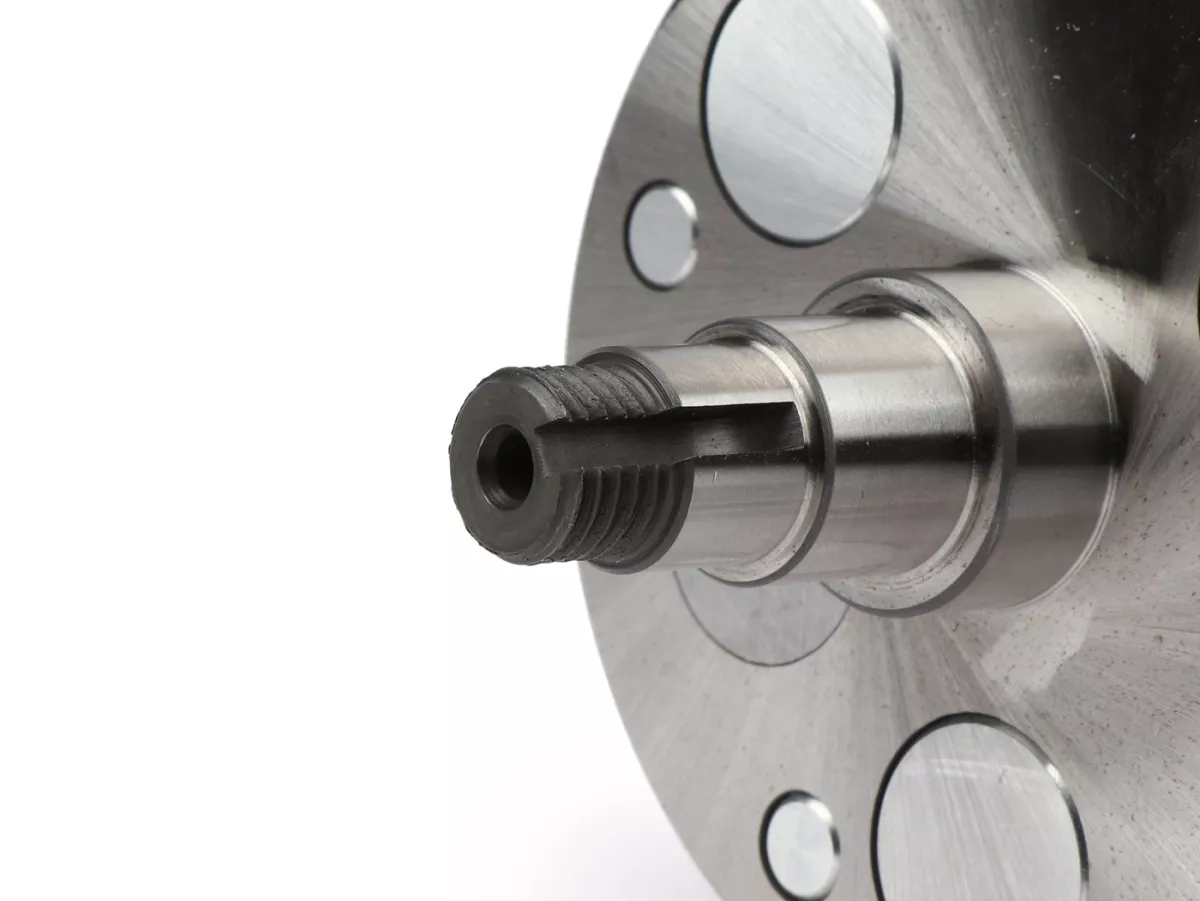
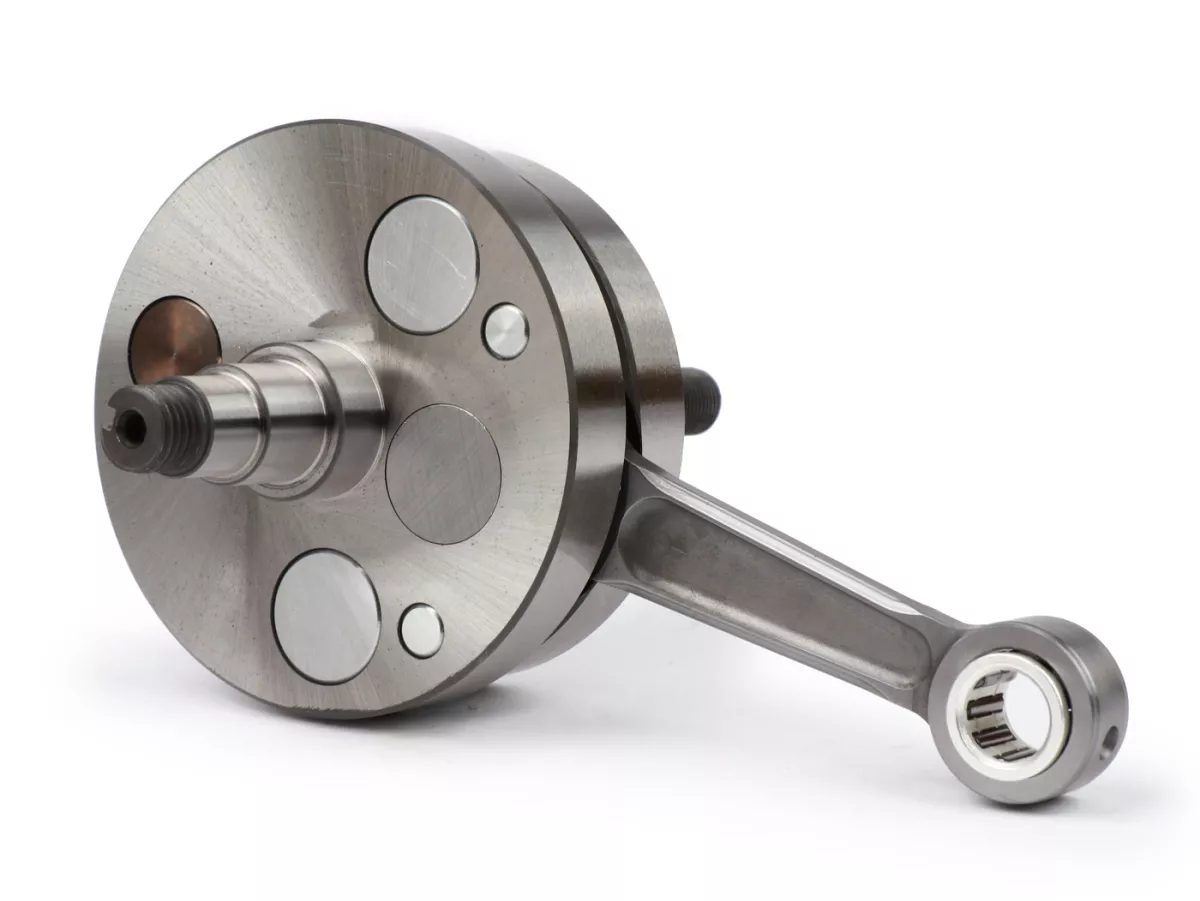
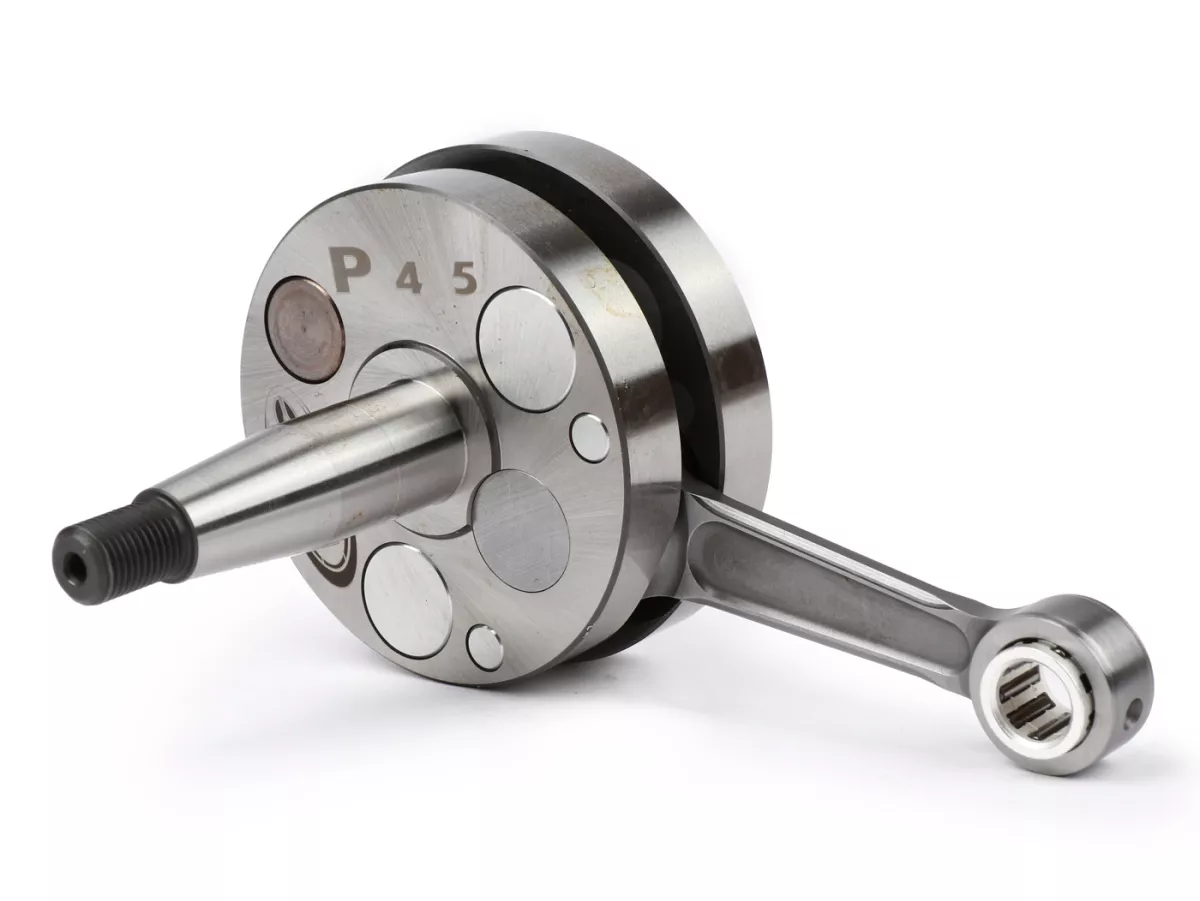
The VMC RACING solid-flange crankshaft is designed for performance-oriented Vespa small-frame engines with a diaphragm intake. With a 45 mm stroke, an 87 mm-long CNC-machined connecting rod, and a 20 mm diameter cone, it provides a suitable foundation for compact, high-performance setups such as the VMC RACING RVA 100 cc.
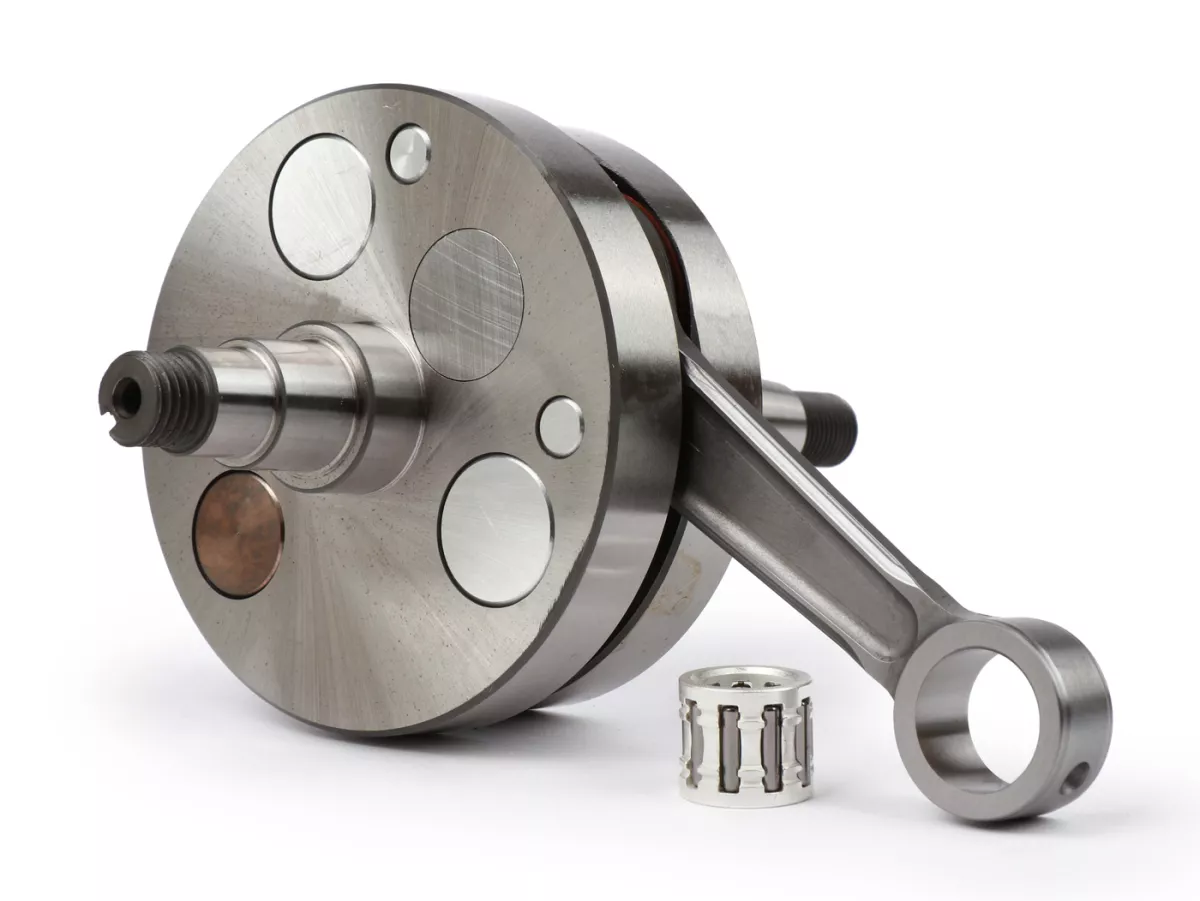
The solid-flange design is particularly well-suited to a diaphragm engine: Since the intake air is controlled by the diaphragm, the crankshaft does not need to feature a traditional rotary valve control surface. This allows the crank flanges to be designed as solid pieces.
VMC specifies a weight of over 1.5 kg for the crankshaft. The comparatively high rotating mass is well-suited for a powerful street or sport engine, where controlled engine operation and smooth power delivery are essential.
45 mm stroke
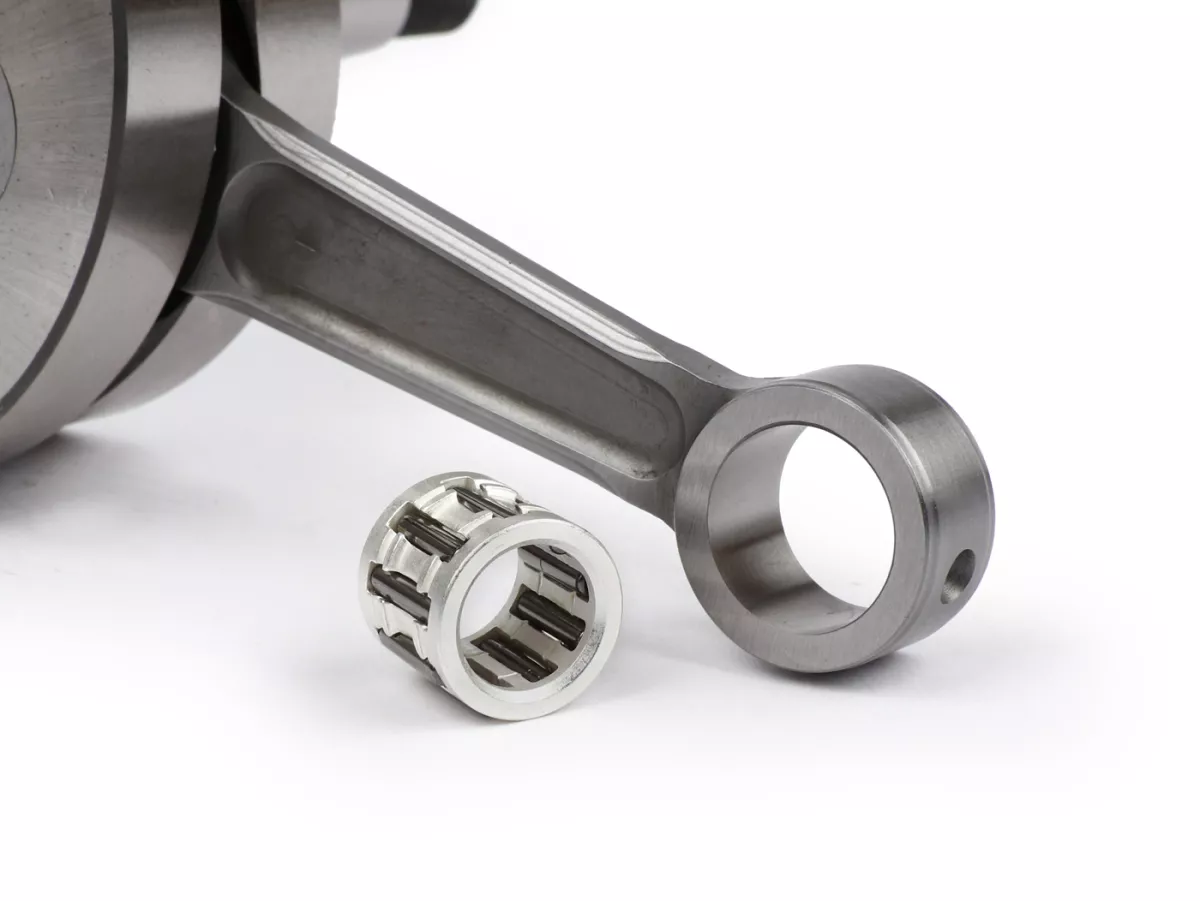
87 mm connecting rod
Solid flange
Ø20 mm taper
>1.5 kg
Diaphragm inlet
VMC RVA 100
Vespa Smallframe
The VMC RACING Crankshaft at a Glance
Solid-flange design: particularly well-suited for engines with diaphragm intake
45 mm stroke: performance-oriented long-stroke design for compact small-frame cylinder configurations
87 mm connecting rod: CNC-machined connecting rod designed for the intended engine and cylinder geometry
Ø20-mm cone: compatible with corresponding Smallframe ignition and magneto concepts
Over 1.5 kg: comparatively high rotating mass
Crankcase halfshafts Ø82 / Ø86.5 mm: different halfshaft diameters corresponding to the VMC design
No housing boring required: According to the manufacturer, no boring of the engine housing is required for the crankpin shoulders
Made in Italy: According to the manufacturer, manufactured in Italy from high-quality materials and with appropriate material treatments
Solid-flange crankshaft for diaphragm intake
In a conventional rotary vane motor, the crankpin handles part of the intake control. In a diaphragm motor, however, this task is performed by the diaphragm. It opens and closes depending on the pressure conditions in the crankcase.
This allows the crankshaft to be designed with solid webs. The closed-web design is particularly suitable for engine configurations in which intake control is handled entirely by a diaphragm block.
Why a solid crankpin in a diaphragm engine?
No rotary valve control surface is required on the crankshaft journal
Intake control is handled by the diaphragm block
Solid crankshaft webs as a logical design for diaphragm intake
Well-suited for performance-oriented small-frame engine designs
45 mm stroke
The crankshaft operates with a 45 mm stroke. Compared to a stock small-frame crankshaft, the additional stroke—in combination with a cylinder designed for this purpose—can increase displacement and torque potential.
It is always important that the cylinder, piston, connecting rod length, and crankshaft stroke are compatible as an integrated system. This crankshaft is intended, among other things, for use with the VMC RACING RVA 100 cc engine.
87 mm CNC Connecting Rod
VMC equips the crankshaft with an 87 mm long, CNC-machined connecting rod. The connecting rod length is an essential component of the engine’s geometry and influences the position of the piston within the cylinder.
When building the engine, the stroke and connecting rod length should therefore not be considered separately. The combination of a 45 mm stroke and an 87 mm connecting rod must match the geometry of the cylinder being used.
Over 1.5 kg crankshaft weight
According to VMC , the crankshaft weighs more than 1.5 kg. This gives it a comparatively high rotating mass for a small-frame crankshaft.
A higher flywheel mass can contribute to smoother and more even engine operation and positively influence power delivery under load. However, the extent of this effect in a specific engine depends on the overall setup, including the flywheel, clutch, cylinder, and gear ratio.
Crankpins Ø82 mm and Ø86.5 mm
According to the manufacturer, the two crank arms have diameters of 82 mm and 86.5 mm, respectively.
An important advantage of this design: According to VMC, the engine block does not need to be bored out to accommodate the crankshaft journals. This eliminates the need for extensive machining of the engine block, which might otherwise be necessary with larger crankshaft diameters.
No boring of the crankcase required
Crankpin 1: Ø82 mm
Crankpin 2: Ø86.5 mm
Manufacturer’s specification: No boring of the engine block required for the crankpin journals
Check anyway: Verify free movement for each individual engine configuration before final assembly
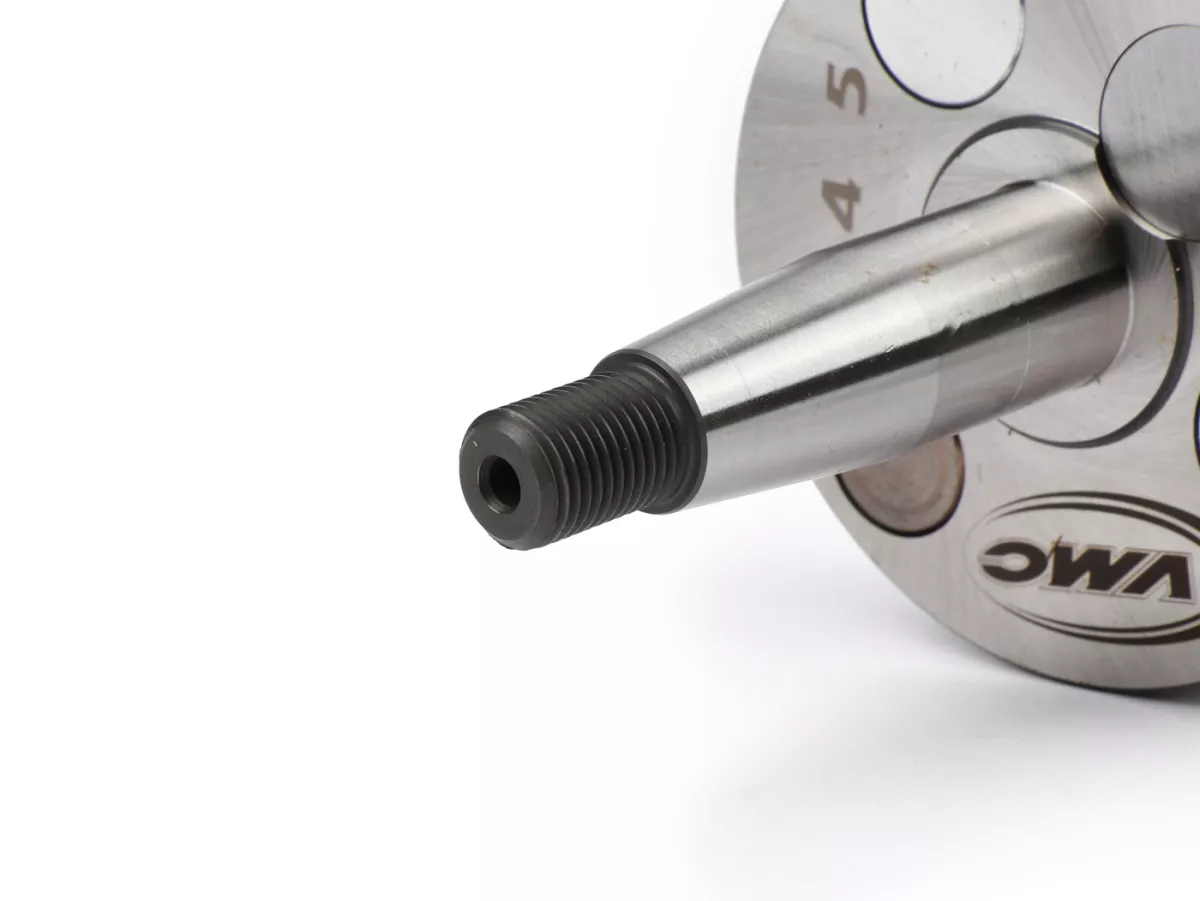
Ø20 mm taper
The crankshaft features a Ø20-mm cone on the ignition side. This makes it compatible with corresponding small-frame ignition and magneto solutions.
Before installation, verify that the pole wheel or ignition system is compatible with the crankshaft variant being used.
Wider needle bearing cages recommended
VMC recommends using wider needle bearing cages for this crankshaft than those found on the original Piaggio version.
Since the manufacturer does not specify exact bearing dimensions in the provided information, the needle bearings used should be selected to match the pistons, piston pins, and connecting rods.
Select needle bearings suitable for the setup
VMC recommends a needle bearing design that is wider than the Piaggio version
Do not derive a specific bearing width from the available manufacturer data
Check compatibility with the connecting rod, piston, and piston pin before installation
Check for axial play and smooth operation
Ideal for the VMC RACING RVA 100 cc
A typical application for this crankshaft is use in the VMC RACING RVA 100 cc engine. The combination of a diaphragm intake, full-flange crankshaft, 45 mm stroke, and 87 mm connecting rods forms a compact foundation for a performance-oriented small-frame engine.
Of course, the crankshaft can also be used in other engine setups, provided that the stroke, connecting rod length, taper, and other geometric requirements match the respective cylinder and engine design.
Suitable for
The crankshaft is intended for compatible Vespa small-frame engines. In addition to the vehicle model, the actual engine installed, as well as the cylinder and ignition combination used, are always decisive factors.
For compatible Vespa V50 small-frame engines with an engine configuration optimized for a diaphragm intake and a 45-mm stroke.
For compatible Vespa PK50 small-frame engines with an engine configuration tuned for a diaphragm intake and a 45-mm stroke.
Technical Specifications
| Manufacturer | VMC RACING |
|---|
| Component | Crankshaft |
|---|
| Design | Solid web |
|---|
| Intake Design | For diaphragm inlet |
|---|
| Stroke | 45 mm |
|---|
| Connecting rod length | 87 mm |
|---|
| Connecting rod | CNC-machined |
|---|
| Taper | Ø20 mm |
|---|
| Crankcase | Ø82 mm / Ø86.5 mm |
|---|
| Weight | Over 1.5 kg according to the manufacturer |
|---|
| Crankshaft housing machining | According to the manufacturer, no boring of the crankcase is required for the crankpin |
|---|
| Needle bearings | The manufacturer recommends a wider version than the original Piaggio design |
|---|
| Manufacturing | Made in Italy |
|---|
| Typical application | VMC RACING RVA 100 cc and comparable diaphragm setups |
|---|
| Vehicle Group | Vespa Smallframe |
|---|
| Models | Vespa V50, PK50 with corresponding engine configuration |
|---|
Check before installation
Clearly identify the engine housing and engine version
Check that both crankshaft journals move freely in the specific engine housing
Adjust the cylinder for a 45 mm stroke and an 87 mm connecting rod
Measure the piston position, compression edge, and valve timing on the assembled engine
Adjust the ignition system or pole wheel to the Ø20-mm cone
Use a suitable needle bearing cage that is wider than the Piaggio standard version
Check axial play, bearing alignment, and free movement after complete assembly
For a high-performance engine, design the bearings, clutch, transmission, and ignition as an integrated system
Conclusion
The VMC RACING 45/87 full-flange crankshaft is a crankshaft consistently tailored to performance-oriented Vespa small-frame diaphragm engines.
With a 45 mm stroke, 87 mm CNC-machined connecting rods, a 20 mm diameter taper, and a weight of over 1.5 kg, it offers an attractive foundation for compact and powerful setups such as the VMC RACING RVA 100 cc.
A particularly practical feature is that, according to the manufacturer, the crankshaft journals—with diameters of 82 mm and 86.5 mm, respectively—can be installed without having to bore out the engine case. Thus, the crankshaft combines a performance-oriented solid-journal design with a comparatively manageable machining effort.
FAQ on the VMC RACING Solid-Flange Crankshaft 45/87
The crankshaft has a 45 mm stroke.
VMC uses an 87 mm long CNC-machined connecting rod.
The full-flange crankshaft is designed for engine configurations with a diaphragm intake. The diaphragm block handles the intake control.
According to VMC, no boring of the engine block is required for crankshaft journals with diameters of 82 mm and 86.5 mm. However, the actual clearance should still be checked for each engine configuration.
The crankshaft has a Ø20-mm taper.
VMC specifies a weight of over 1.5 kg.
VMC recommends a wider needle bearing design than the original Piaggio version. Specific dimensions are not listed in the available manufacturer specifications and should be selected to match the piston and connecting rod being used.
Yes. The VMC RACING RVA 100 cc is a typical application for this 45-mm solid-flange crankshaft.


 DE | €