Postage free from 99€ (DE)
High customer satisfaction


 DE | €
- all
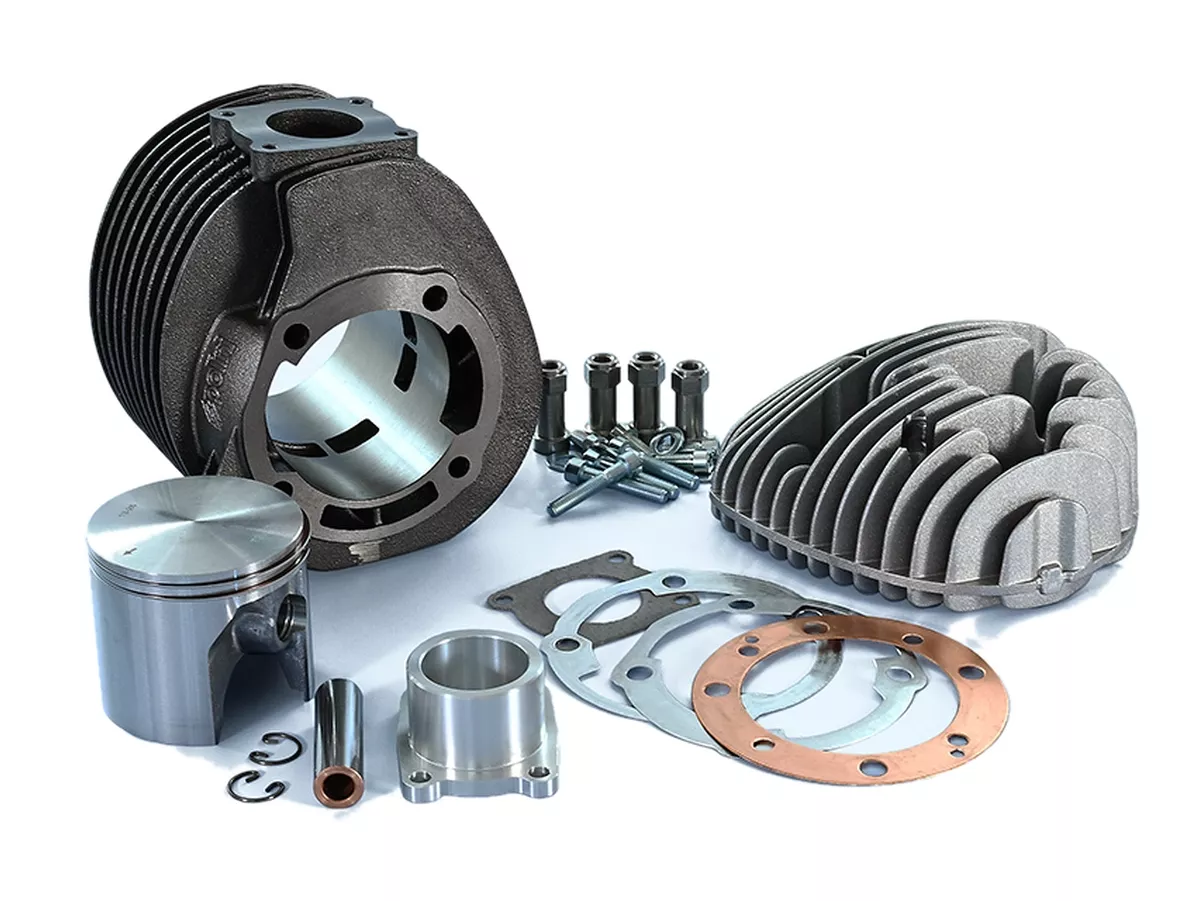
- Cylinder - POLINI 244cc gray cast iron, Ø72mm, stroke = 60mm, connecting rod length = 127mm - Vespa PX200, Rally200 - with cylinder head

POLINI 244 cm³ gray cast iron cylinder for Vespa PX200, P200E, and Rally200. Unique large-frame design with a 72 mm bore, 60 mm stroke, and an extra-long 127 mm connecting rod. Cylinder head included.
With the POLINI 244 cm³ cylinder kit 140.0241, POLINI is pursuing a unique large-frame design. The combination of a 72 mm bore, 60 mm stroke, and 127 mm connecting rod length enables an unusual cylinder geometry with high-positioned transfer ports and a correspondingly short cylinder base.
The solid gray cast iron cylinder is supplied with a matching cylinder head. Unlike conventional PX200 tuning cylinders, it is specifically designed for crankshafts with particularly long connecting rods.
Thanks to the large bore and the long connecting rod, POLINI is able to accommodate a large portion of the transfer ports within the cylinder itself. This eliminates the need for the cylinder base—which typically protrudes far into the crankcase in classic PX200 cylinders.
The POLINI installation instructions do not describe the traditional method of boring out the crankcase to accommodate a large cylinder base. However, some adaptation work is still required.
The POLINI 244 is not a plug-and-play cylinder. For original Vespa casings, the installation instructions specify that the overflow channels on the engine casing, the base gasket, and the cylinder must be adapted. Even with POLINI engine cases, the transitions must be adjusted.
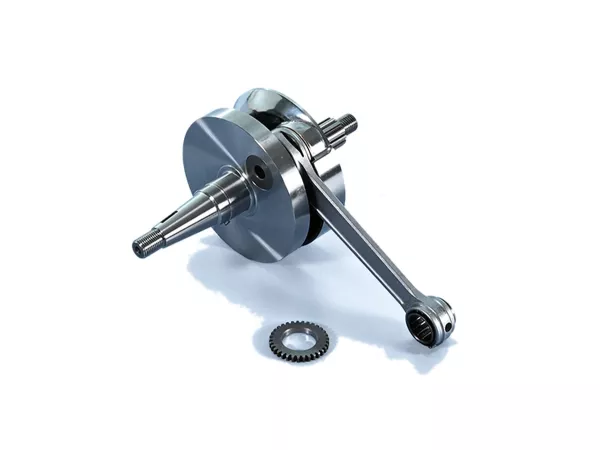
POLINI 210.0095: The crankshaft specified by the manufacturer has a 60 mm stroke and a 127 mm connecting rod length. A distinctive feature is the toothed clutch stub. To install the POLINI HT Clutch, the matching clutch hub 230.0506 is required. Conventional PX clutches cannot be mounted directly onto this spline.
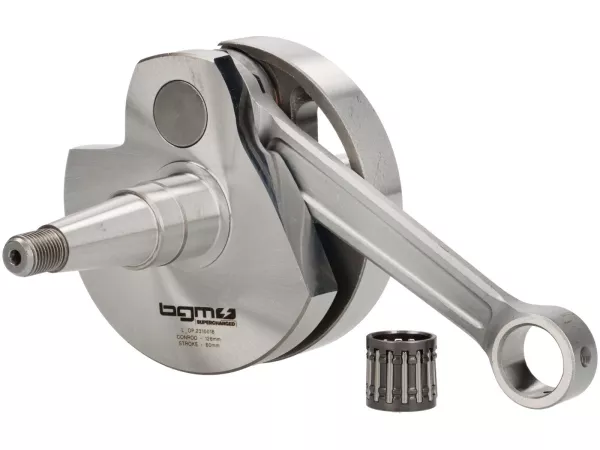
BGM PRO BGM031128G: An interesting alternative that also has a 60 mm stroke but a 128 mm connecting rod length. Its main advantage is the conventional PX clutch stub, which significantly expands the selection of compatible clutches.
The BGM connecting rod, which is 1 mm longer, also provides additional leeway for positioning the cylinder. With appropriately matched base and head spacers, the valve timing angles can be precisely adjusted. In doing so, the squish edge, compression, and mechanical clearance must be rechecked.
| Feature | Value |
|---|---|
| Manufacturer / Part Number | POLINI / 140.0241 |
| Displacement | 244 cm³ |
| Cylinder Material | Gray cast iron |
| Bore / Stroke | 72 / 60 mm |
| Connecting rod length | 127 mm (POLINI) |
| Squeeze edge | 1.4–1.6 mm |
| Compression ratio | 12:1 |
| Piston clearance | 0.12 mm |
| Piston ring clearance | 0.40 mm |
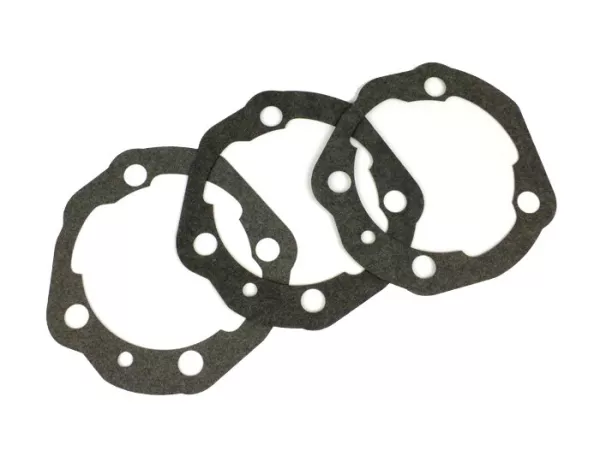
| Base gaskets for adjustment | 0.3 / 0.5 mm |
| Tightening torque for M8 cylinder head bolts | 20–22 Nm |
| Tightening torque for cylinder head M6 | 10–12 Nm |
| Ignition timing (stock ignition) | 18.5° before TDC |
| Ignition timing for POLINI ignition | 23° before TDC |
| Spark plug | NGK B9ES or equivalent |
The compression edge is set to 1.4–1.6 mm according to POLINI specifications. To achieve this, the provided base gaskets with thicknesses of 0.3 and 0.5 mm can be combined. When using the BGM crankshaft with 128-mm connecting rods, the resulting change in piston position must be taken into account accordingly.
POLINI recommends a break-in period of at least 500 km and prefers 98/100 octane E5 fuel. The manufacturer specifies 95 octane E5 as the minimum requirement and advises against using E10. Carburetor jet settings and ignition timing must be adjusted to the specific engine setup.
Note on the oil-to-fuel ratio: The POLINI manual contains differing specifications regarding the oil content (2% or 3–4%). Therefore, the current manufacturer’s specifications for the specific application should be checked before commissioning.
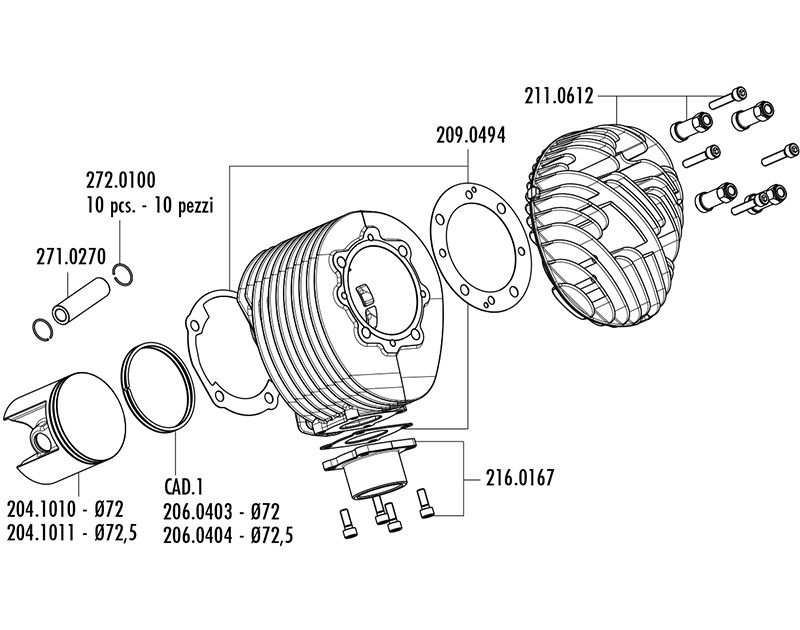
The current POLINI parts list determines the exact scope of delivery.
Important: Installation requires a compatible long-connecting-rod crankshaft and the described modifications to the engine case. When using the BGM alternative, the cylinder position must be adjusted accordingly.