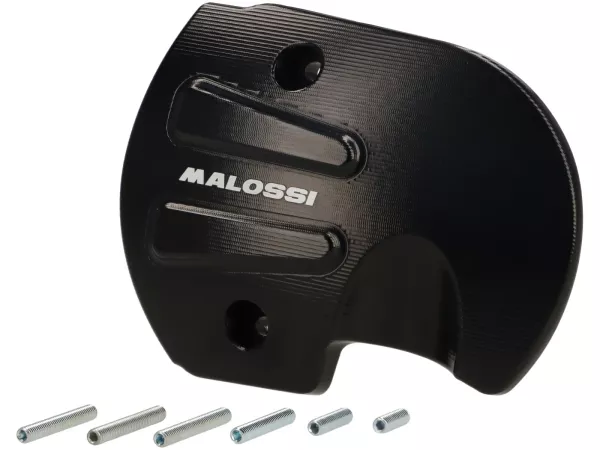
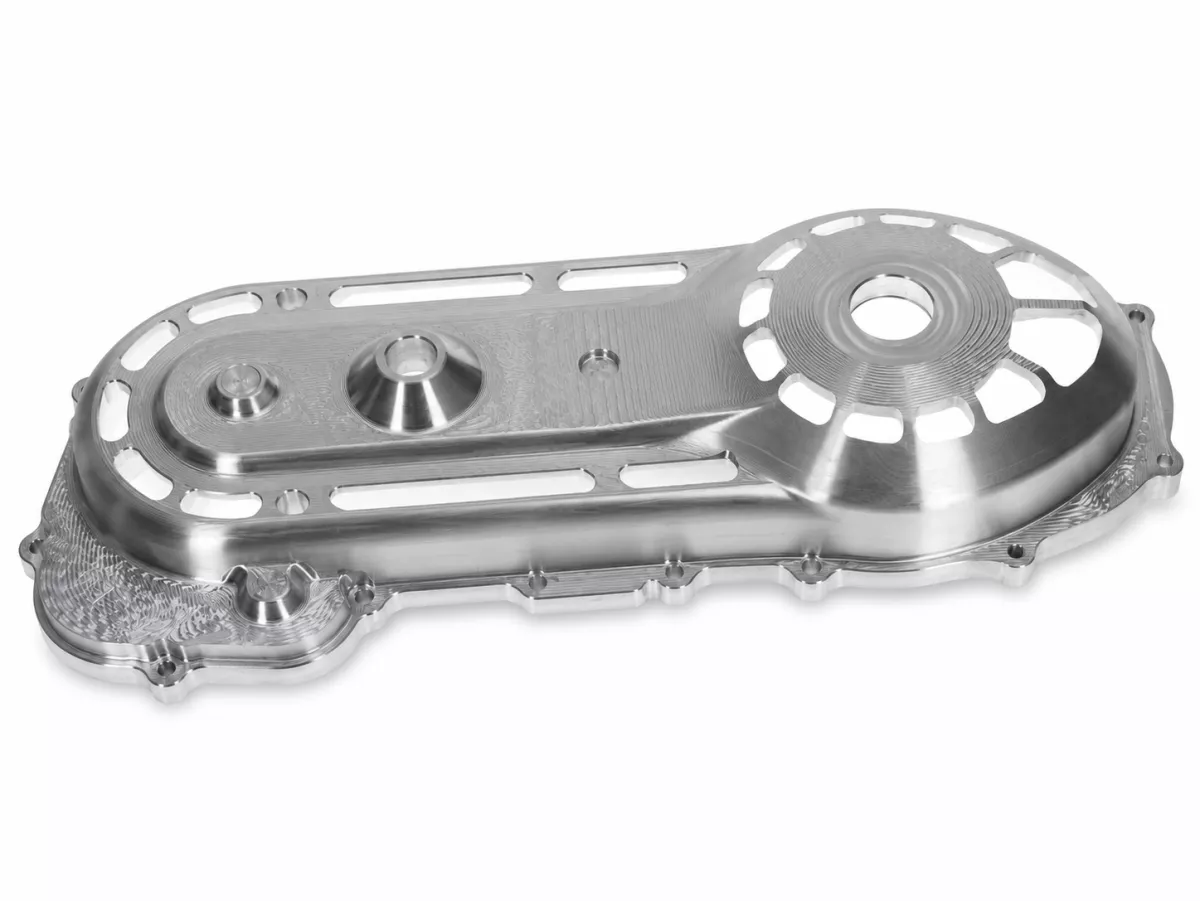
The HT Tuning CNC variator cover was developed for Piaggio and Gilera 125–180 cm³ 2-stroke engines with an externally mounted clutch shaft. In this design, the clutch shaft is mounted in both the transmission cover and the variator cover. The HT engine cover, milled from solid aluminum, serves as the outer bearing point.
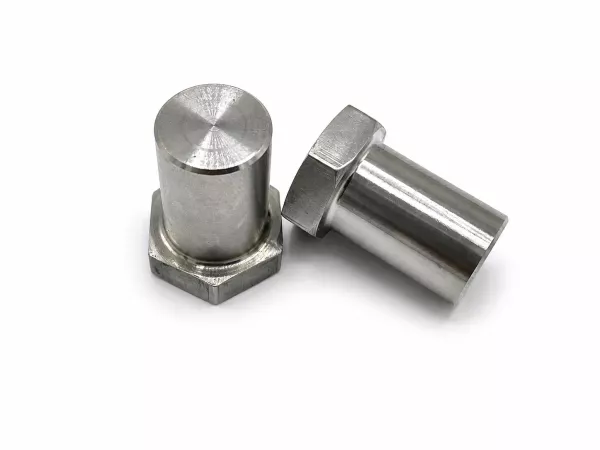
However, with the separately available HT rolling groove, the cover can also be used on older engines where the clutch shaft is mounted as standard in the engine block and in the transmission cover. The special nut establishes the connection between the older clutch shaft and the bearing in the externally mounted variator cover.
HT Tuning
CNC-machined aluminum
externally mounted clutch shaft
Rollingnut conversion possible
Compatible with Ø 140 mm
Ø 110 mm: Note electric starter
Compatibility at a Glance
Motors with externally mounted clutch shaft: Intended use of the HT Variomatic cover
Older engines with an internally mounted clutch shaft: Installation possible with the separately available HT Rollingnut
Older engines with a Ø 140 mm rear brake: Use is generally possible
Older engines with a Ø 110 mm rear brake: only without an electric starter or after appropriate modifications
For engines with an externally mounted clutch shaft
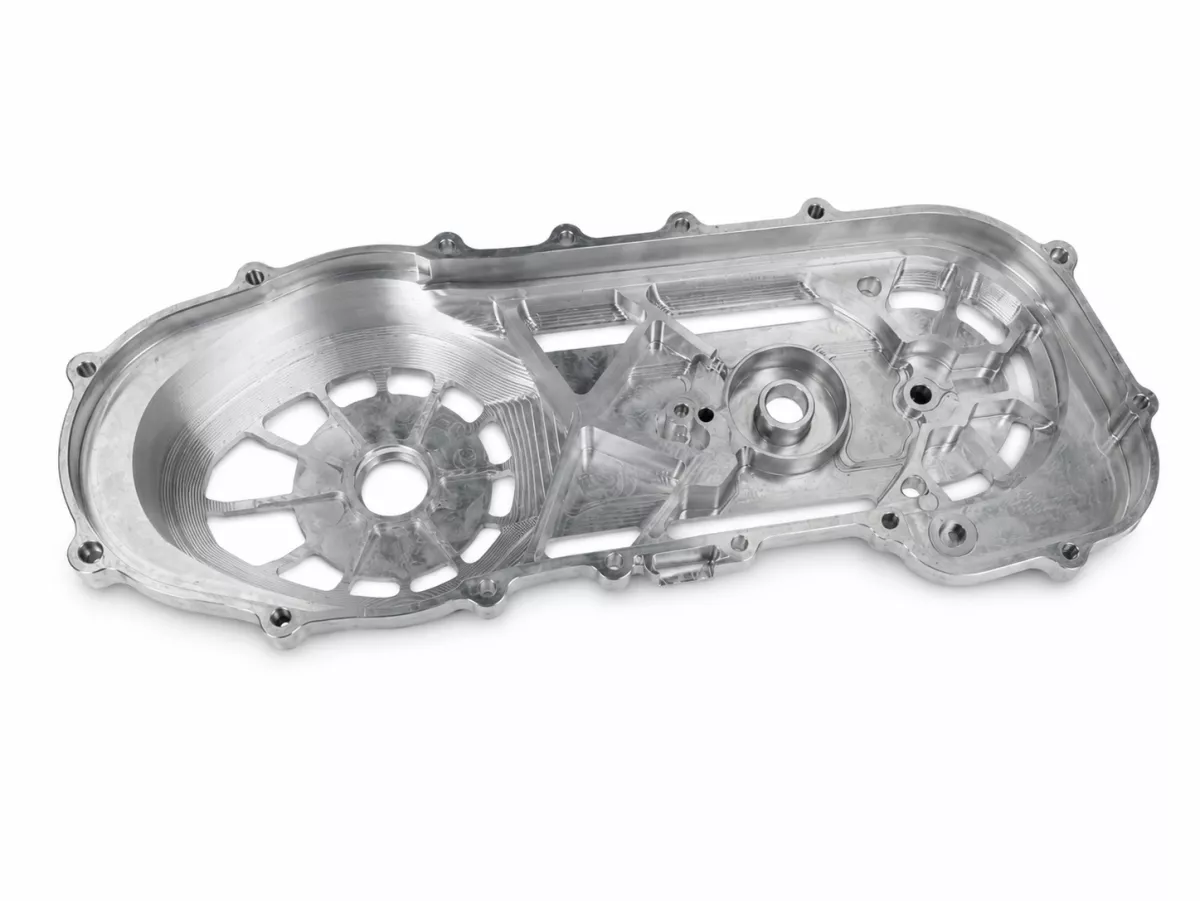
In the externally mounted version, one bearing of the clutch shaft is located in the transmission cover and the second bearing in the Variomatik cover. The bearing arrangement typically found in older engines—inside the engine housing itself—is no longer used.
The variator cover is therefore not merely a cover for the variator, clutch, and kickstarter mechanism; it also serves a load-bearing function within the clutch shaft bearing assembly.
Key Features
For Piaggio and Gilera 125–180 cm³ 2-stroke engines
For engines with an externally mounted clutch shaft
Can also be used on older engines thanks to the HT rolling groove
CNC-milled from solid aluminum
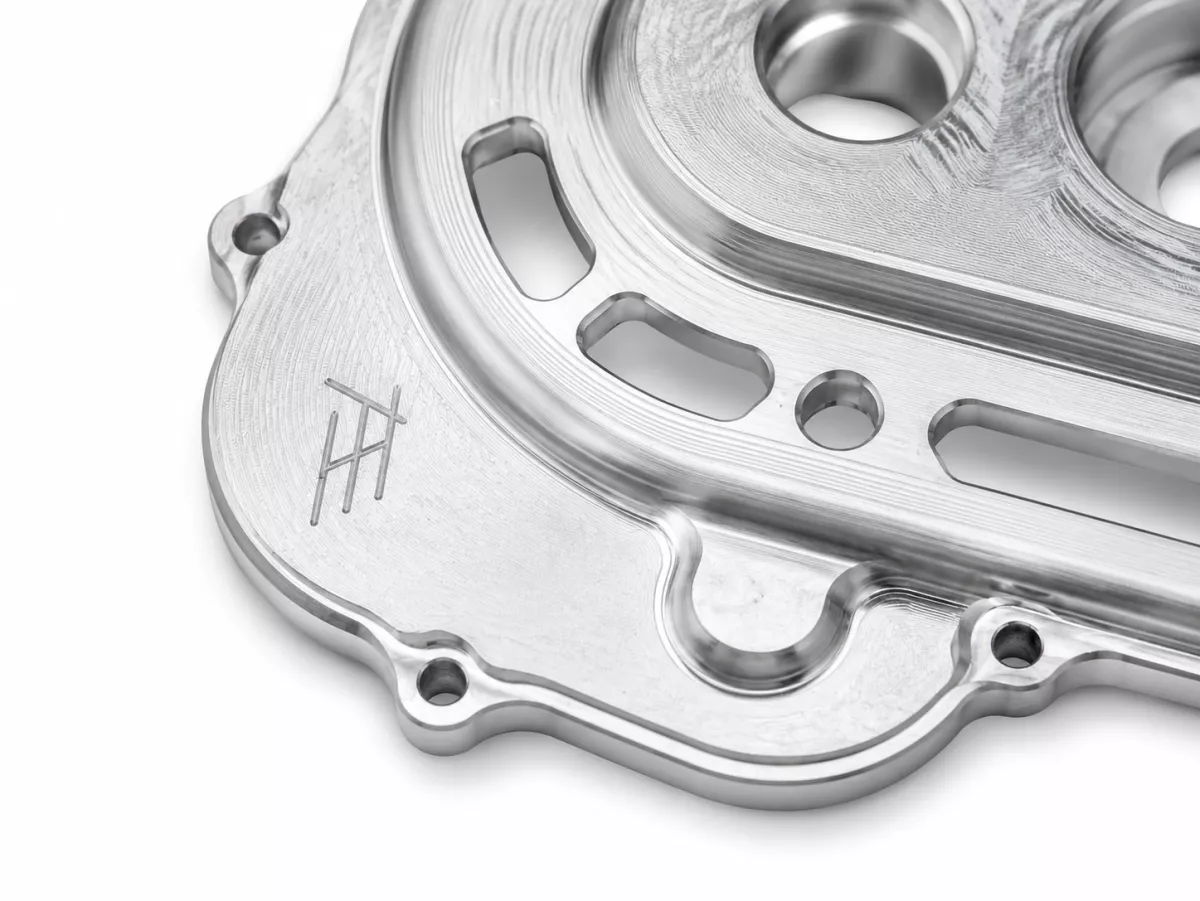
Precisely machined bearing and mounting areas
Milled openings for additional air circulation
HT Rollingnut for older engines
Older Piaggio and Gilera engines have a clutch shaft that is mounted in the engine block and the transmission cover. These engines do not come standard with the clutch shaft connection designed for an externally mounted cover.
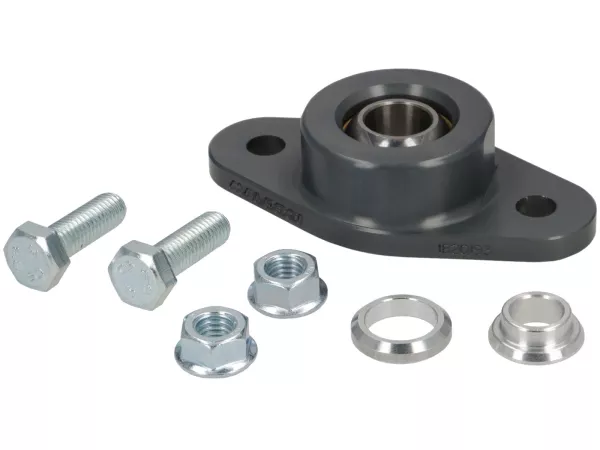
HT (Heiko Tuning) offers a special rolling nut specifically for this purpose. This nut is used in place of the stock clutch shaft nut and establishes the connection to the bearing in the variator cover. This allows a cover designed for the externally mounted version to be mounted on the older engine block as well.
Rolling Nut Conversion
For older engines with the clutch shaft mounted in the engine block and transmission cover
Replaces the stock nut on the clutch shaft
Establishes the connection to the bearing of the externally mounted Variomatic cover
Enables installation of the HT CNC variator cover on older engines
Also compatible with original variator covers of the externally mounted type
The HT rolling groove is sold separately and is not included with the cover
The Rollingnut accommodates the different designs of the clutch shaft bearing. Space-related limitations with small 110-mm brakes and an existing electric starter remain.
Also for older engines with a 140-mm brake
When used with the appropriate HT Rollingnut, the engine cover can also be installed on older engines with a large rear brake. These engines provide the necessary installation space for the cover and electric starter.
Typical models with a large 140 mm brake
Gilera Runner 125 FX
Gilera Runner 180 FXR 2-stroke
Italjet Dragster 125
Italjet Dragster 180
Piaggio Hexagon LX 125
Piaggio Hexagon LXT 180
Restriction for engines with a 110 mm rear brake
In principle, the cover can also be used on older engines with a small Ø 110 mm rear brake. However, the installation space around the electric starter on these engines differs from that of models with a large brake.
If the HT Variomatic cover is to be installed on such an engine, either the electric starter must be removed or the affected area must be modified accordingly. The HT Rollingnut alone does not eliminate this installation restriction.
110 mm brake: Note the electric starter
This restriction applies, among others, to:
Piaggio SKR
Piaggio TPH 125
Piaggio Hexagon EX
Without further modifications, the variator cover can only be used on these engines if the electric starter is removed. If the electric starter is to be retained, appropriate modifications are necessary.
Compatibility at a Glance
| Engine Model |
Accessory |
Usage |
Note |
| Motor with externally mounted coupling shaft |
No conversion part required |
Intended Use |
The cover serves as the outer bearing point for the coupling shaft |
| Older motor with a 140 mm brake |
HT rolling groove |
Compatible |
The rolling nut connects to the bearing in the variator cover |
| Older engine with a 110 mm brake |
HT Rollingnut |
Limited compatibility |
Only without an electric starter or after appropriate modifications |
CNC-milled from solid aluminum
The variator cover is machined entirely from a solid block of aluminum. This allows the bearing housing, mounting points, and contours to be machined with precision.
In an engine with an externally mounted clutch shaft, the exact position of the outer bearing is particularly important. The cover assumes part of the shaft guidance function here and must therefore be designed to be sufficiently rigid and dimensionally stable.
Technical Specifications
| Manufacturer |
HT Tuning / Heiko Tuning |
| Component |
Variator Cover / Engine Cover / Kickstarter Cover |
| Main Application |
Engines with an externally mounted clutch shaft |
| Older engines |
Compatible with the HT Rollingnut (sold separately) |
| Large rear brake |
Ø 140 mm |
| Small rear brake |
Ø 110 mm; electric starter usable only after modification |
| Material |
Aluminum |
| Manufacturing |
CNC-milled from solid stock |
| Engine type |
Piaggio and Gilera 125–180 cm³ 2-stroke |
| Ventilation openings |
Integrated |
| Bearings |
Not included |
| Rolling nut |
Not included, sold separately |
| Other internal components |
Not included |
Milled openings for improved air circulation
The openings in the Variomatic cover allow for additional airflow in the area of the Variomatic, clutch, and drive train. With high-performance engines and sporty riding, the additional airflow can help dissipate heat generated in the drive train more quickly.
At the same time, the open milled areas provide a view of parts of the drive train and define the technical design of the HT cover.
Important: Shipped without bearings, rolling groove, and internal components
Only the CNC-milled Variomatik cover is included. Bearings, the HT rolling groove, kickstarter mechanism, and other internal components are not included.
Order the HT rolling groove separately for installation on older engines
Order bearings separately or reuse them from a compatible existing cover
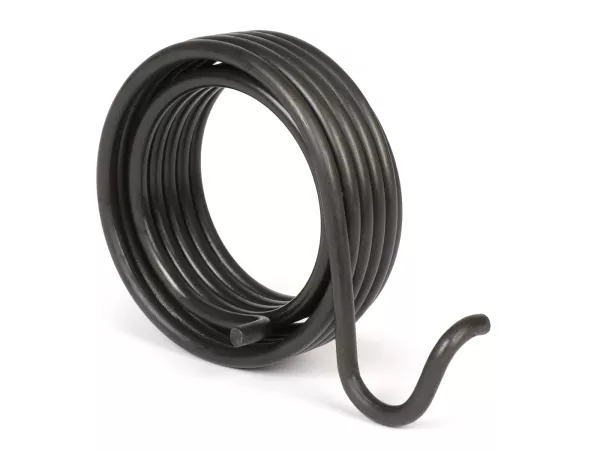
Kickstarter shaft, gears, springs, and small parts are not included
Check used bearings and internal components for wear before reusing them
Installation
Before installation, first check which clutch shaft bearing and which rear brake are installed in the engine. For older engines, the HT Rollingnut is also required to connect to the bearing in the variator cover.
Check the type of clutch shaft bearing
Use the appropriate HT rolling nut for older engines
Check the diameter of the rear brake: Ø 140 mm or Ø 110 mm
If the brake is Ø 110 mm, check the installation space and electric starter configuration
Install the appropriate bearing and required internal components
Check that the clutch shaft, rolling nut, and cover bearing move freely
Before final assembly, check the function of the kick starter and electric starter
Conclusion
The HT Tuning CNC variator cover is designed for Piaggio and Gilera 2-stroke engines with an externally mounted clutch shaft. With the separately available HT rolling groove, the cover can also be used on older engines whose clutch shaft is mounted in the engine block and transmission cover. This also applies to original externally mounted variator covers. For engines with a small Ø 110 mm brake, the restriction remains that the electric starter can only continue to be used after appropriate modifications have been made.
FAQ
No. Although the cover is designed for this generation of engines, it can also be used on older engines—where the clutch shaft is mounted in the engine block and transmission cover—with the separately available HT Rollingnut.
The HT Rollingnut is a special nut for the clutch shaft of older Piaggio and Gilera engines. It connects the older clutch shaft to the bearing in the externally mounted variator cover.
Yes. The HT Rollingnut can be used with both the HT CNC variator cover and a compatible original variator cover of the externally mounted type.
No. The Rollingnut is a separately available accessory and is not included with the Variomatic cover.
When used in combination with the HT Rollingnut, it is compatible with, among others, older models such as the Runner 125 FX, Runner 180 FXR 2-stroke, Italjet Dragster 125/180, and Hexagon LX 125 and LXT 180 models equipped with a large 140 mm rear brake.
Generally, yes. However, on models such as the SKR, TPH 125, or Hexagon EX, the electric starter cannot simply be retained. Either the electric starter must be removed, or the corresponding area must be modified.
No. The rolling groove adapts the clutch shaft to the externally mounted cover. The installation space limitation for engines with a brake smaller than 110 mm in diameter remains.


 DE | €