Postage free from 99€ (DE)
High customer satisfaction


 DE | €
- Scooter 50-850cc
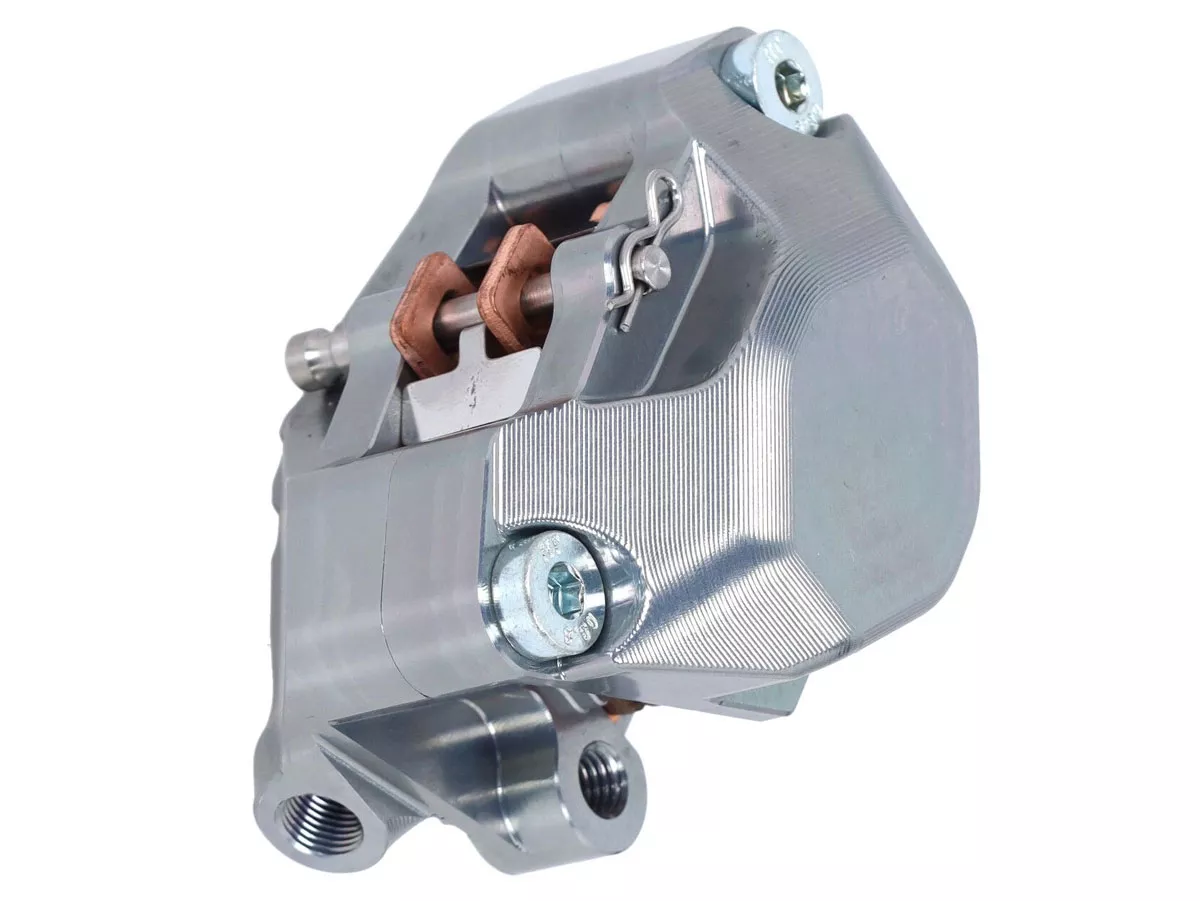
- EVOK Iron Front Brake Caliper, Titanium-Colored, for Vespa ET2, ET4, S, LX, LXV, Primavera, Sprint, Piaggio Zip II, Zip SP, Sfera RST, Liberty

 Made in Italy
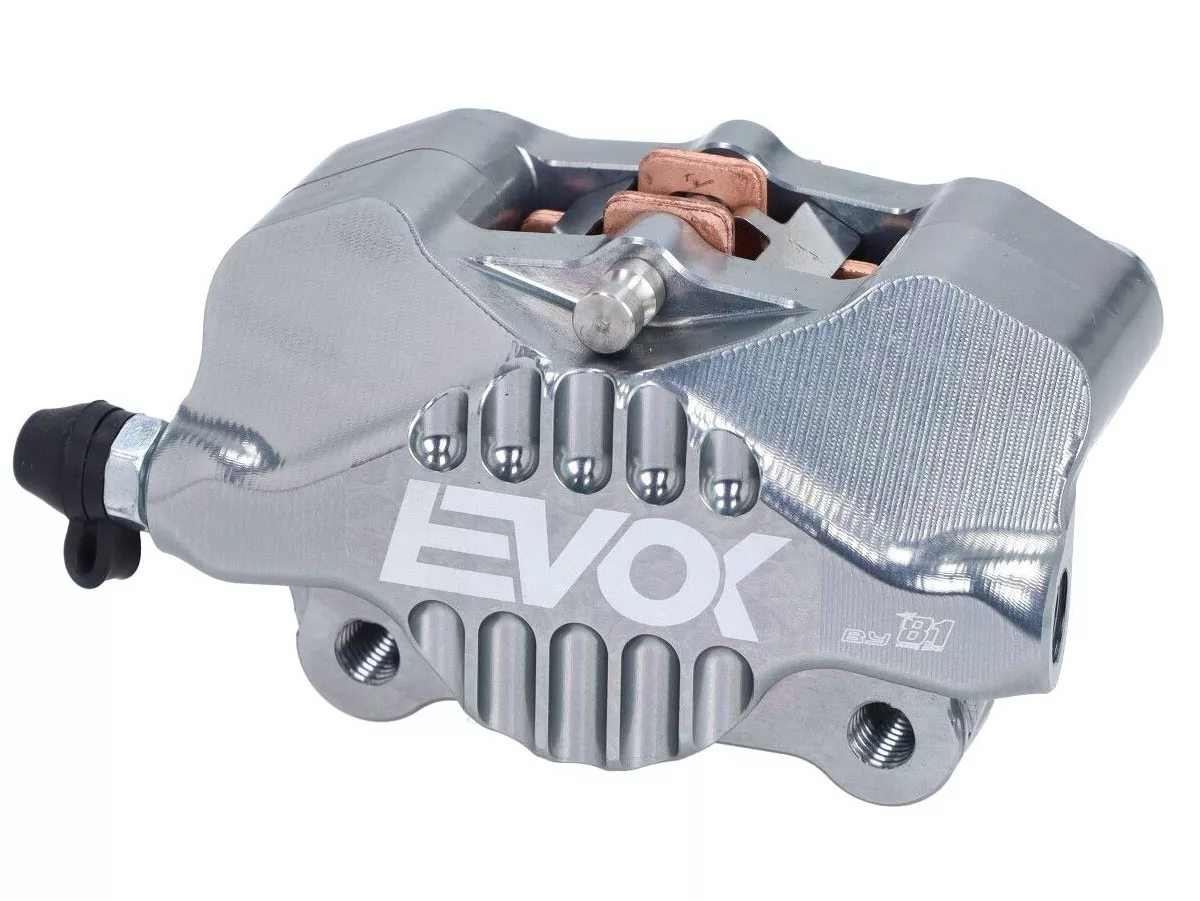
Engineering deserves to be seen – and that is exactly what gives the titanium-coloured EVOK Performance P34 IRON its distinctive appeal. Instead of dominating with a bold colour, this CNC brake caliper goes for an uncompromising mechanical appearance: metallic, precise and almost like a one-off component machined straight from the racing paddock. The bright titanium look makes the contours, machining paths and different surface textures particularly visible, turning the elaborate CNC work itself into part of the design.
EVOK has the P34 manufactured in Italy by 8.1 Ottopuntouno. Inside, two 34 mm brake pistons are at work, while the original brake caliper uses two 30 mm pistons. Pre-installed sintered brake pads complete the package – combining striking CNC aesthetics with a technically interesting change in the hydraulic ratio.
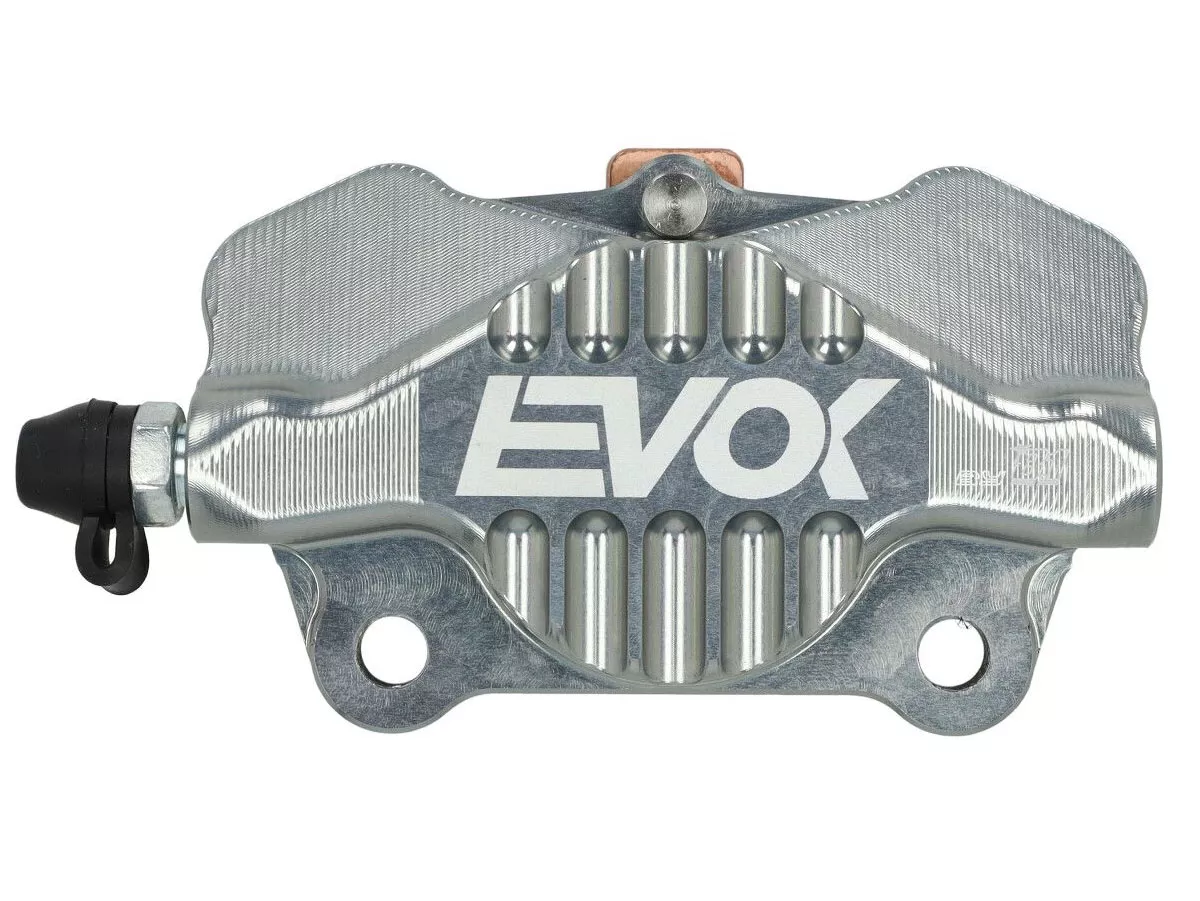
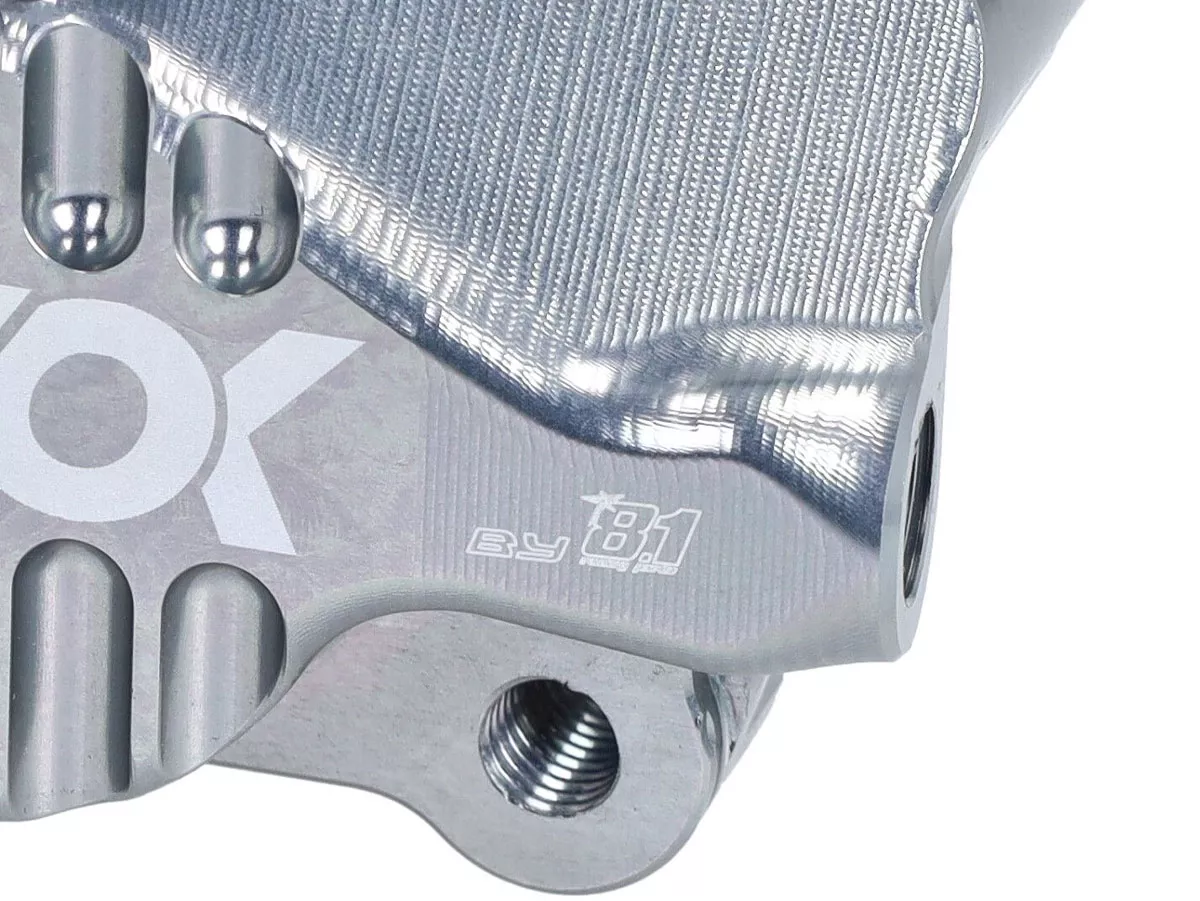
This colour variant shows particularly well just how complex the P34 is. Fine, closely spaced machining marks remain clearly visible across the large outer surfaces. The direction of the CNC patterns changes from one area to another, creating a dynamic interplay between matt, finely textured and more reflective sections.
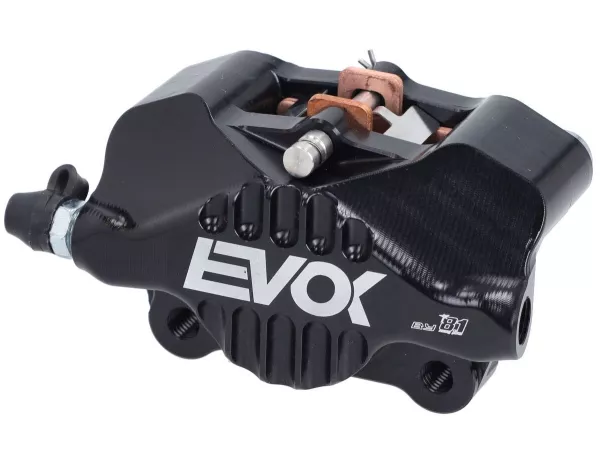
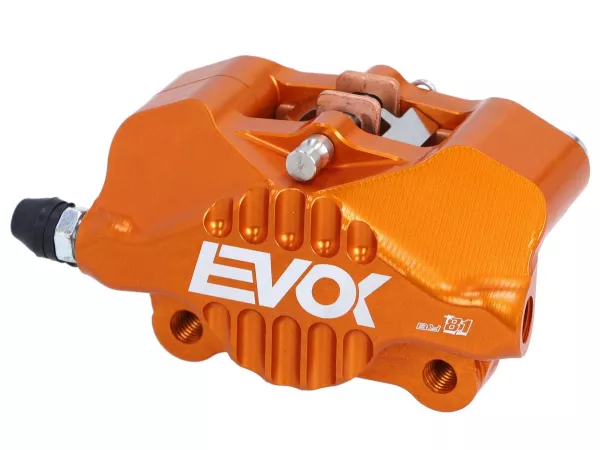
The front is particularly distinctive: the large bright EVOK logo sits centrally between two rows of deeply machined, rounded recesses. Above it, the machined surfaces extend to both sides like wings. The combination of the technical titanium look, visible tool paths and sharply defined transitions gives the brake caliper an almost raw Factory Racing character – premium, functional and deliberately mechanical.
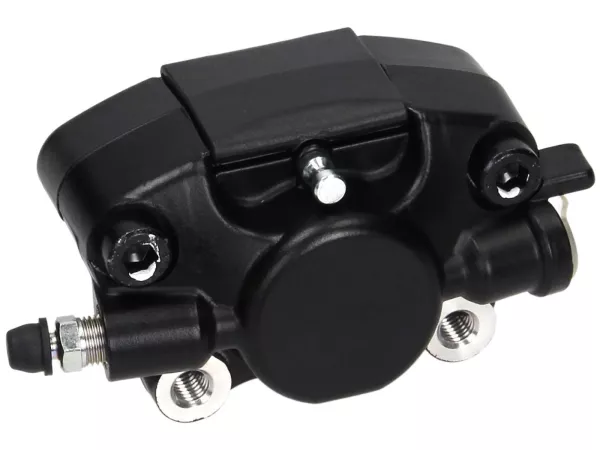
The main technical difference compared with the original brake caliper lies behind the two pistons. The standard caliper uses 2 x 30 mm, while the EVOK P34 uses 2 x 34 mm. Four millimetres more diameter may not sound dramatic at first, but because the circular area increases with the square of the diameter, the resulting difference is considerably greater.
At identical hydraulic line pressure, the approximately 28.4% larger piston area theoretically allows a correspondingly higher clamping force of the brake pads against the brake disc. At the same time, this changes the hydraulic ratio. When used with the original master cylinder, a greater volume of brake fluid must be displaced for the same piston movement, which can also affect lever travel and brake feel.
Important: the 28.4% larger piston area does not automatically mean 28.4% more actual braking performance. The achievable deceleration also depends on factors including the brake disc, brake pads, coefficient of friction, temperature, overall hydraulic setup and tyre grip. However, the larger piston area provides the potential for greater pad clamping force at the same hydraulic pressure.
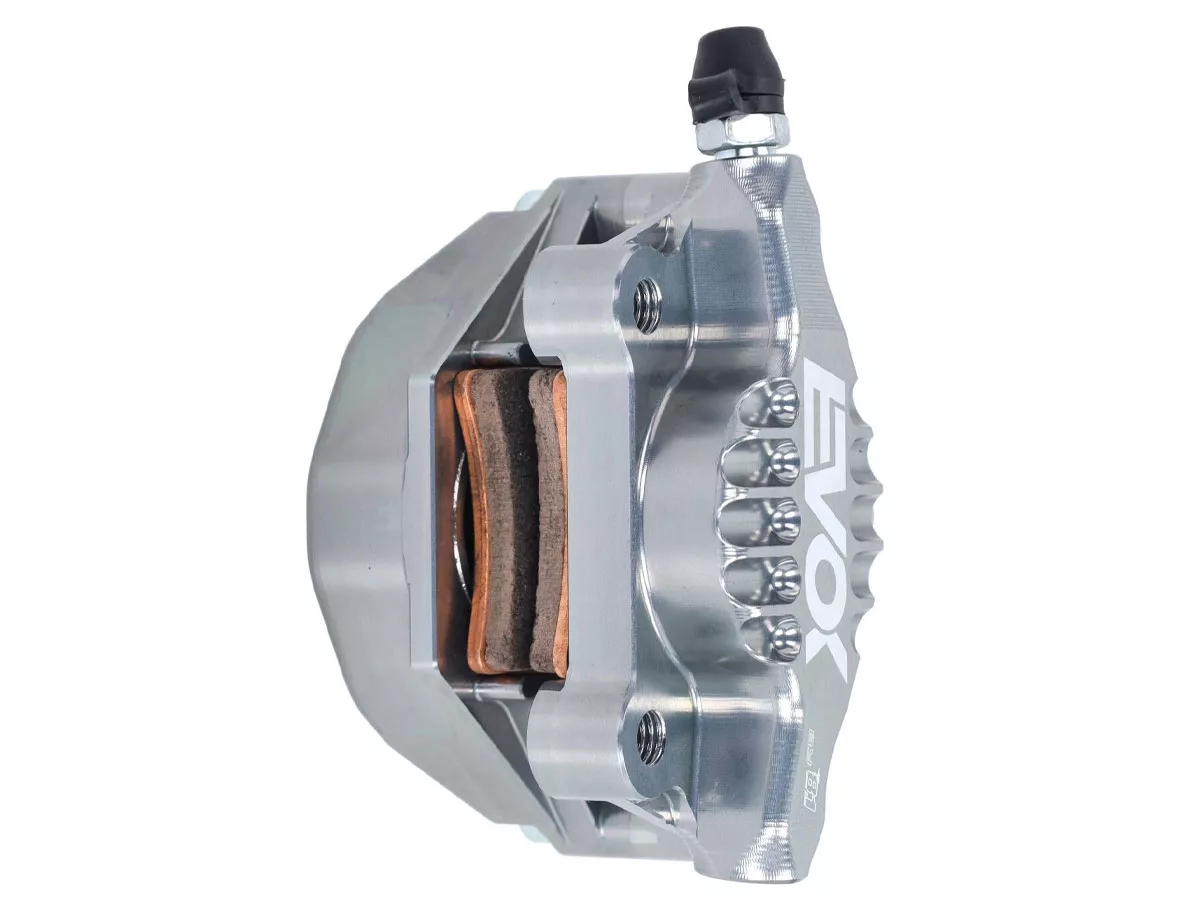
One important detail of the P34 is already taken care of: sintered brake pads are included and come pre-installed in the caliper. In the images, their copper-coloured backing plates are clearly visible between the titanium-coloured CNC surfaces. A retaining pin running through the brake caliper holds the pads in position and is mechanically secured.
This creates an especially appealing contrast on this version: cool metallic surfaces on the outside, copper-coloured elements inside and mechanical details left deliberately visible. The P34 does not look decorated – it looks uncompromisingly technical.
Alongside the large EVOK branding, the detailed view also reveals the subtle “By 8.1” marking. It refers to 8.1 Ottopuntouno, EVOK's Italian manufacturing partner.
On the titanium-coloured version, the manufacturing quality becomes a central design feature. Fine CNC lines remain visible, different machining directions meet deep recesses and precisely defined contours. It is exactly this combination that gives the brake caliper its distinctive character: less colour show, more visible engineering.
Piaggio
Vespa
The titanium-coloured version takes a different approach from black or orange. Here, the focus is not primarily on colour but on the component itself. Machining marks, contours, recesses and mechanical details remain visually prominent, giving the P34 the character of a genuine Factory Racing part.
Behind the look is serious engineering: two 34 mm pistons with approximately 28.4% more effective piston area than the original 2 x 30 mm configuration, plus pre-installed sintered brake pads. For builds where CNC engineering should not be hidden but deliberately put on display, this version hits exactly the right note.
Work on the braking system is safety-critical and should be carried out professionally. After installation, the braking system must be filled and bled according to the manufacturer's specifications and checked for correct operation and leaks.