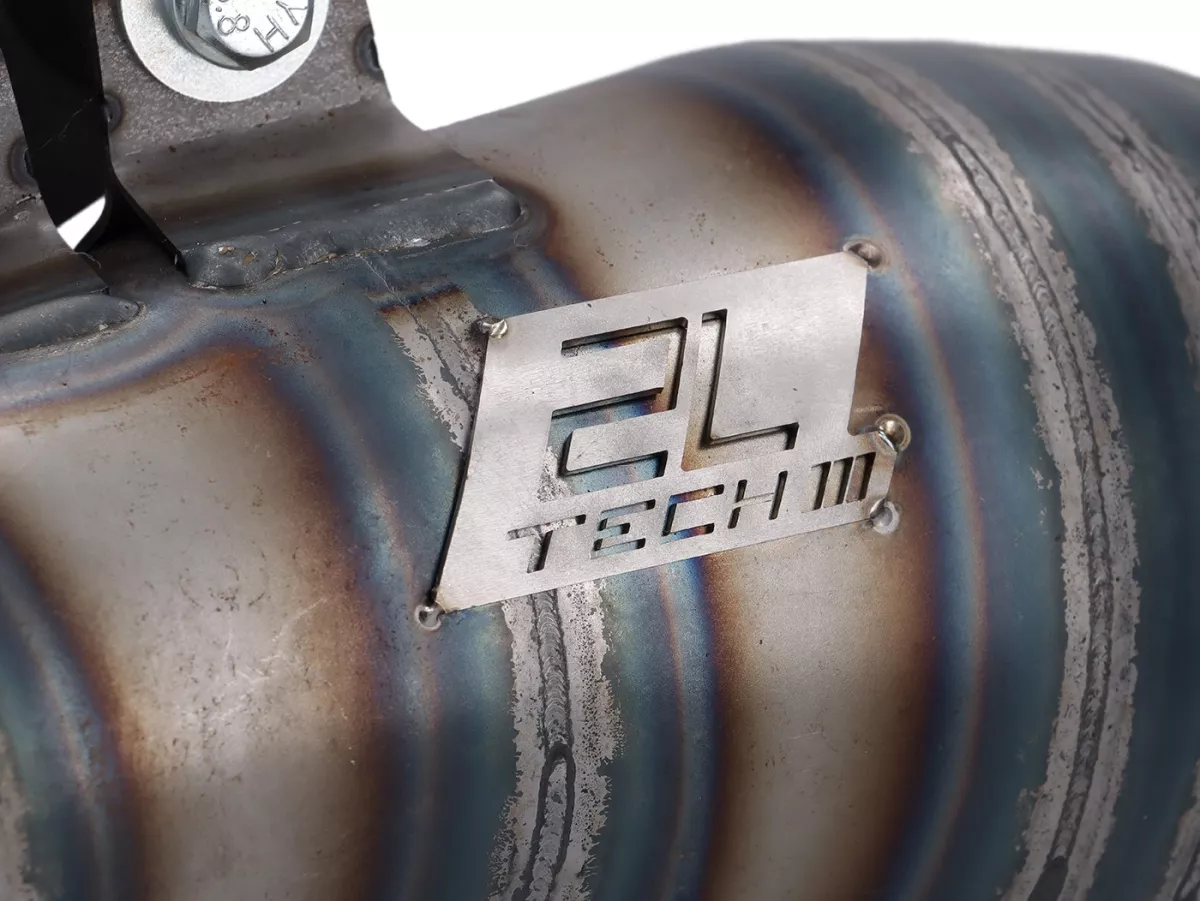
Early torque and a broad power band
The 2LTech MINIGUN M200 LOW PASS is a resonance exhaust system handcrafted in Italy for high-performance Vespa small-frame engines based on the Quattrini M200. Its performance characteristics combine an early, clearly noticeable increase in torque with a wide rpm range and a rich, touring-friendly power delivery.
The resonance range begins as early as between approximately 5,000 and 5,500 RPM. This makes power available early on, and the engine reliably remains within its usable range even after shifting up. With a properly tuned setup, the MINIGUN reaches its peak power output at approximately 8,500 to 9,000 rpm and, depending on the engine configuration, offers a redline range extending to about 10,500–11,000 rpm.
Moved forward—luggage compartment and frame remain intact
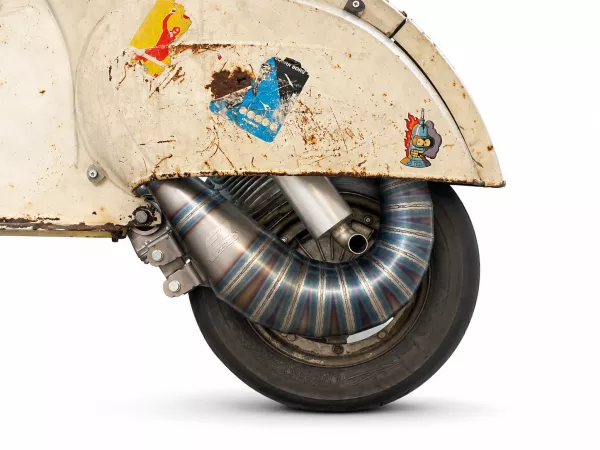
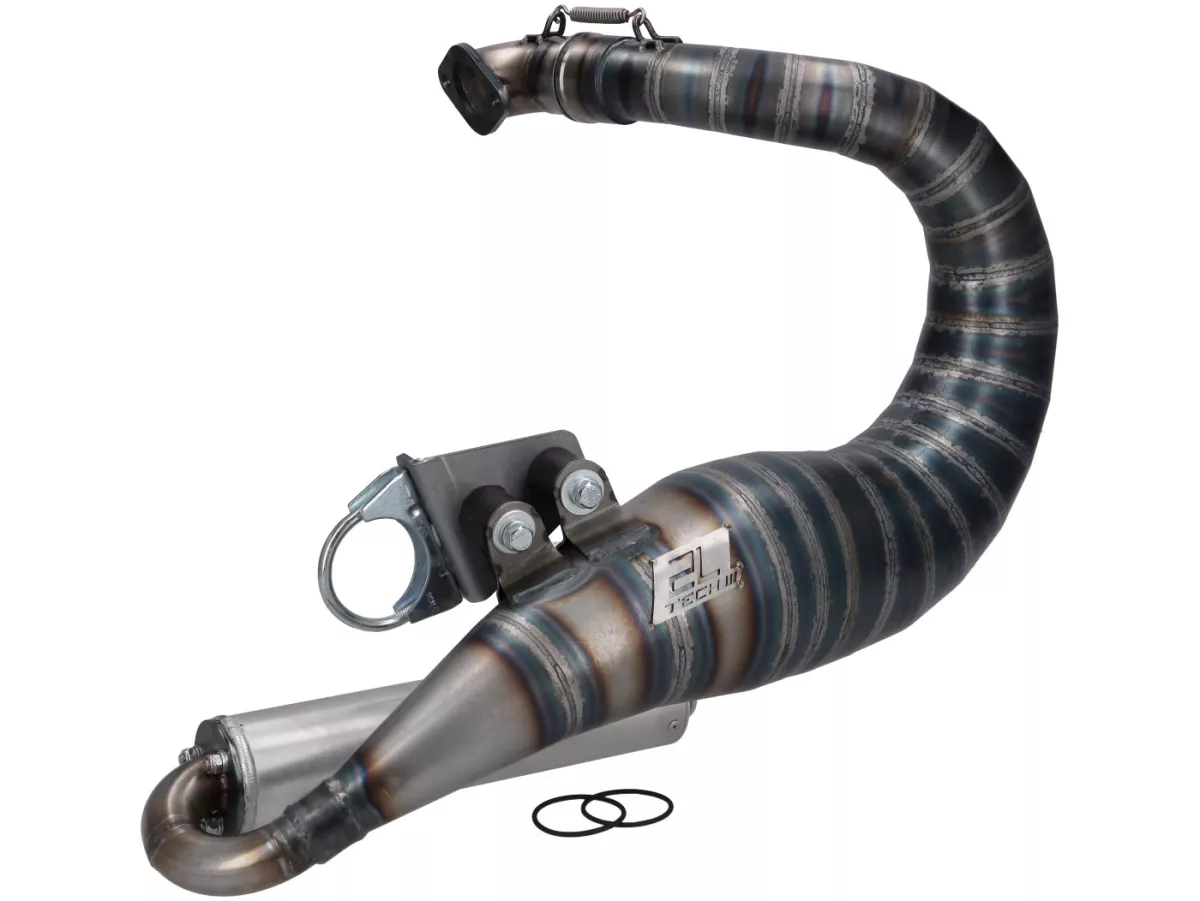
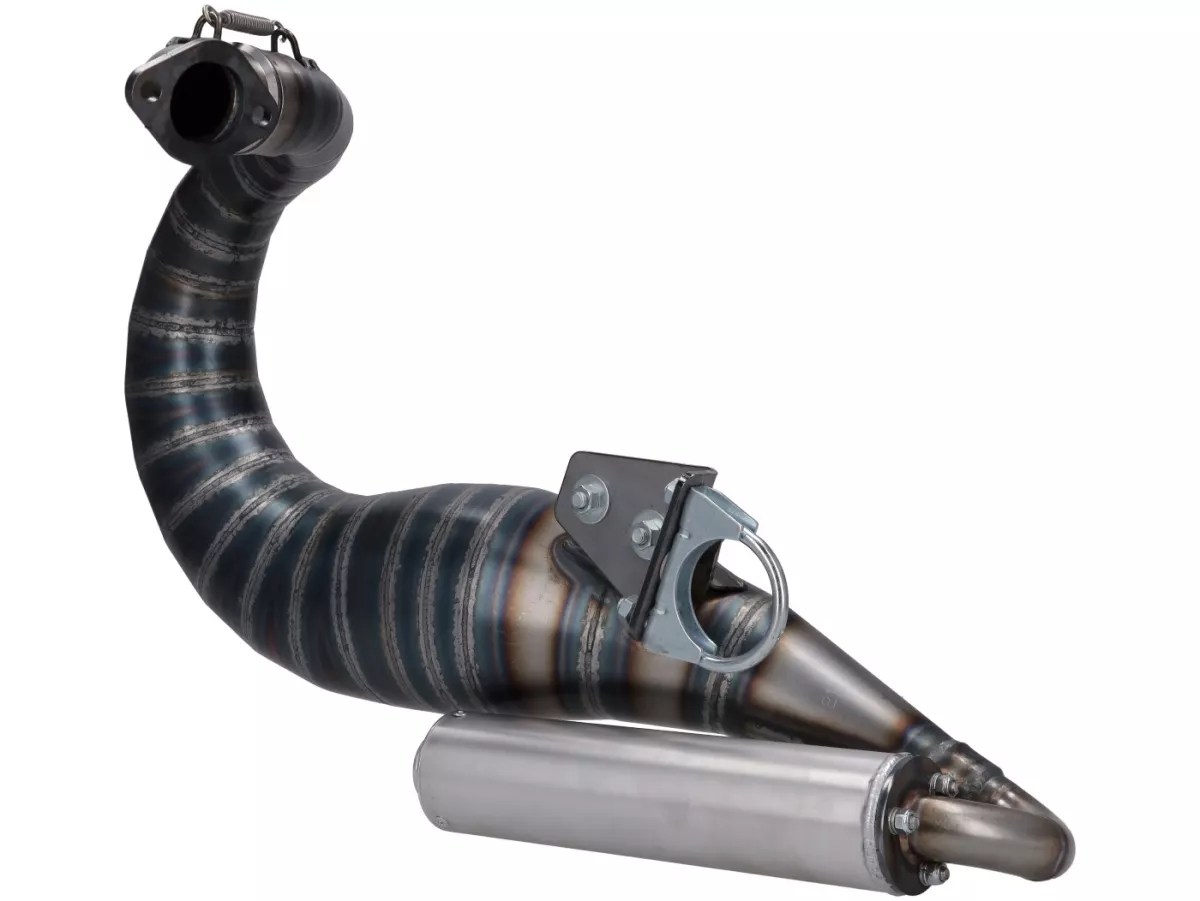
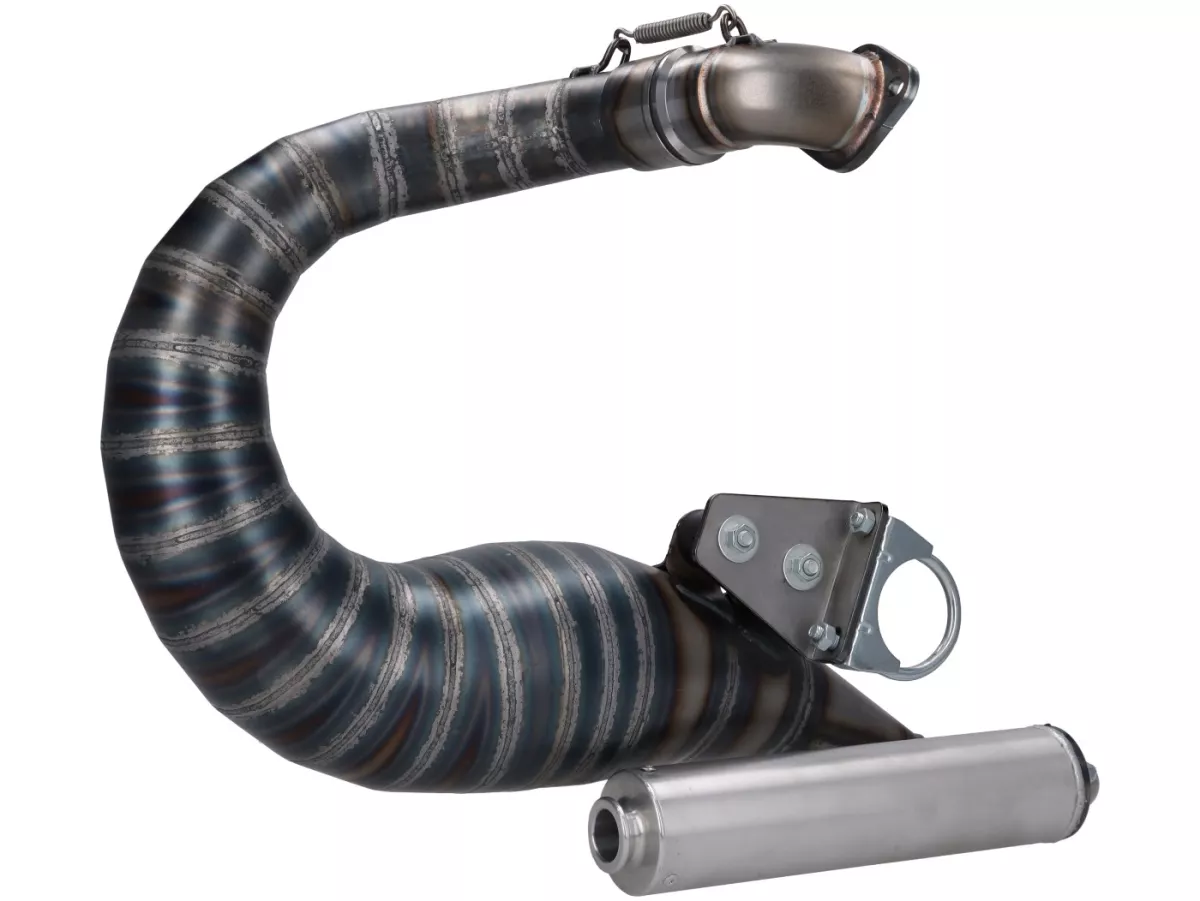
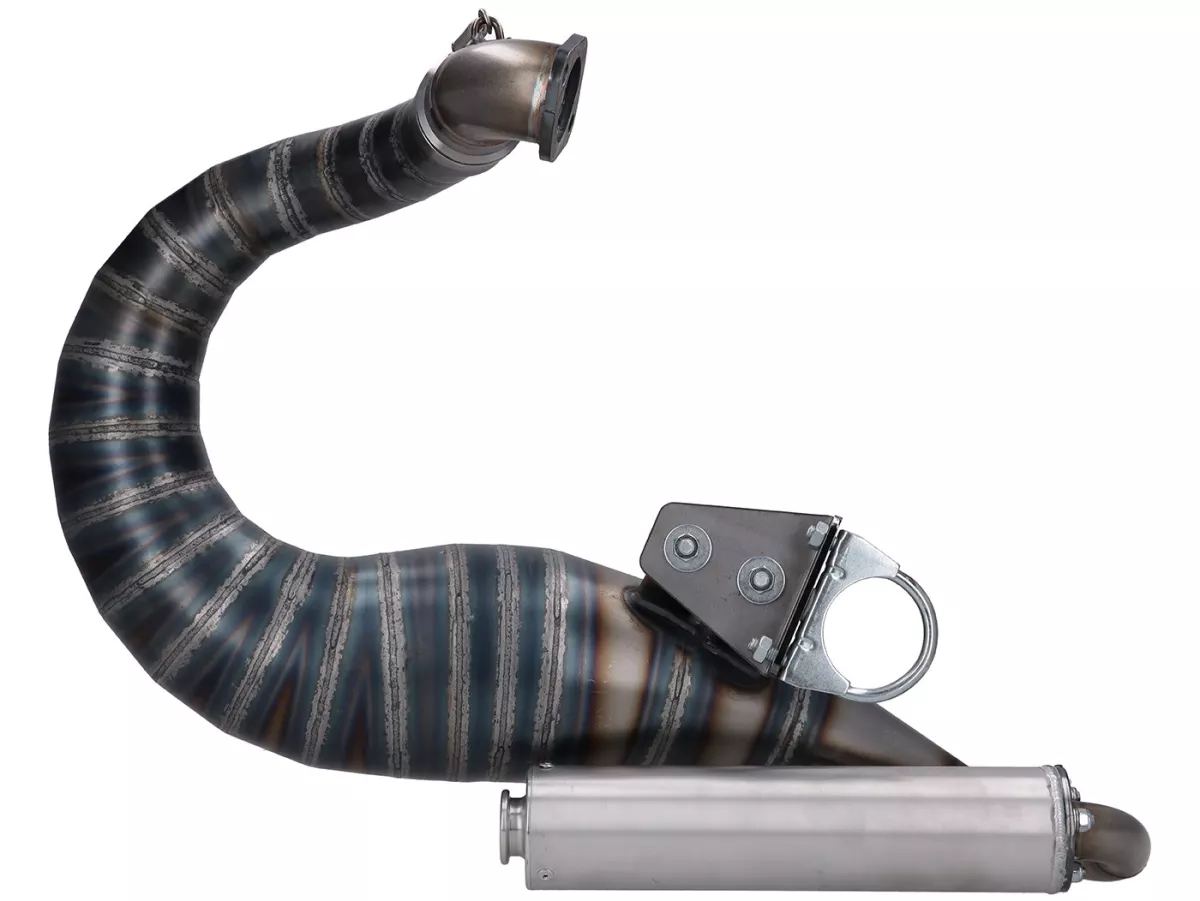
Unlike the Curly version, the LOW PASS is not wrapped around the engine. The resonator runs forward in the direction of travel and makes particularly efficient use of the available installation space.
This makes the system suitable even for Vespa small-frame models with a side luggage compartment. As a result, the LOW PASS is ideal for vehicles that are intended to remain as close to their original appearance as possible, yet deliver significantly increased engine performance that is fully suitable for touring.
Discreetly integrated rear muffler
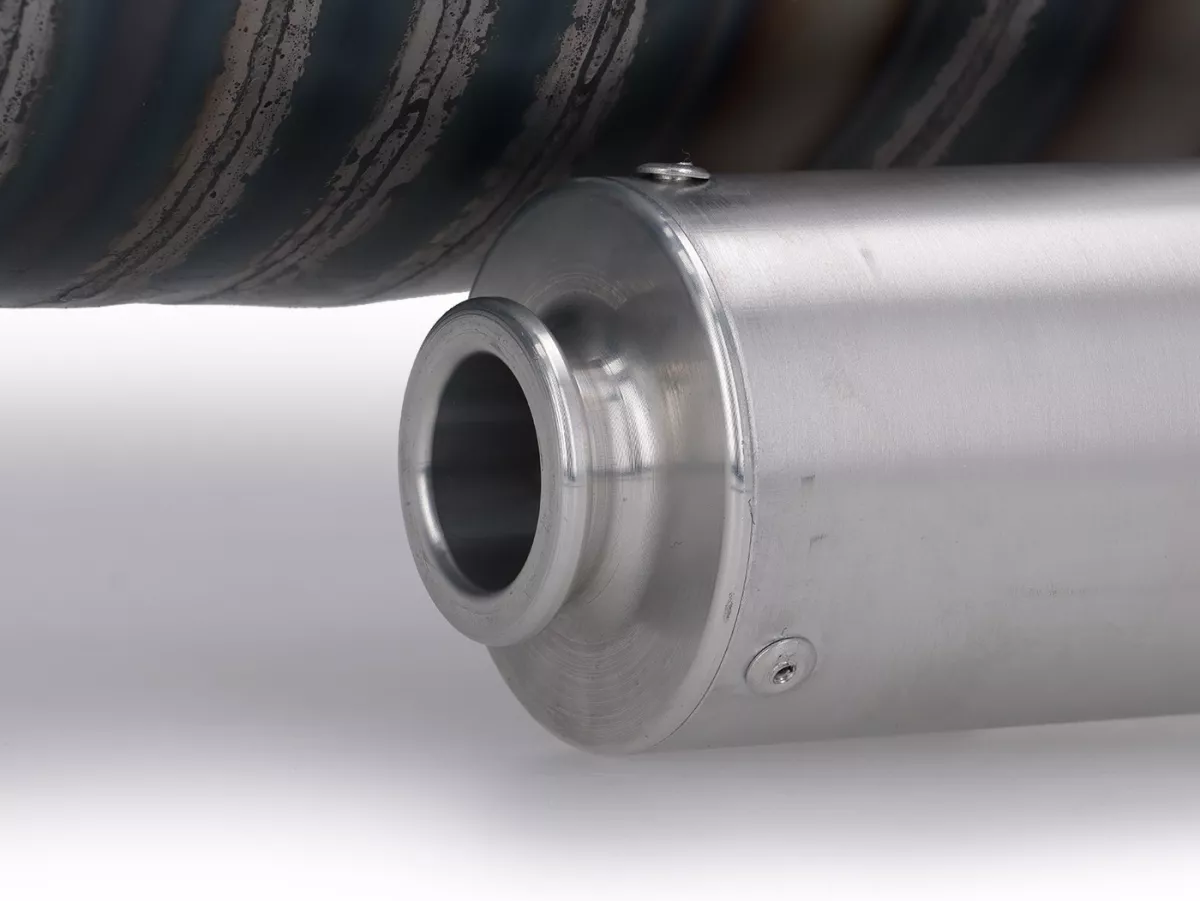
The rear silencer is discreetly positioned behind the resonance chamber. It follows the system’s contours rather than protruding noticeably from the vehicle.
This results in an overall look that is both functional and understated. Especially on vehicles that have been meticulously restored or deliberately kept in their original condition, the LOW PASS blends into the vehicle’s appearance much more harmoniously than many open and conspicuously mounted resonant exhaust systems.
Handcrafted in Italy
Small-batch production
Quattrini M200
EGIG Single
Early resonance inlet
Suitable for luggage compartment
Frame remains original
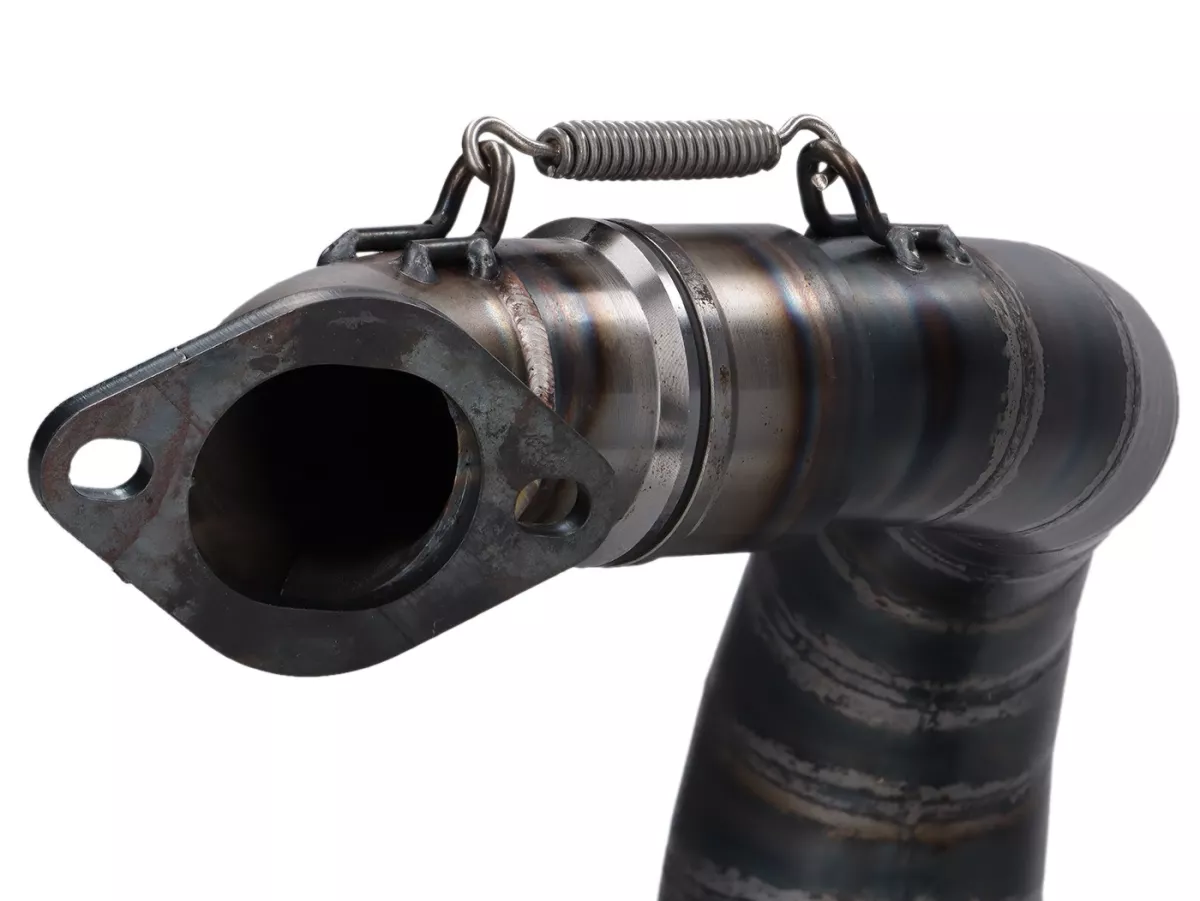
Ø 44 mm
Unpainted
Characteristics of the MINIGUN M200 LOW PASS
Early resonance onset at approximately 5,000–5,500 rpm
Strong torque delivery in the low and mid-range
Wide power band for smooth gear shifts
Peak power range at approximately 8500–9000 rpm
Usable over-rev range up to approximately 10,500–11,000 rpm
Forward-facing resonance chamber instead of a “curly” layout
Suitable for vehicles with a side luggage compartment
Rear silencer discreetly positioned behind the resonance chamber
Ideal for fast street and sporty touring setups
Tuned for the Quattrini M200 and comparable cylinders
The exhaust system was developed primarily for the Quattrini M200. It is designed for cylinders with stock valve timing or an exhaust valve lift of up to approximately 182°. This makes it particularly well-suited for engines that build torque early on yet are designed to rev cleanly into the upper RPM range.
In addition to the Quattrini M200, the system can also be used with appropriately configured EGIG 205, 210, and 220 single-cylinder engines. The key factors are the matching 44 mm exhaust port diameter, the exhaust valve timing, and the overall engine configuration.
Application
| Vehicle Type |
Vespa Smallframe, including the PV125 and ET3 |
| Main Application |
Quattrini M200 |
| Other Cylinders |
EGIG 205, 210, and 220 Single with compatible configuration |
| Exhaust port |
Ø 44 mm |
| Recommended exhaust timing |
Standard timing up to approximately 182° |
| Installation |
LOW PASS, facing forward in the direction of travel |
| Luggage compartment |
Suitable for vehicles with a side luggage compartment |
| Frame |
Original frame structure can be retained |
| Rear muffler |
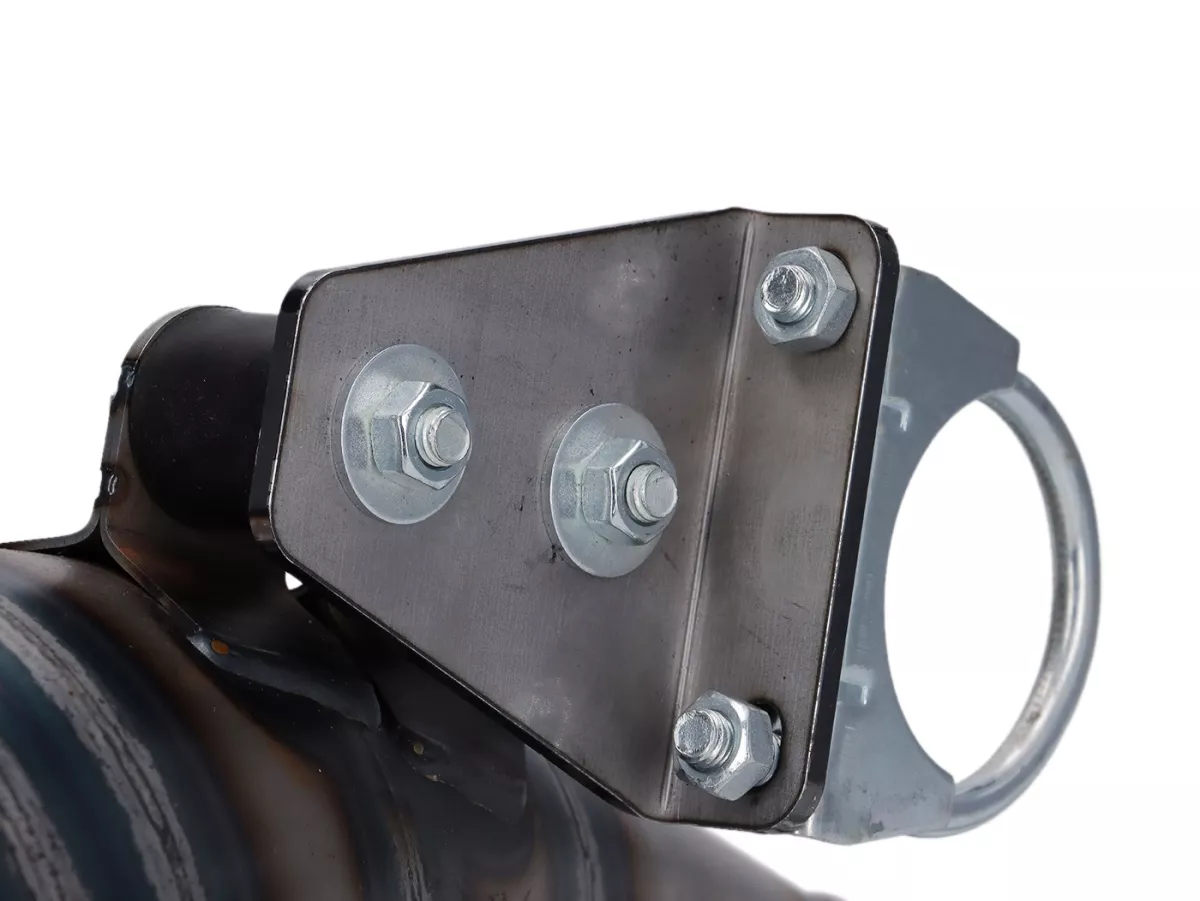
Discreetly positioned behind the resonator, bolted in place, and removable |
| Finish |
Unpainted |
Handcrafted in small batches in Italy
2LTech exhaust systems are not mass-produced industrial products. The individual segments are manufactured in small batches, precisely aligned, and hand-welded into a complete resonator.
In the LOW-PASS version, the position of the cones, the routing of the manifold, and the compact arrangement of the resonator and rear silencer are particularly crucial. The result is a functional, vehicle-specific system with the characteristic segmented appearance of a handcrafted resonant exhaust.
Manufacturing and Design
Manufactured in Italy
Produced in small batches
Resonance chamber made from individually formed segments
Aligned and welded by hand
Installed close to the vehicle, facing forward in the direction of travel
Rear silencer discreetly positioned behind the resonator
Bolt-on, removable rear silencer
Delivered unpainted for custom surface treatment
Performance without noticeable frame modifications
The LOW PASS is designed for riders who want a high-performance resonant exhaust system without fundamentally altering their vehicle’s character. The side storage compartment can be retained, and the original frame structure does not need to be modified to accommodate the exhaust routing.
This makes the system particularly suitable for high-quality restorations, discreet “sleeper” conversions, and fast touring vehicles. Visually, the scooter retains a understated appearance, while the engine benefits from the MINIGUN’s rich torque delivery and wide usable rpm range.
Advantages of the LOW-PASS layout
The resonator runs forward in the direction of travel
No typical “curly” routing around the engine
Suitable for Vespa small-frame models with a side storage compartment
Original frame structure can be preserved
The rear muffler is discreetly positioned behind the resonator
Discreet appearance despite a full-fledged resonant exhaust system
Ideal for fast, touring-capable vehicles with a classic look
Delivered unpainted
The MINIGUN is delivered unpainted. This allows the system to be treated with a custom corrosion protection coating to match the vehicle, the desired look, and the intended use.
Determine corrosion protection before use
The untreated surface should be protected against corrosion before or upon first use. Depending on the desired look and intended use, various options are available:
Painting: using a heat-resistant coating system suitable for exhaust temperatures
Electroplating: for a durable metallic surface treatment
Flame spraying: as a durable thermal metal coating
Heat-resistant tape: Wrap the system with suitable heat-resistant tape
Oiling: Regularly apply a thin layer of suitable oil to the untreated surface to preserve it
If used without a permanent coating, the surface must be inspected, cleaned, and lightly re-oiled on a regular basis. Re-preservation is particularly important after driving in the rain, washing the vehicle, or extended periods of inactivity.
RPM Range at a Glance
| Speed range |
Character |
| below approx. 5,000 rpm |
Usable pre-resonance range for starting and smooth driving |
| approx. 5,000–5,500 rpm |
Start of the resonance range and significant increase in torque |
| approx. 5,500–8,500 rpm |
Wide usable power range for acceleration and gear changes |
| approx. 8,500–9,000 rpm |
Peak power range with a properly tuned engine |
| up to approx. 10,500–11,000 rpm |
Revving reserve depends on the cylinder, valve timing, and the rest of the setup |
The specified RPM ranges describe the intended operating range. Actual performance depends, among other factors, on cylinder machining, compression, ignition, carburetor, intake system, and gear ratio.
For which engines is the MINIGUN suitable?
The MINIGUN is designed for engines where high power should be available not only at extreme RPMs. It is particularly well-suited for high-displacement small-frame designs with strong torque that are ridden on the road, on fast tours, or in a sporty manner.
Typical Applications
Quattrini M200 with stock-like valve timing
M200 builds with exhaust valve lift increased to approximately 182°
EGIG 205, 210, and 220 Single with matching exhaust configuration
High-torque street engines with longer gear ratios
Sporty touring engines with a wide usable RPM range
Bikes with side luggage compartments
Subtle performance modifications with the original frame structure preserved
Setups where an early gear engagement is more important than a narrow high-rpm range
Tuning and Installation
A high-performance resonant exhaust system significantly alters airflow and, consequently, the requirements for carburetor tuning and ignition timing. After installation, the carburetor jets, ignition, and, if necessary, the gear ratio must be adjusted to match the engine’s new characteristics.
Determine the desired corrosion protection before installation
Re-tune the carburetor jets after installation
Check the ignition timing to ensure it matches the cylinder and compression ratio
Check the compression ratio and compression band of the engine
Adjust the primary gear ratio and gear spacing to the usable RPM range
Install the exhaust system without applying tension
Check for clearances to the frame, luggage compartment, tires, and moving parts
Take engine movement into account during compression and rebound
Check bolted connections after the first heat cycles
Conclusion
The 2LTech MINIGUN M200 LOW PASS combines the MINIGUN’s early resonance onset and broad power band with an exhaust route that runs forward, hugging the vehicle closely.
The system is suitable for vehicles with a side luggage compartment and for conversions where the original frame structure is to be preserved. The rear muffler, discreetly positioned behind the resonator, further ensures a low-key appearance.
This makes the LOW PASS a particularly appealing solution for Quattrini M200 and comparable EGIG single-cylinder engines, which are designed to deliver rich, early-kicking power suitable for touring without the scooter losing its classic and largely original appearance.
FAQ
The system was developed primarily for the Quattrini M200. It can also be used with appropriately modified EGIG 205, 210, and 220 single-cylinder engines.
The performance characteristics are comparable. The main difference is the physical layout: On the LOW PASS, the resonator runs forward in the direction of travel, while the Curly version is routed compactly around the engine.
Yes. The forward-running LOW-PASS layout is suitable for Vespa small-frame models with a side storage compartment.
The system is designed for vehicles where the original frame structure is to be retained. Actual clearance must be checked during installation on the specific vehicle and engine configuration.
The rear silencer is discreetly positioned behind the resonator. This keeps the overall appearance of the system relatively unobtrusive and close to the vehicle.
2LTech recommends this system for the Quattrini M200 with stock exhaust valve timing or with exhaust valve timing advanced up to approximately 182°.
Depending on the engine configuration, the resonance range begins at approximately 5,000 to 5,500 RPM. This means that performance for a system in this class kicks in relatively early.
Yes. The early torque build-up and the broad usable power band make this system particularly appealing for fast, sport-oriented touring setups. This requires appropriate engine tuning and gear ratios.
No. The MINIGUN is delivered unpainted. The surface must be protected against corrosion with a suitable coating or regular preservation treatment.
Yes. The rear silencer is bolted on and can be removed for inspection, maintenance, or refilling.


 DE | €