Postage free from 99€ (DE)
High customer satisfaction


 DE | €
- Scooter 50-850cc
- PIAGGIO Piston, LC 125 Ø=57.0 mm, Category (2/B) for Vespa GT L 125 (2003–2005), GTS 125 (2007–2012), GTS Super 125 (2009–2016), GTV 125 (2006–2008)

Original Piaggio pistons for liquid-cooled 125cc four-stroke engines of the LEADER series with a four-valve cylinder head. These pistons are designed for repairing the cylinder and piston assembly and are available in four precisely matched size categories.
Depending on the cylinder dimensions, categories A, B, C and D, also designated 1, 2, 3 and 4, are available. This classification makes it possible to select the correct piston size for the existing cylinder during replacement. Accurate matching is essential for achieving the specified piston-to-cylinder clearance and ensuring a professional engine repair.
LEADER is the designation of an engine family developed by the Piaggio Group. These engines were produced in different displacement classes and in both air-cooled and liquid-cooled versions. They were used across several brands in numerous scooters from Vespa, Piaggio, Gilera, Aprilia and Derbi.
The 125cc LEADER LC version described here is a liquid-cooled, single-cylinder four-stroke engine with four valves and an overhead camshaft. The engine has an actual displacement of approximately 124cc, a cylinder bore of 57mm and a piston stroke of 48.6mm.
The abbreviation LC stands for Liquid Cooled. Heat is dissipated through a coolant circuit, helping to regulate the temperature of engine components exposed to high thermal loads.
Power is transmitted through an automatic variator transmission. Depending on the vehicle model and production year, the engines were equipped with different fuel delivery systems.
The LEADER engine family includes several technically different versions. Therefore, selecting the correct replacement part requires more than identifying the engine as a LEADER unit. The specific engine version must also be considered. These pistons are intended for the corresponding liquid-cooled 125cc four-valve engines.
Piaggio offers these pistons in four size classes. The categories account for the dimensional variations specified during the manufacturing process of pistons and cylinders.
The following versions are available:
Categories A to D represent different dimensional classifications within the standard cylinder dimensions. They are not conventional repair oversizes that require a worn cylinder to be rebored to a significantly larger diameter.
Before ordering, the required category must be determined using the cylinder identification marking and the actual measured dimensions. The individual categories must not be interchanged without appropriate dimensional checks.
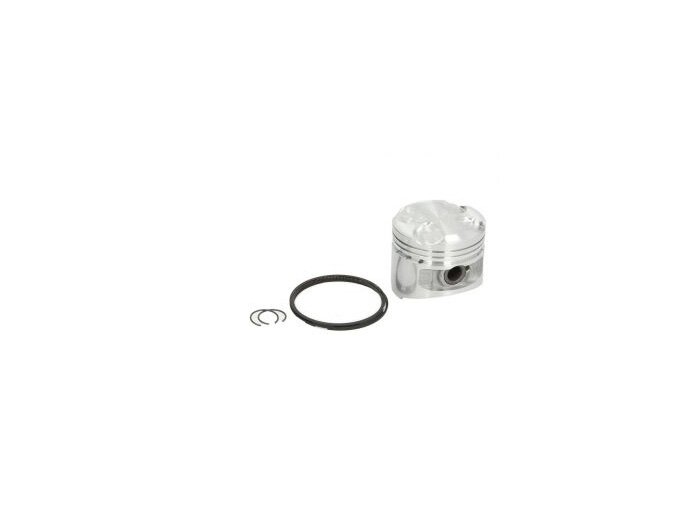
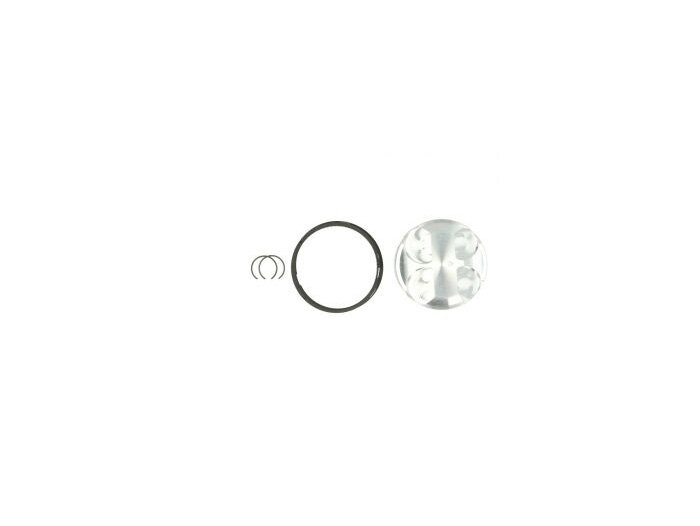
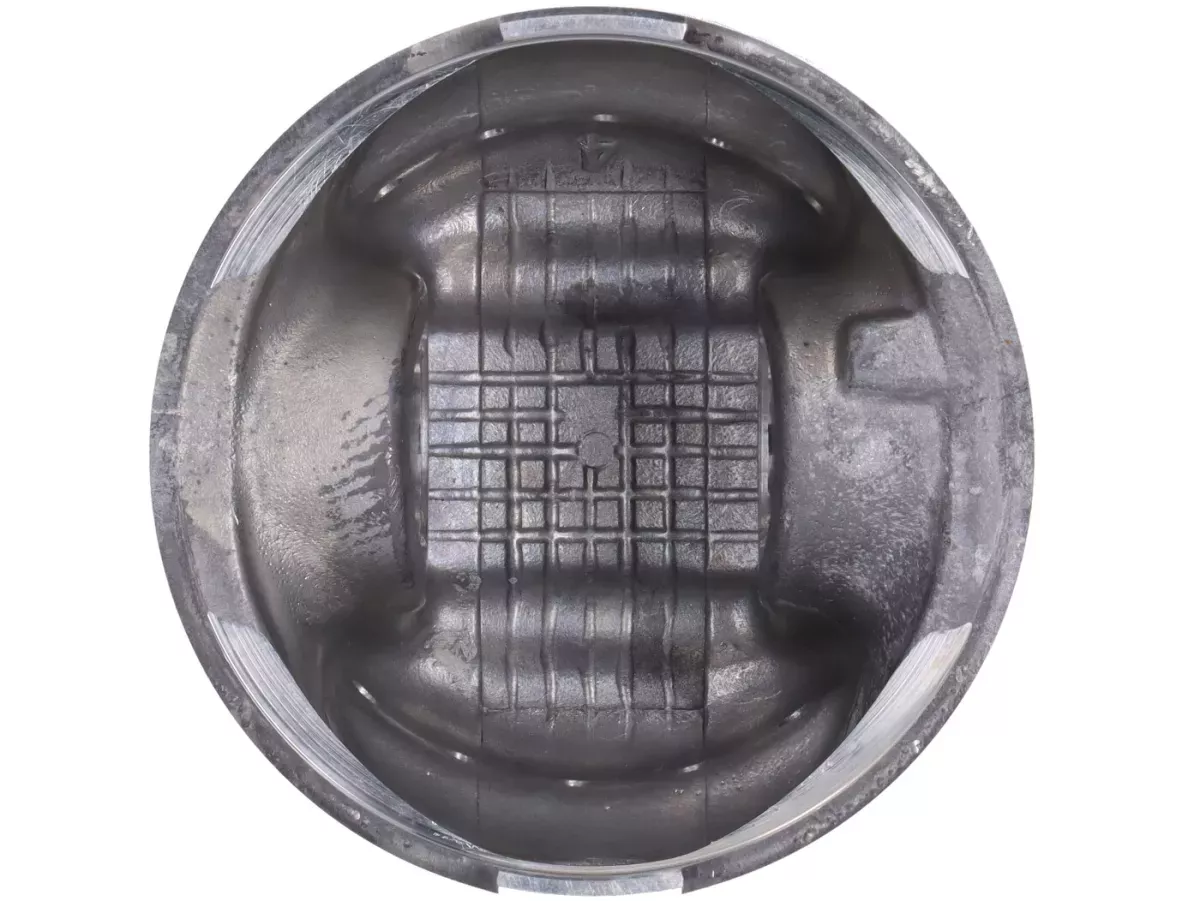
The piston features a bright metallic crown with specially shaped recesses. These contours are designed to match the combustion chamber geometry and valve arrangement of the corresponding four-valve cylinder head.
The piston crown forms part of the combustion chamber geometry and, together with the cylinder head, influences the shape of the combustion space. The integrated valve pockets provide the necessary clearance in the valve area.
Below the piston crown are the grooves for the piston rings. The ring assembly seals the combustion chamber, supports heat transfer to the cylinder wall and regulates the lubricating oil film.
The lateral piston pin bosses connect the piston to the connecting rod through the piston pin. Reinforcing ribs and the internal piston structure are visible on the underside. Together with the piston pin bosses, these components form the mechanically loaded connection between the piston and connecting rod.
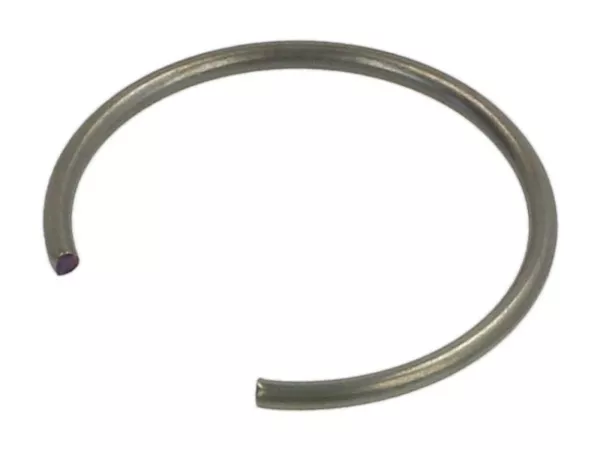
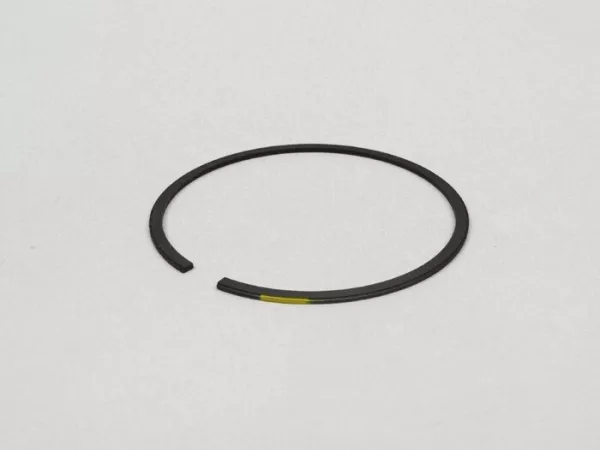
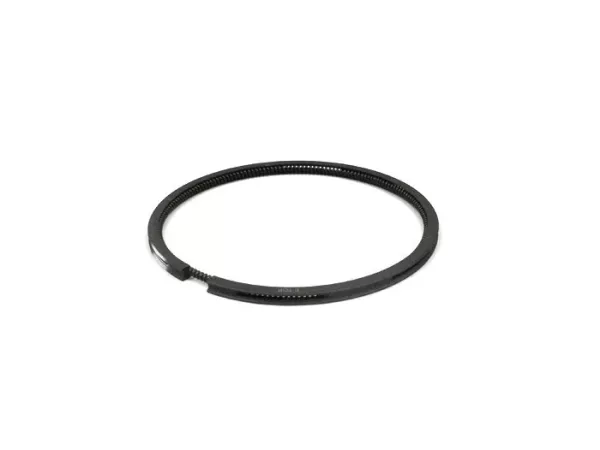
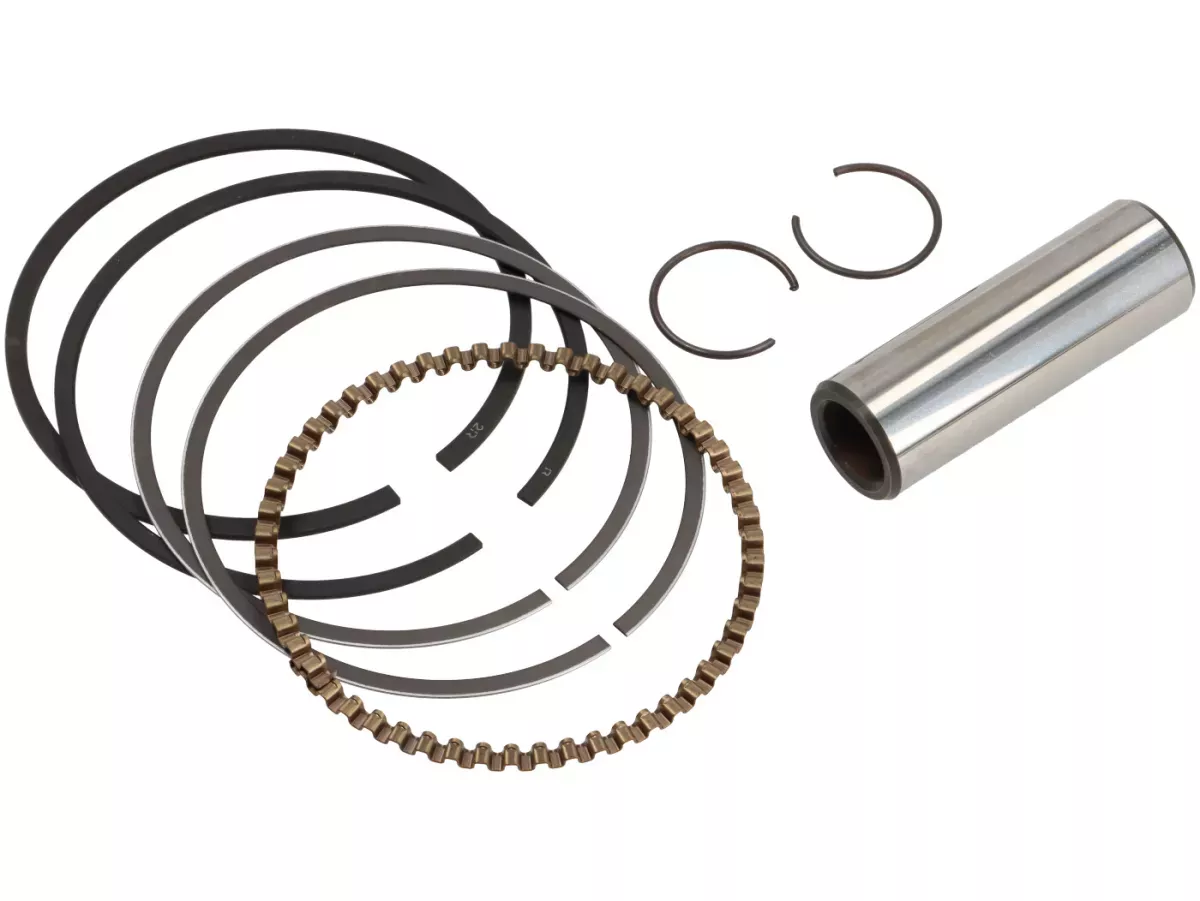
In addition to the piston, the product images show the corresponding piston rings, piston pin and two piston pin retaining clips.
The ring assembly consists of two compression rings and a multi-piece oil control ring. Each ring performs a different function:
The piston pin provides the movable connection between the piston and connecting rod. The two retaining clips prevent the piston pin from moving sideways during engine operation.
During installation, the specified mounting orientation of the piston rings, ring end gaps and positioning of the ring gaps must be observed. The piston pin retaining clips must also be correctly seated.
The vehicle compatibility list refers to the corresponding versions equipped with the liquid-cooled Piaggio 125cc LEADER four-valve engine. Since different engine versions were used within certain model ranges, the engine version, original part number and required piston category must be checked before ordering.
Before replacing the piston, the condition of the cylinder must be inspected. In particular, the cylinder bore must be checked for wear and damage, and the actual cylinder diameter must be measured.
The correct piston category must be selected according to the manufacturer's specifications and the measured dimensions. The specified piston-to-cylinder clearance must be maintained. Selecting a piston solely by vehicle designation or production year is not sufficient to ensure correct compatibility.
The piston ring end gaps, piston installation orientation, correct arrangement of the piston rings and secure retention of the piston pin must also comply with the technical specifications.
During the repair, it is also advisable to inspect the connecting rod, piston pin bearing, cylinder head and valve train. If additional components show signs of wear or damage, they must also be repaired or replaced.
Correct piston selection and professional installation are essential for reliable combustion chamber sealing, controlled heat dissipation and proper engine operation.
With four piston categories available, Piaggio makes it possible to select the appropriate dimensional version for the existing cylinder when repairing a 125cc LEADER LC engine.
These original pistons are intended for technically correct repairs of the corresponding liquid-cooled four-valve engines. The decisive factor is not only compatibility with the vehicle model, but above all the precise matching of piston and cylinder.
A suitable replacement part for professional repairs and overhauls of 125cc four-stroke engines used in numerous Vespa, Piaggio, Gilera, Aprilia and Derbi models.