Clutch Hub / Base Plate for Cosa2 Clutches
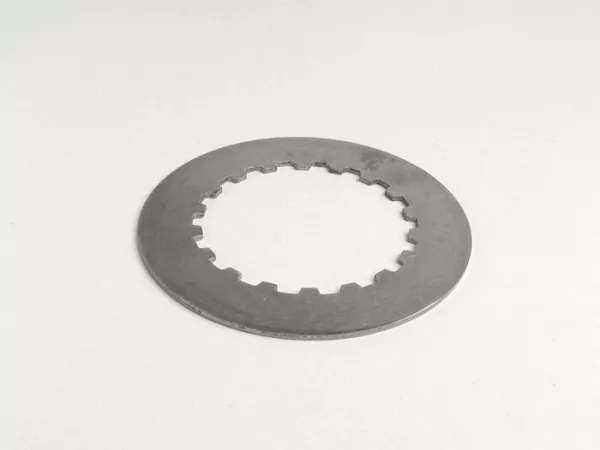
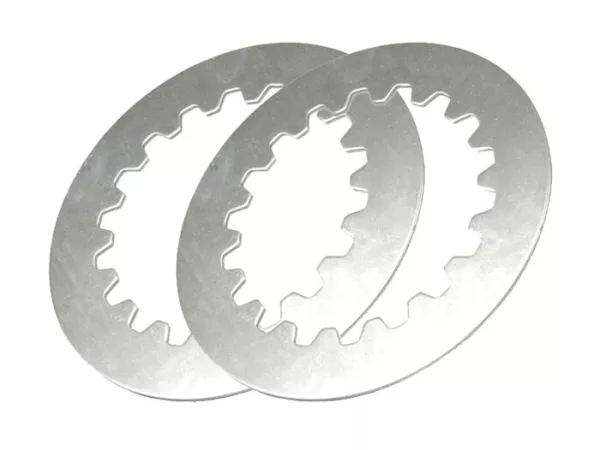
The clutch hub, or base plate, is the central internal component of the Cosa2 clutch. It is mounted on the crankshaft and guides the clutch pinion through its bearing sleeve.
Depending on the item, the hub is available from FA Italia, Piaggio, PREDIERI & ABBATE, or BGM PRO.
Important: Correct play of the clutch pinion
When the clutch is fully assembled, the clutch pinion should have an axial clearance of approximately 0.2 to 0.4 mm. It is crucial that the pinion can rotate freely without having excessively large clearance.
Excessive axial play reduces the clutch’s available disengagement travel and can result in the clutch failing to disengage cleanly or making it difficult to engage or disengage gears while the vehicle is stationary.
Check the Sleeve and Radial Play
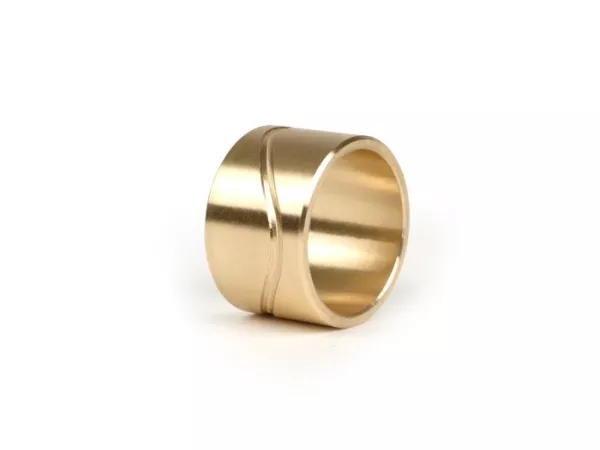
For smooth and jerk-free clutch operation, the fit between the clutch pinion, bearing sleeve, and hub is also important. If the outer diameter of the sleeve is too small or the sleeve is already worn, excessive radial play results.
This can cause the pinion to tilt or jam on the hub. The result can be a clutch that jerks severely or operates unevenly. During an overhaul, the bushing and pinion should therefore always be checked together for wear and play.
Check the key during installation
The key (or crescent key) must sit completely and straight in the groove of the crankshaft. It must not stand upright when the hub is slid onto the crankshaft.
A key that is raised prevents the hub from sitting completely on its intended contact surface. If the clutch nut is then tightened, the hub can become distorted. In the worst-case scenario, it may crack or become damaged, which could cause the clutch to come loose on the crankshaft later on.
When the coupling is installed correctly, engine torque is transmitted primarily through the frictional grip of the hub on the crankshaft. The key serves primarily to ensure correct positioning during installation and to prevent rotation when tightening the coupling nut.
Tightening Torque
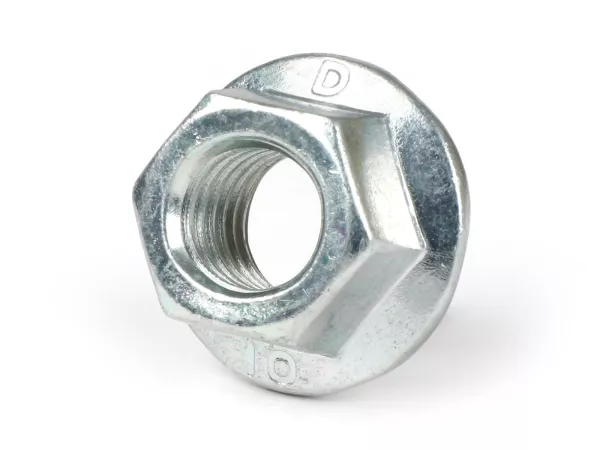
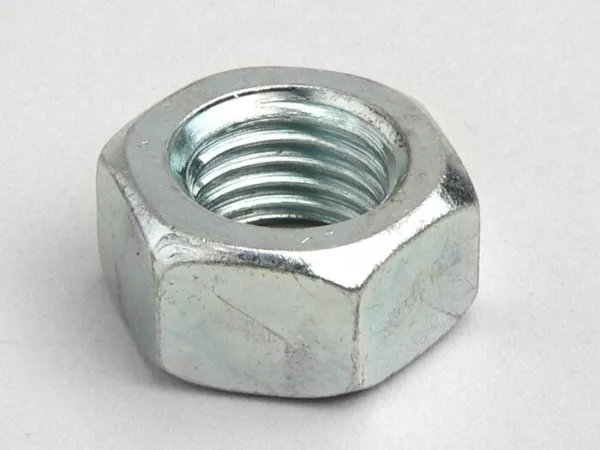
The recommended torque for the clutch nut on a Vespa Largeframe is 40–45 Nm. If the manufacturer of the clutch or the fasteners used specifies a different torque value, that specification takes precedence.
The hub is a wear part
The teeth on the clutch hub are intentionally designed to be the softer component of the connection. The corresponding counterpart in the clutch basket is hardened. This ensures that, in the event of wear, the hub—which is comparatively easy to replace—wears out first, rather than the significantly more complex clutch basket.
Therefore, the teeth should be inspected regularly, especially on high-performance or tuned engines. Worn, significantly thinned, or deformed tooth flanks are a sign that the hub should be replaced.
Installation Check
- Insert the key fully and straight into the crankshaft groove
- The hub must sit completely on the crankshaft without any binding
- Check that the clutch pinion runs smoothly
- Axial play of the pinion: approx. 0.2–0.4 mm
- Check the bearing sleeve for wear and excessive radial play
- Tighten the clutch nut to 40–45 Nm or according to the manufacturer’s specifications
- For tuned engines, check the hub’s teeth regularly
Compatible with Cosa2 clutches, including those in
- Vespa PX125, PX150, and PX200 with Cosa2 clutches
- Vespa Cosa 2 125, 150, and 200
- LML Star / Stella 125 and 150 2-stroke models equipped accordingly
Note: For older or modified vehicles, check which clutch is actually installed before ordering. The condition of the hub, pinion, bushing, and thrust washers should be assessed together during every clutch overhaul.


 DE | €