Postage free from 99€ (DE)
High customer satisfaction


 DE | €
- Vespa Classic
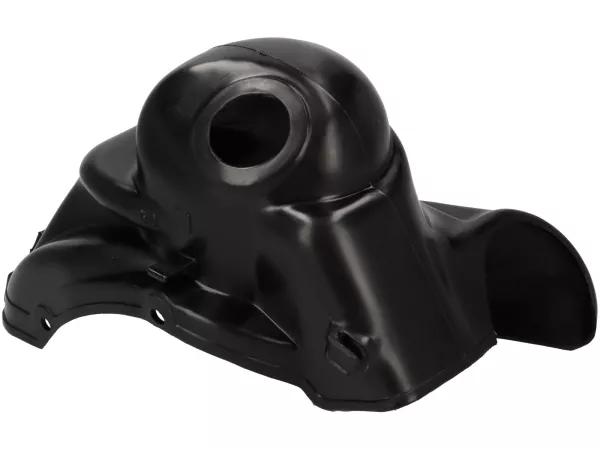
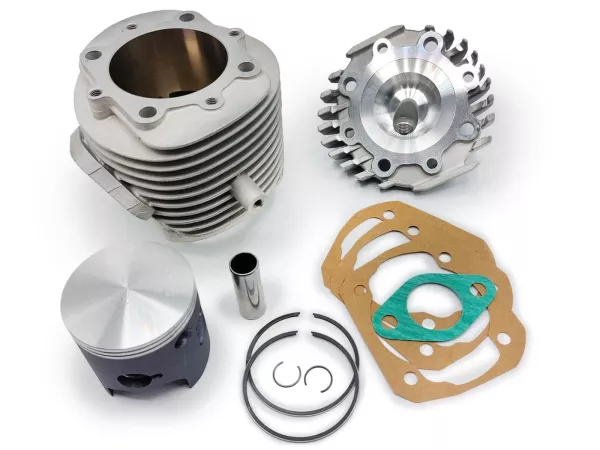
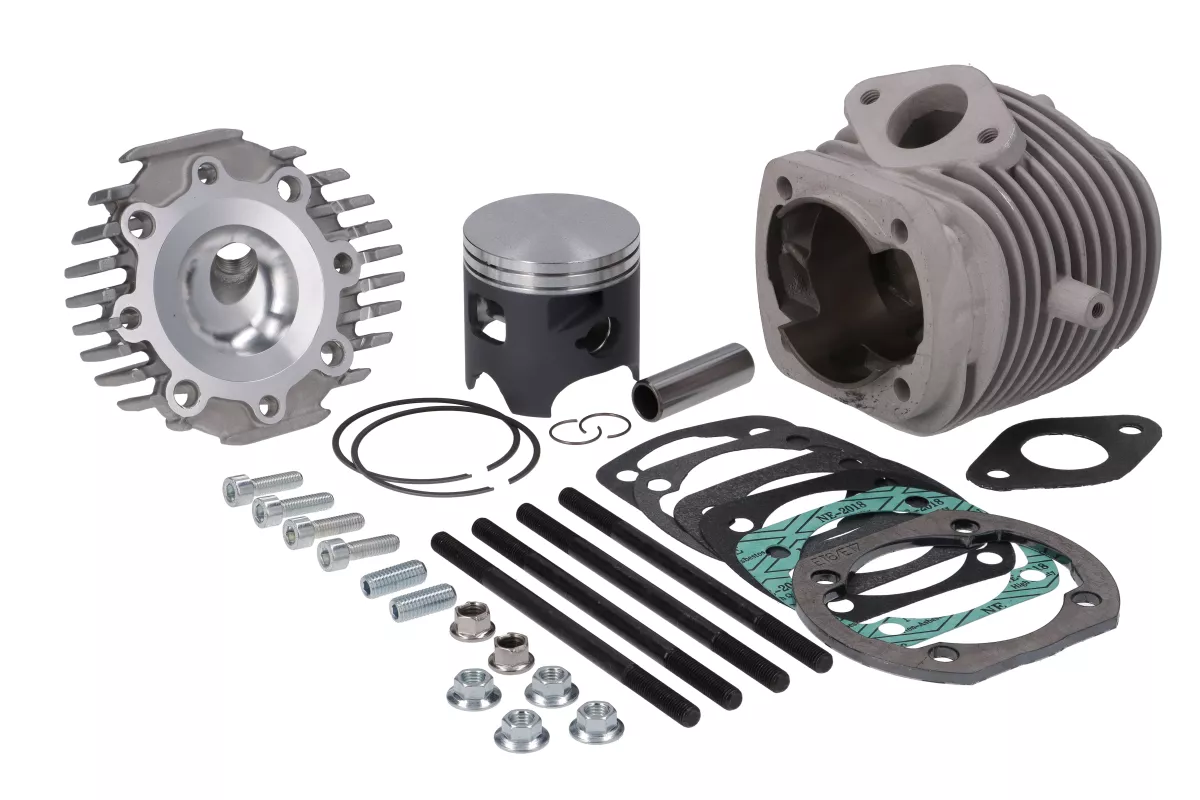
- Cylinder - VMC CP60 Cuffia Piccola - 144 cc, Ø60 mm, stroke 51 mm, aluminum, 1-piece exhaust port - Vespa PV125, ET3, PK125 - for small 50cc cylinder head

The CP58’s big brother: a whopping 144 cm³ under the small cylinder cover of the Vespa 50 models.
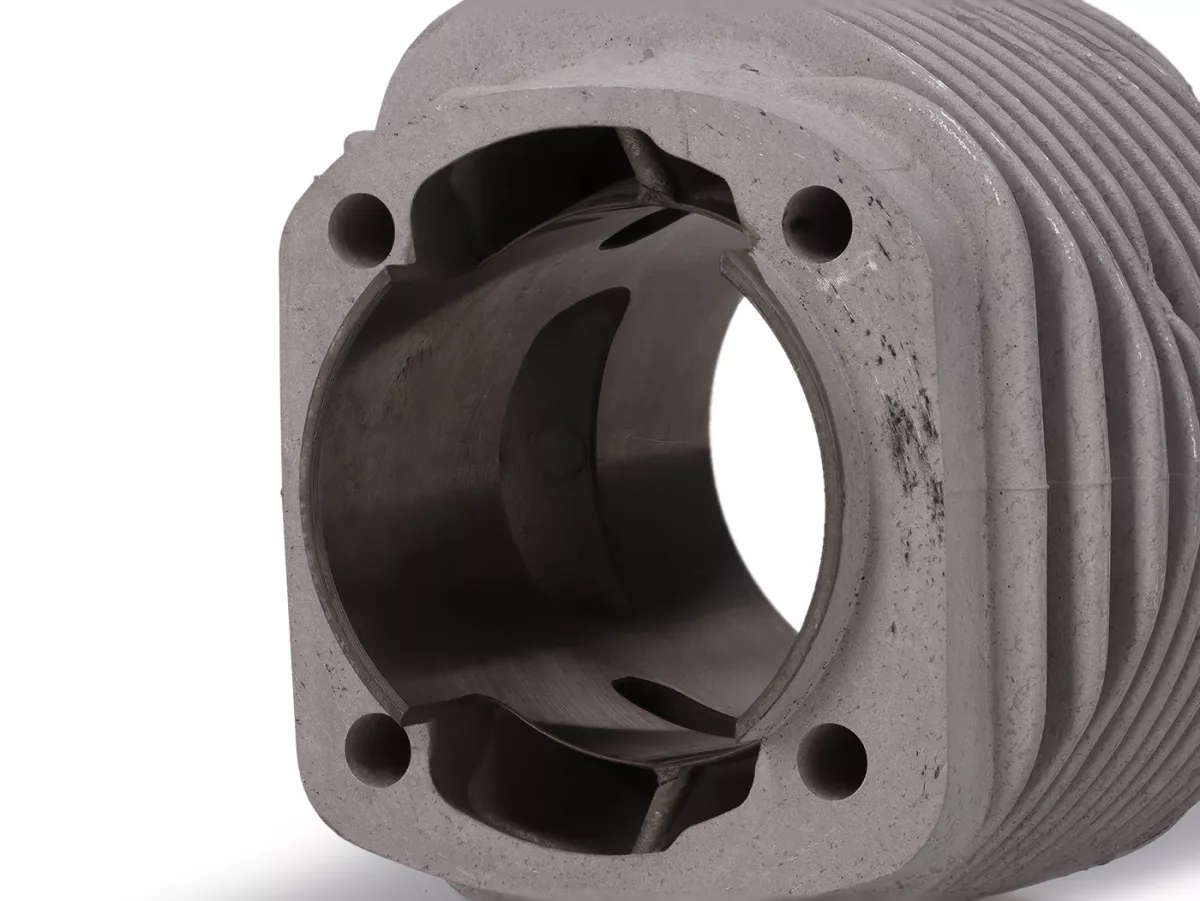
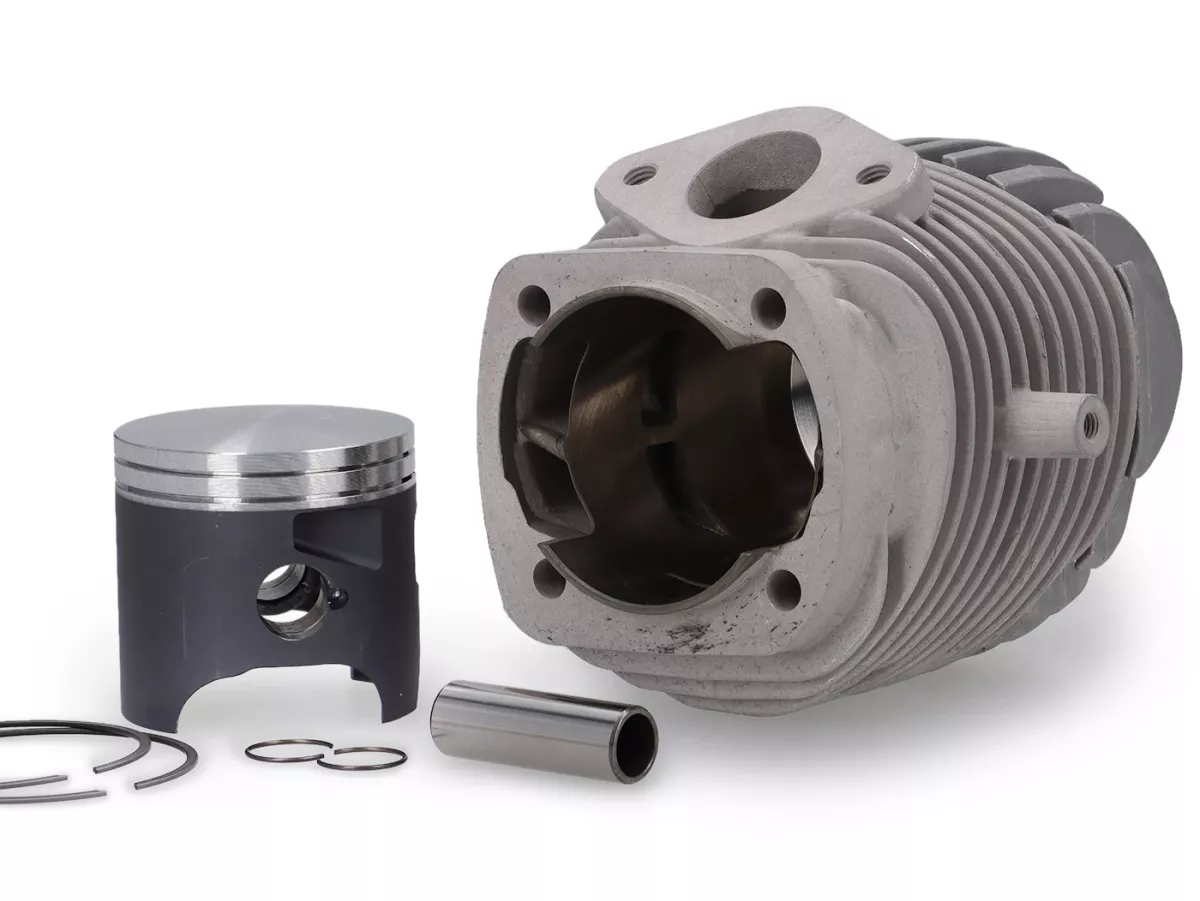
The VMC CP60 is the bigger brother of the well-known CP58. Despite its 60-mm bore and a whopping 144 cm³, the compact aluminum cylinder still fits under the small cylinder cooling cover of the Vespa V50 and PK50 models.
That’s exactly what the designation CP stands for: Cuffia Piccola, Italian for “small hood.” The CP60 thus combines the displacement of a powerful 125cc small-frame engine with the compact and visually unobtrusive cylinder shape of the 50-cm³ models.
With a crankshaft featuring a 51 mm stroke and 97 mm connecting rod length, the 60 mm bore yields approximately 144 cm³. An aluminum cylinder, Gilardoni Nikasil coating, six transfer ports, and valve timing of approximately 122°/180° form the technical foundation for a powerful street engine that can be tuned for a wide range of applications.
VMC CP60 Cuffia Piccola 144 ccm Ø60 mm small 50-cc cooling hood Gilardoni Nikasil Housing modification required
On classic Vespa small-frame engines, the cylinder covers of the 50-cm³ and 125-cm³ models differ significantly. The small hood on the V50 and PK50 models encloses a much more compact cylinder.
VMC makes full use of this limited installation space. Despite its large 60-mm bore, the CP60 has such compact external dimensions that it still fits under the small cooling shroud. From the outside, the engine is therefore much less conspicuous than a conventional large-displacement small-frame cylinder.
The CP58 established the concept of a large-displacement cylinder under a small cowl. With a 58-mm bore and 51-mm stroke, it achieves approximately 135 cm³.
The CP60 takes this concept a step further. By increasing the bore to 60 mm while keeping the stroke unchanged, the displacement rises to about 144 cm³. This gives it about 9 cm³ more displacement without compromising the fundamental “Cuffia Piccola” concept.
| Feature | VMC CP58 | VMC CP60 |
|---|---|---|
| Bore | Ø58 mm | Ø60 mm |
| Stroke | 51 mm | 51 mm |
| Connecting rod length | 97 mm | 97 mm |
| Displacement | approx. 135 cm³ | approx. 144 cm³ |
| Cylinder head | Small 50cc cylinder head | Small 50cc cylinder head |
| Housing mount | Can be mounted without extension according to CP58 specifications | Extension to Ø64 mm, approx. 8 mm deep |
In addition to the larger bore, the key difference lies in the housing machining required for the CP60.
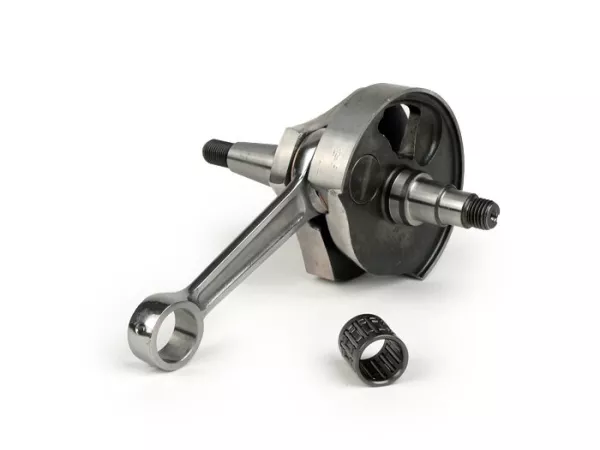
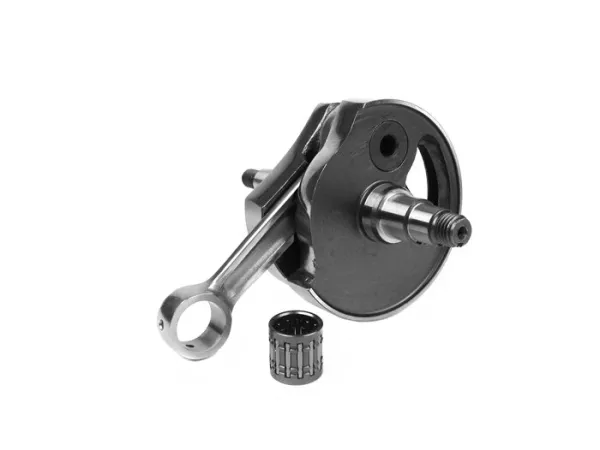
The CP60 is designed for a crankshaft with a 51 mm stroke and a 97 mm connecting rod length. This geometry corresponds to the classic crankshaft configuration of the Vespa Smallframe 125 engines.
The additional displacement is thus achieved entirely through the large 60-mm bore. A long-stroke crankshaft or longer connecting rod is not required for the intended standard configuration.
| Bore | 60 mm |
|---|---|
| Stroke | 51 mm |
| Connecting rod length | 97 mm |
| Calculated displacement | approx. 144 cm³ |
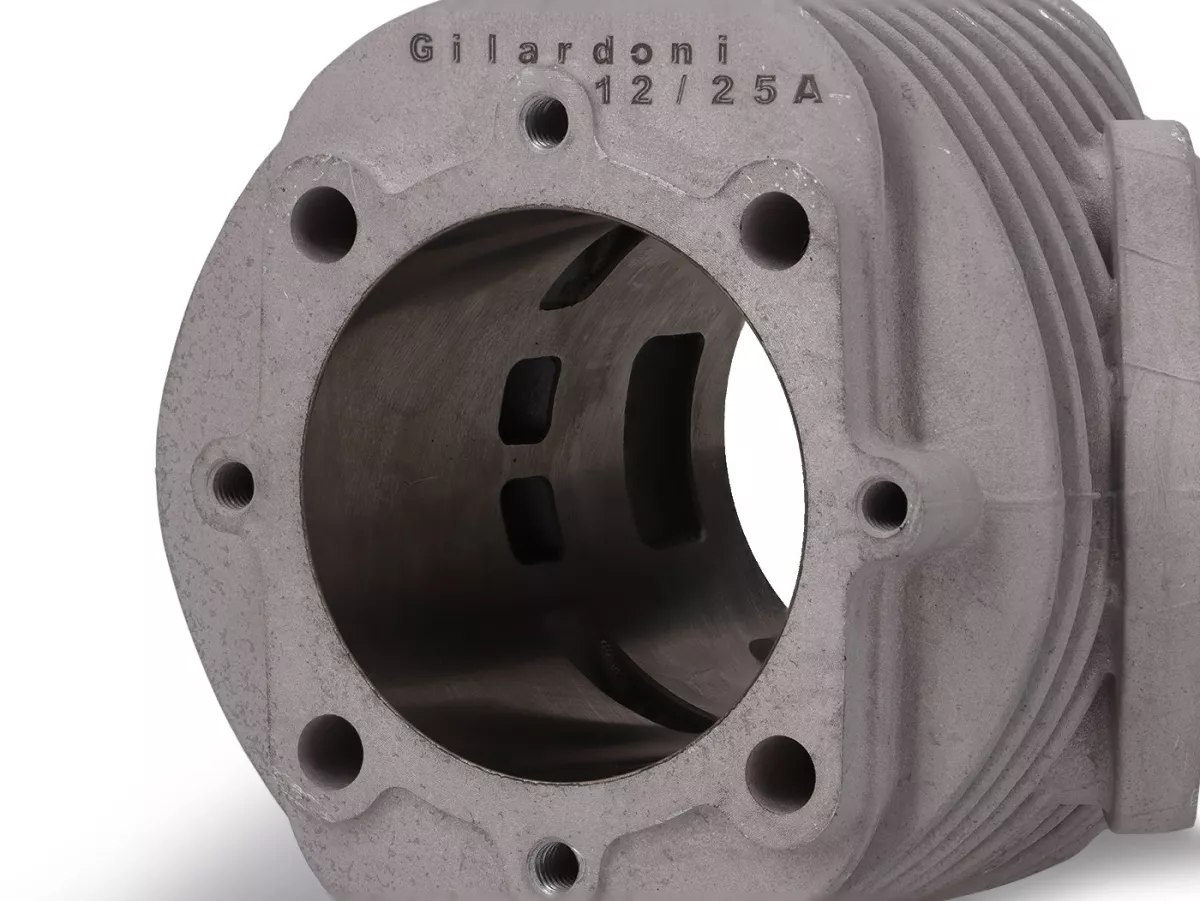
The VMC CP60 is manufactured from aluminum using the die-casting process and features six flow channels. These channels distribute the fresh gas from the crankcase into the cylinder and, together with the exhaust port, determine the characteristics of the gas exchange.
Aluminum quickly dissipates the heat generated during combustion to the cooling fins. This is particularly important for a compact cylinder with a large bore, as there is limited installation space available for cooling surfaces.
The cylinder bore is coated with a Nikasil coating applied by Gilardoni. This thin, hard coating forms the running surface for the piston and piston rings.
VMC specifies a valve timing of approximately 122° for the main overflow port and about 180° for the one-piece exhaust port. This results in a calculated early exhaust timing of around 29°.
These valve timing angles allow for a sporty engine setup without limiting the cylinder exclusively to very high RPMs. The actual performance characteristics depend heavily on the exhaust system, intake, carburetor, ignition system, and gear ratio used.
| Main overflow | approx. 122° |
|---|---|
| Exhaust | approx. 180° |
| Calculated advance angle | approx. 29° |
Actual values may vary depending on the engine block, gasket thickness, and cylinder position. Valve timing and compression angle should be measured on the fully assembled engine.
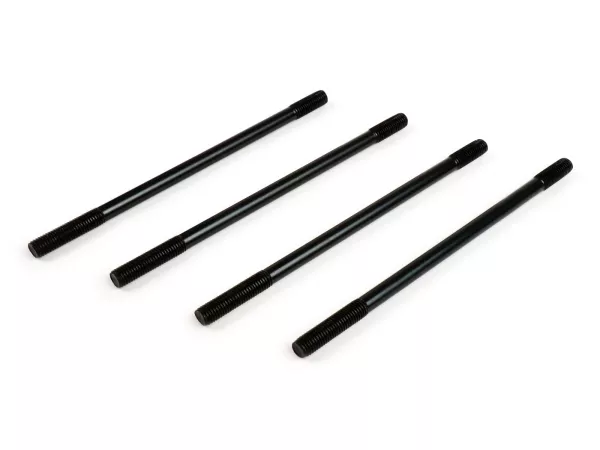
The CP60 features a one-piece exhaust port. The exhaust port has a diameter of 28 mm; the distance between the two exhaust studs is 56 mm.
When selecting an exhaust system, the connection diameter, flange shape, and stud spacing must be taken into account. The exhaust system must also be compatible with the desired engine characteristics and the cylinder’s valve timing.
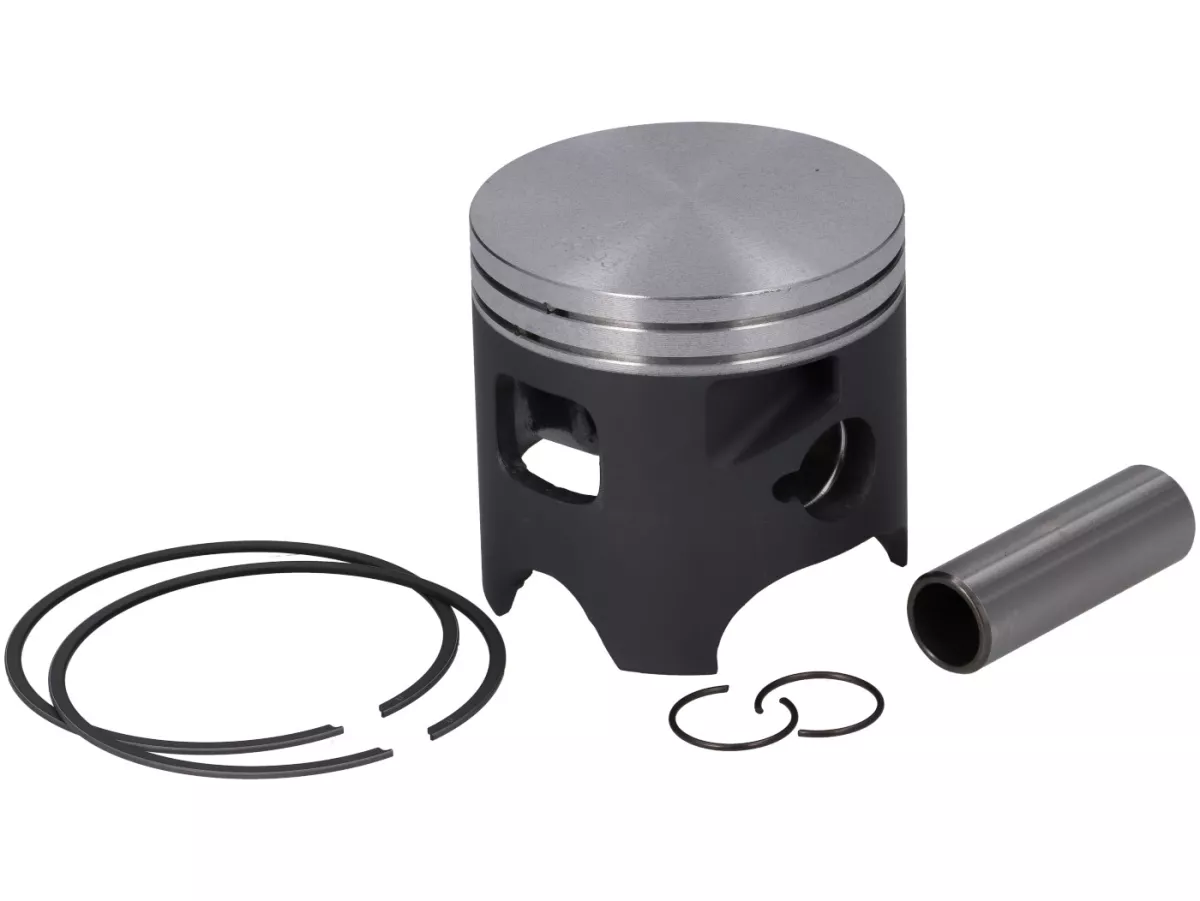
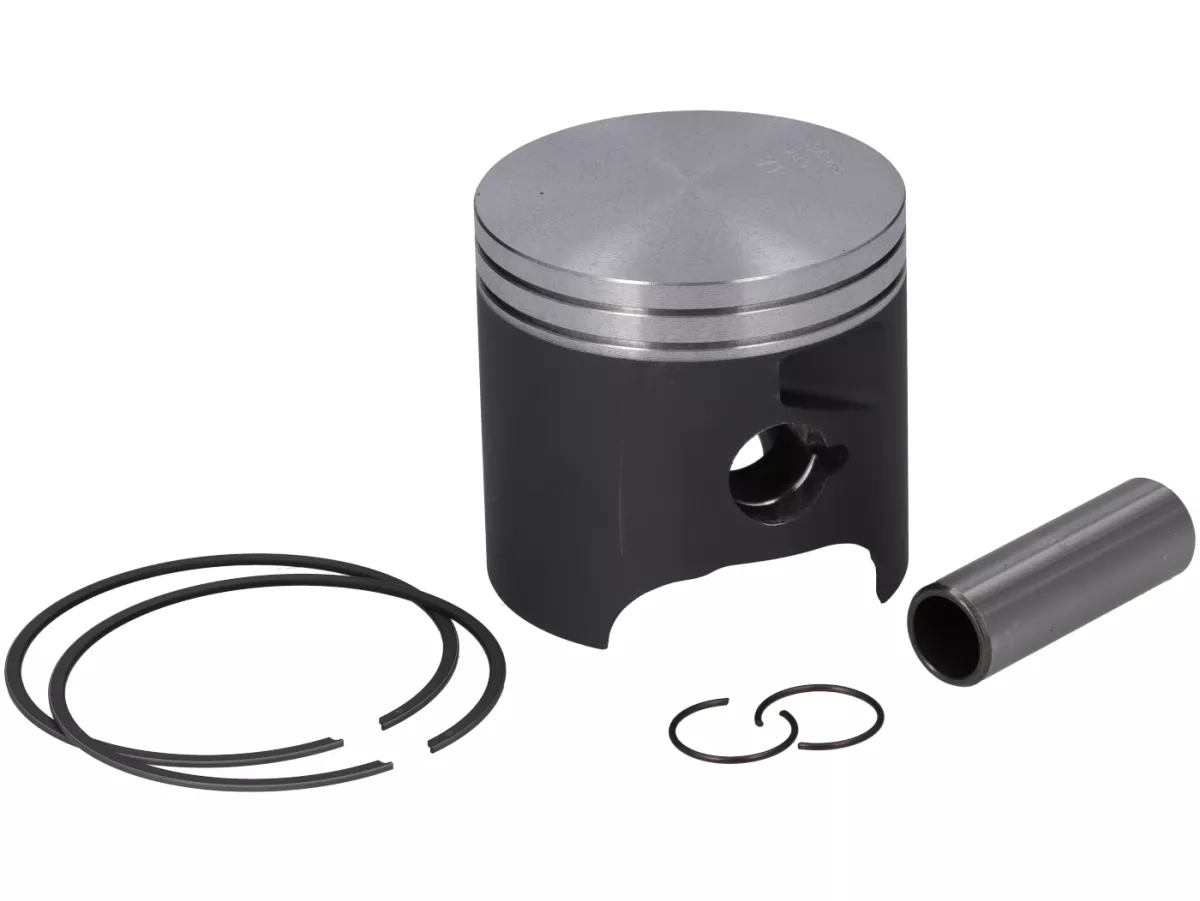
The piston is made of an aluminum alloy with a high silicon content and uses two piston rings. The alloy is optimized for the thermal load and expansion behavior within the coated aluminum cylinder bore.
The two steel rings seal the combustion chamber and transfer some of the heat generated in the piston to the cylinder bore. The piston pin and retaining clips are also made of steel.
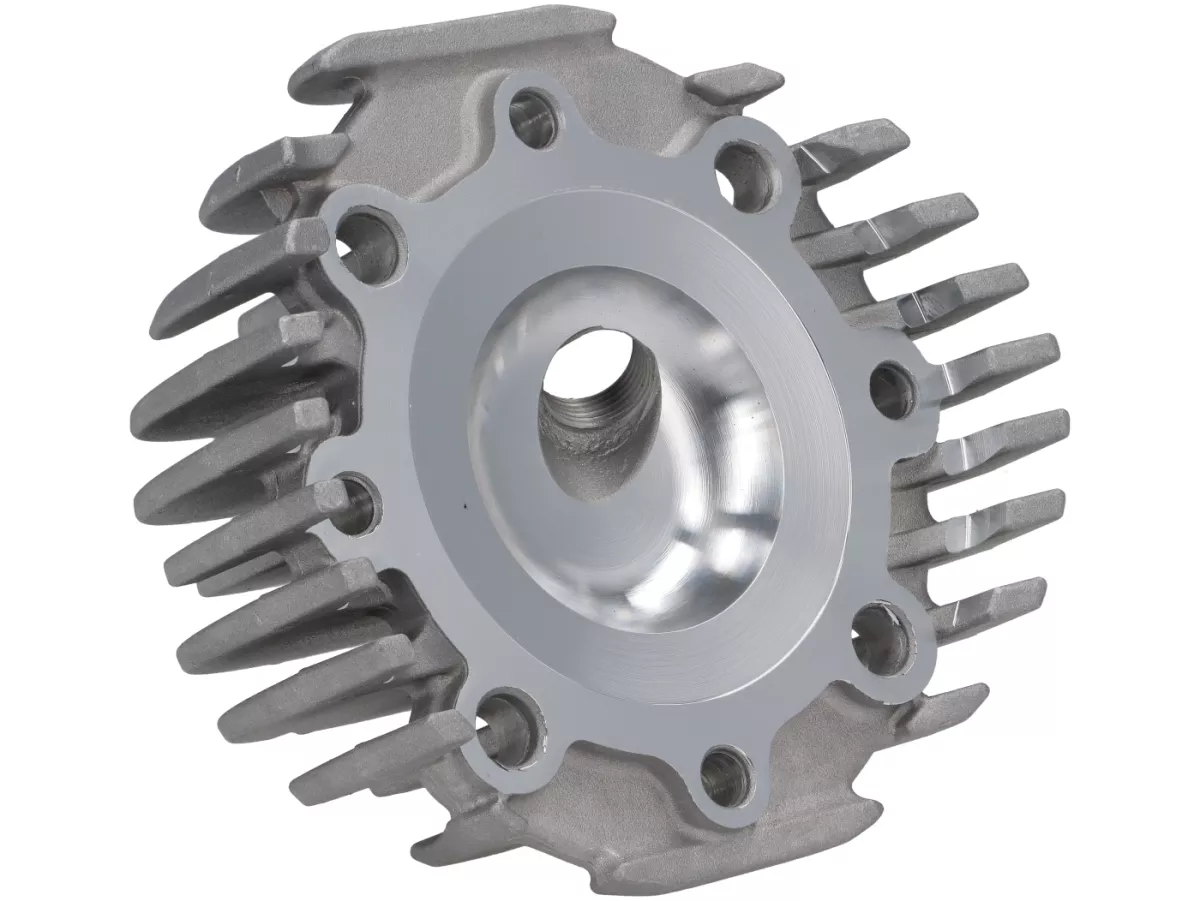
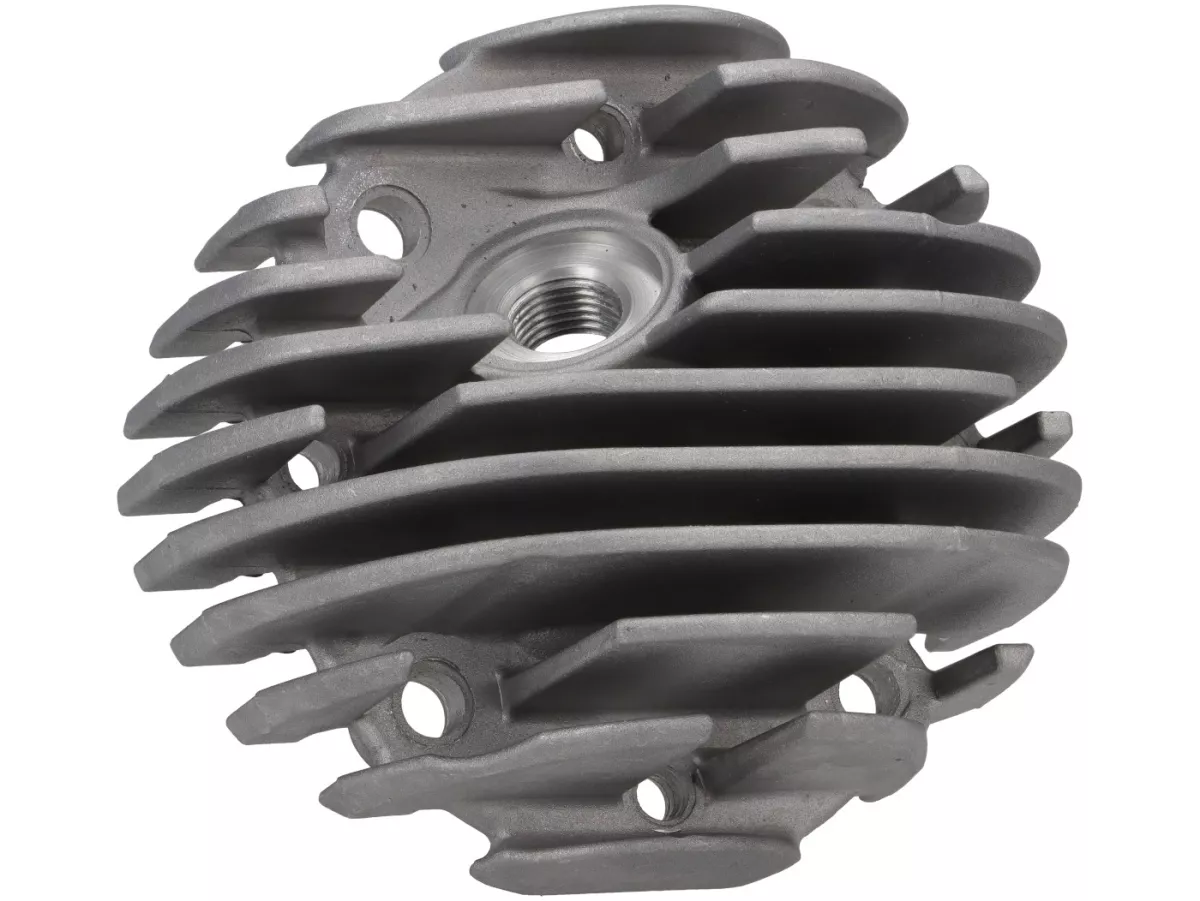
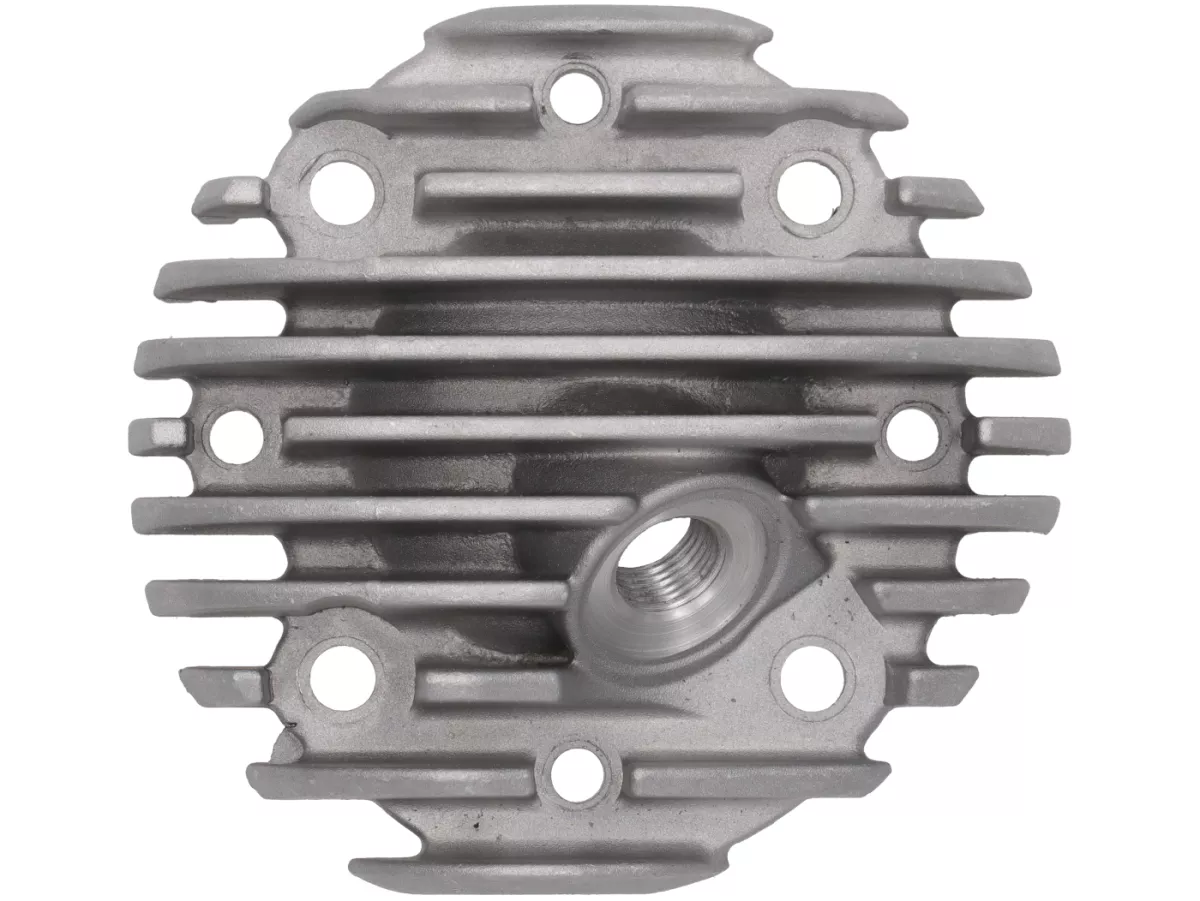
The cylinder head is manufactured from die-cast aluminum and then CNC-machined. This allows for precise machining of the combustion chamber and sealing surface.
The spark plug is positioned approximately in the center of the combustion chamber but is slightly offset to the side. This aligns it with the existing opening in the small cylinder cooling cover.
This positioning is a key component of the Cuffia Piccola concept: Despite the large displacement, the small cylinder head cover can be used without having to create an entirely new spark plug opening.
Unlike the smaller CP58, the CP60 requires an enlarged cylinder bore in the engine block due to its larger cylinder liner.
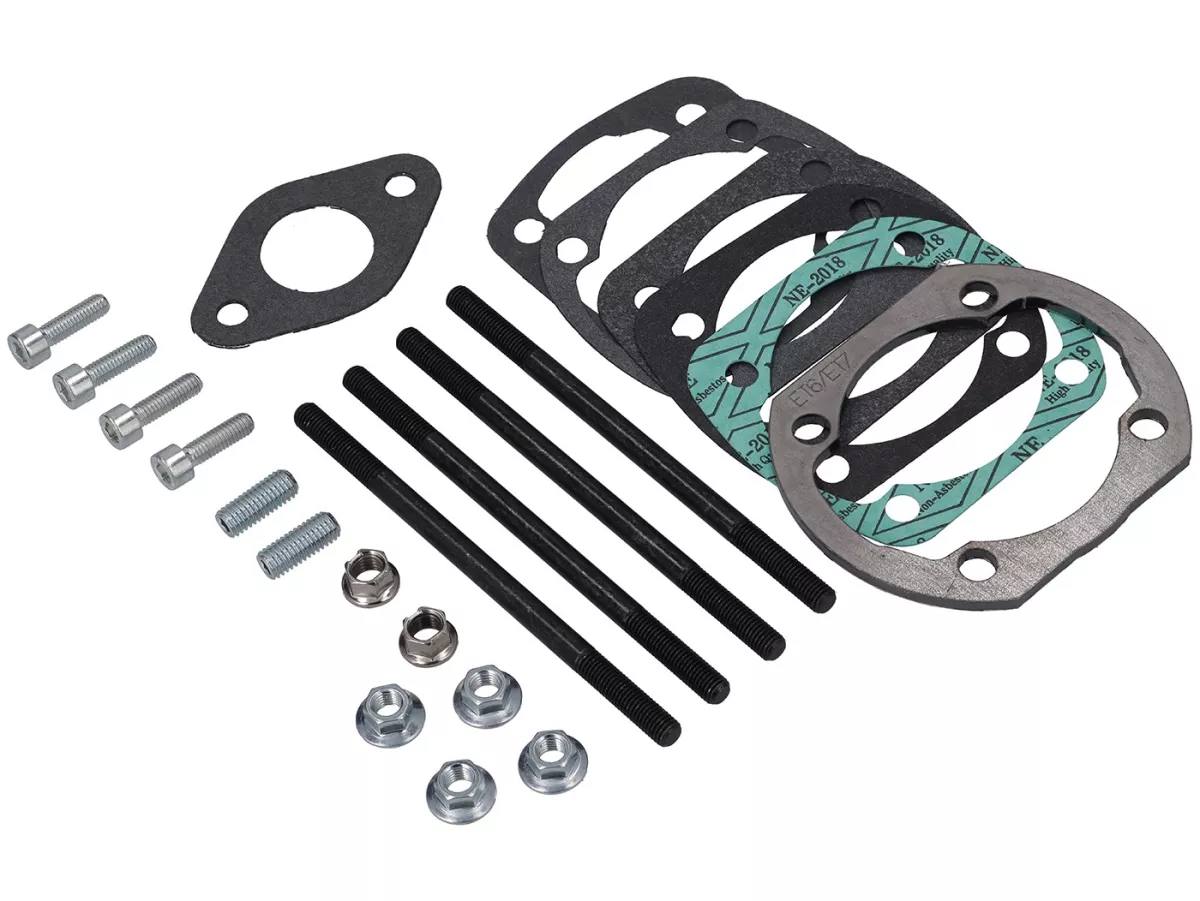
The cylinder kit includes a steel guide that is attached to the motor housing via the cylinder stud bolt holes. It serves as a centering aid for enlarging the cylinder mounting.
VMC also recommends machining with a suitable hand-held milling cutter. The guide helps position the tool centrally over the existing housing opening.
Even with the guide, the diameter, depth, and alignment of the mounting hole must be carefully checked. The cylinder base must be able to fully engage without jamming or lifting the cylinder off the sealing surface.
Although the cylinder bore must be enlarged to 64 mm, VMC states that it is not necessary to completely remove the dust-proof flange at the base of the housing.
Machining is limited to the area required by the cylinder base when it is inserted. This preserves more material on the engine housing than if the circumferential flange were completely removed.
The compact cylinder body can also be used with pole wheels featuring an electric starter ring. The CP60 is therefore also suitable for PK engines of this design equipped with an electric starter.
Before final assembly, however, you should check whether there is sufficient clearance between the cylinder, cooling fins, pole wheel, and starter ring.
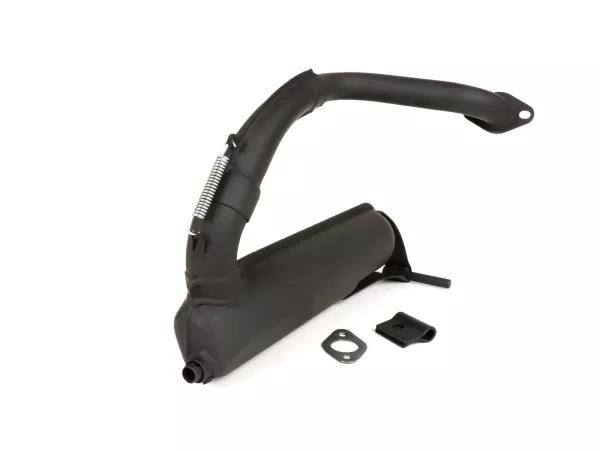
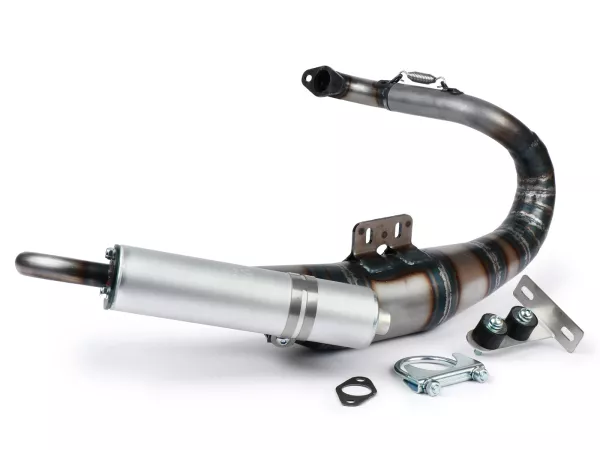
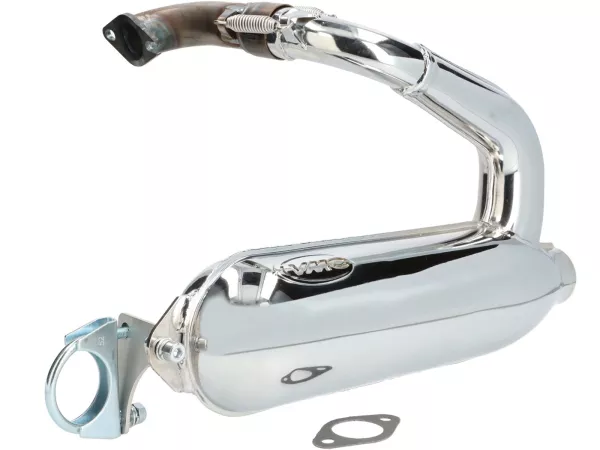
VMC recommends the CP60, among other things, in combination with the VMC Siluro Touring. The classically shaped exhaust complements the understated Cuffia Piccola concept: The engine offers significantly more displacement and torque without looking like a large-displacement racing engine.
The combination is designed for a versatile engine character, where power and torque are not limited to a narrow upper RPM range. At the same time, the appearance and sound remain closer to that of a classic Vespa setup.
The intake, carburetor, ignition, primary gear ratio, and transmission must be tuned to the overall engine concept.
The cylinder is designed for a Vespa small-frame engine with a 51 mm stroke and a 97 mm connecting rod length. The small cylinder head cover from the V50 or PK50 models can be used.
| Manufacturer | VMC |
|---|---|
| Series | CP60 / Cuffia Piccola |
| Displacement | 144 cm³ |
| Bore | Ø60 mm |
| Crankpin stroke | 51 mm |
| Connecting rod length | 97 mm |
| Cylinder head | Small cylinder cooling cover from the Vespa V50/PK50 models |
| Cylinder material | Aluminum |
| Manufacturing process | Shell casting |
| Bearing surface coating | Nikasil, manufactured by Gilardoni |
| Flow channels | 6 |
| Main overflow time | approx. 122° |
| Exhaust valve timing | approx. 180° |
| Exhaust | One-piece |
| Exhaust diameter | Ø28 mm |
| Outlet stud spacing | 56 mm |
| Piston | High-silicon aluminum alloy |
| Piston rings | 2 steel rings |
| Cylinder head | Die-cast aluminum, CNC-machined |
| Spark plug position | Approximately central, offset to the side to accommodate the small cooling hood |
| Required housing machining | Cylinder mounting hole Ø64 mm, approx. 8 mm deep |
| Electric starter | Compatible with pole wheels with starter ring gear |
| Vehicle range | Vespa Smallframe |
| Models | PV125, ET3, and PK125 |
The VMC CP60 represents the next evolutionary step in the Cuffia Piccola concept. With a 60 mm bore and 51 mm stroke, it achieves a whopping 144 cm³, yet remains compact enough on the outside that the small cylinder head from the Vespa 50 models can still be used.
This makes the CP60 particularly suitable for unobtrusive small-frame builds that aim to combine a large displacement, strong torque, and a stock-like appearance. The aluminum cylinder, Gilardoni Nikasil coating, and two-ring piston form a robust foundation for street and touring engines.
Compared to the CP58, the CP60 offers even more displacement, but requires the cylinder bore to be enlarged to Ø64 mm with a depth of approximately 8 mm. The included steel guide facilitates this modification.