Postage free from 99€ (DE)
High customer satisfaction


 DE | €
- Vespa Classic
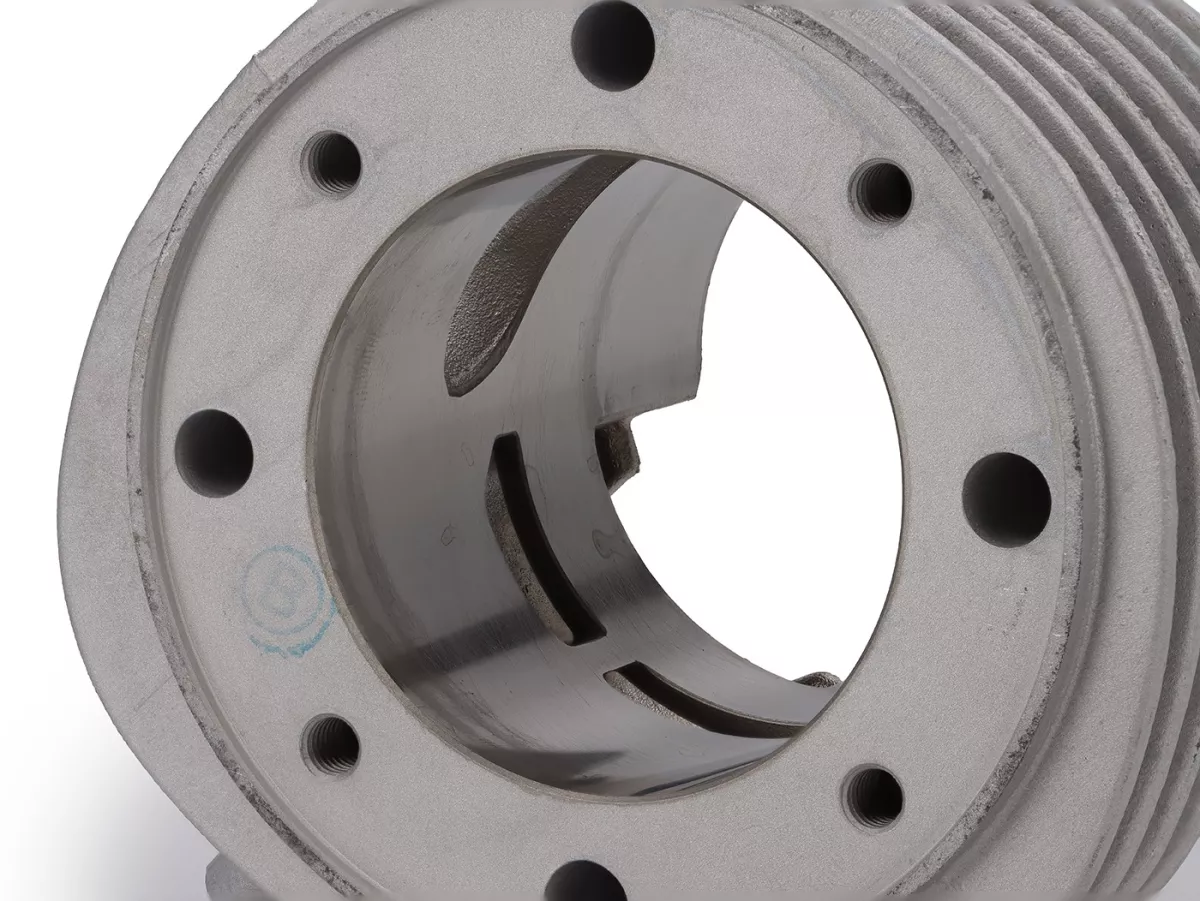
- Cylinder - VMC Type R 85 - 114cc, Ø58, stroke=43mm, aluminum - Vespa V50, PK50

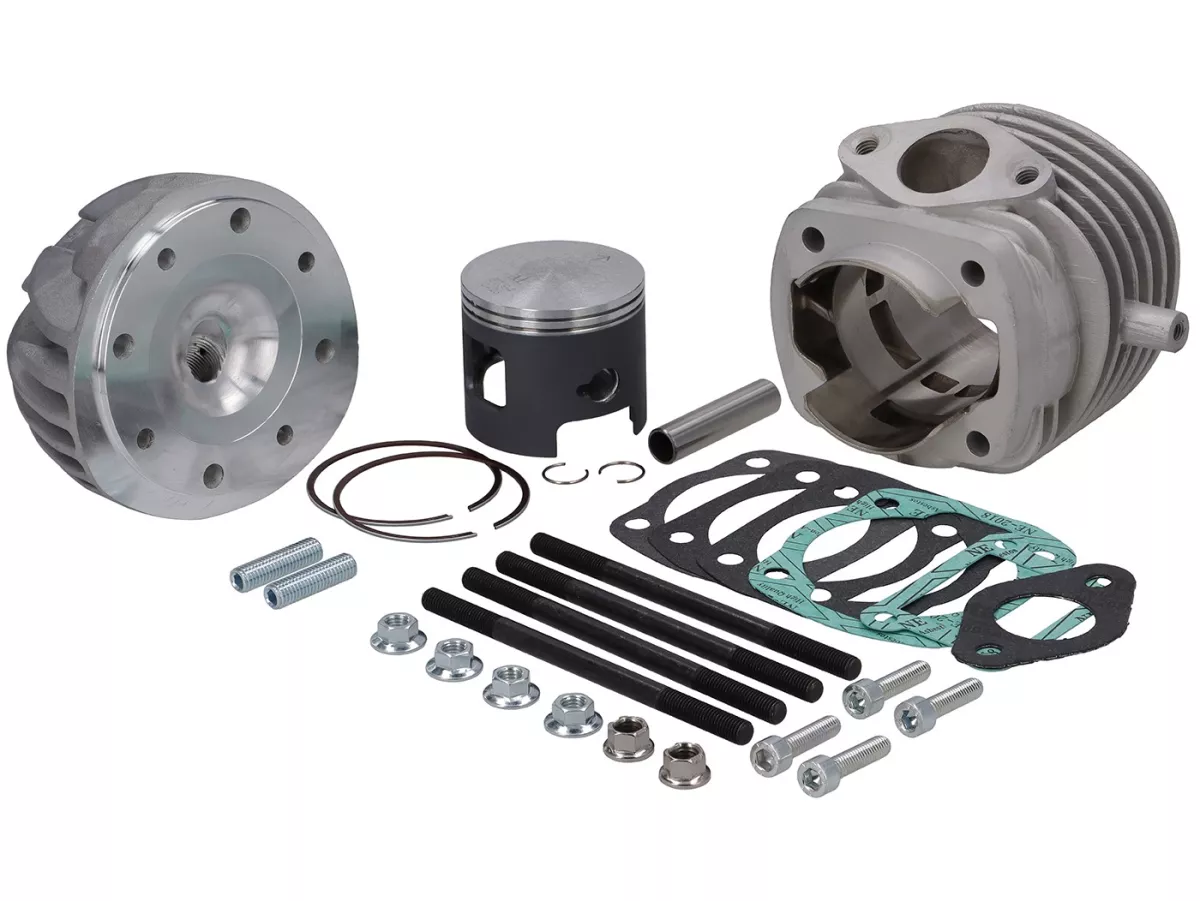
Aluminum cylinder kit with Nikasil coating, 58 mm bore, and modern porting for Vespa small-frame engines with a 43 mm short stroke.
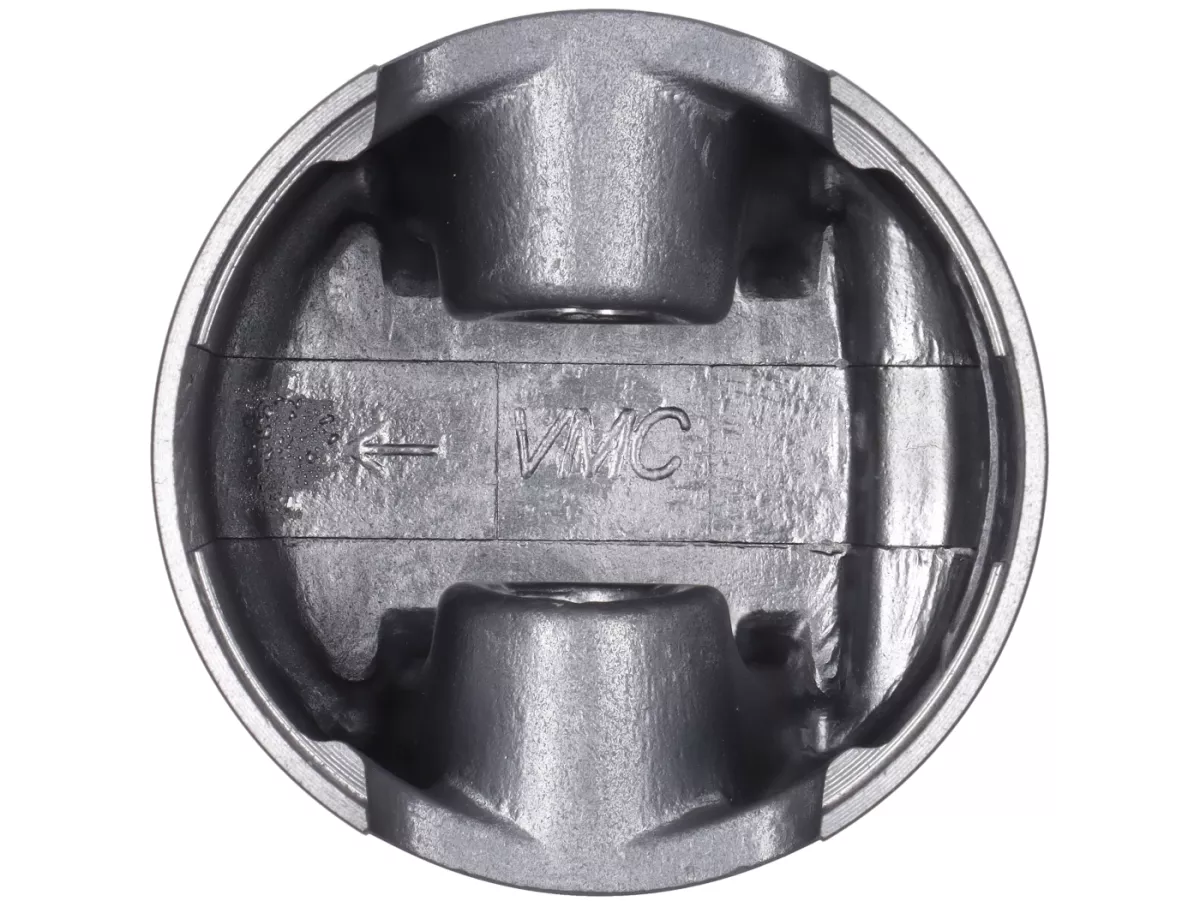
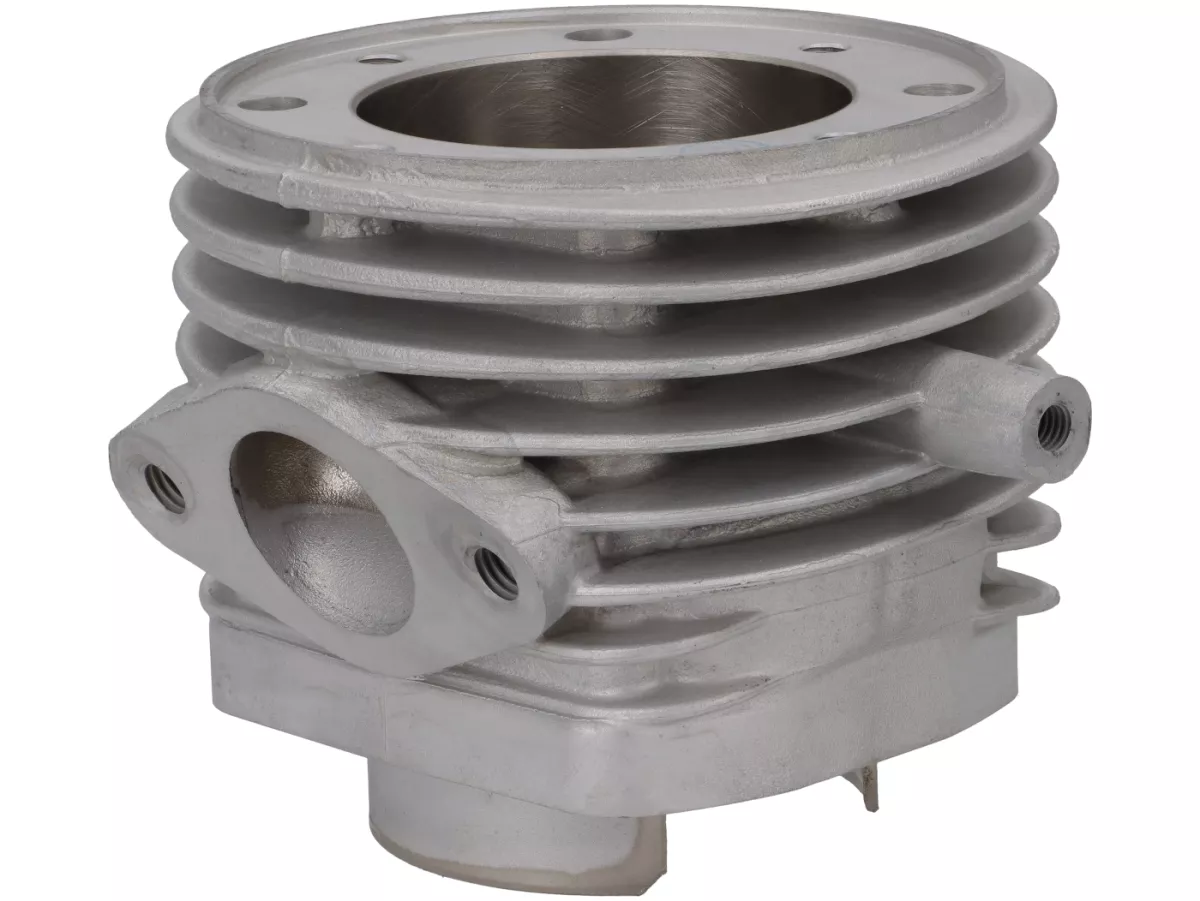
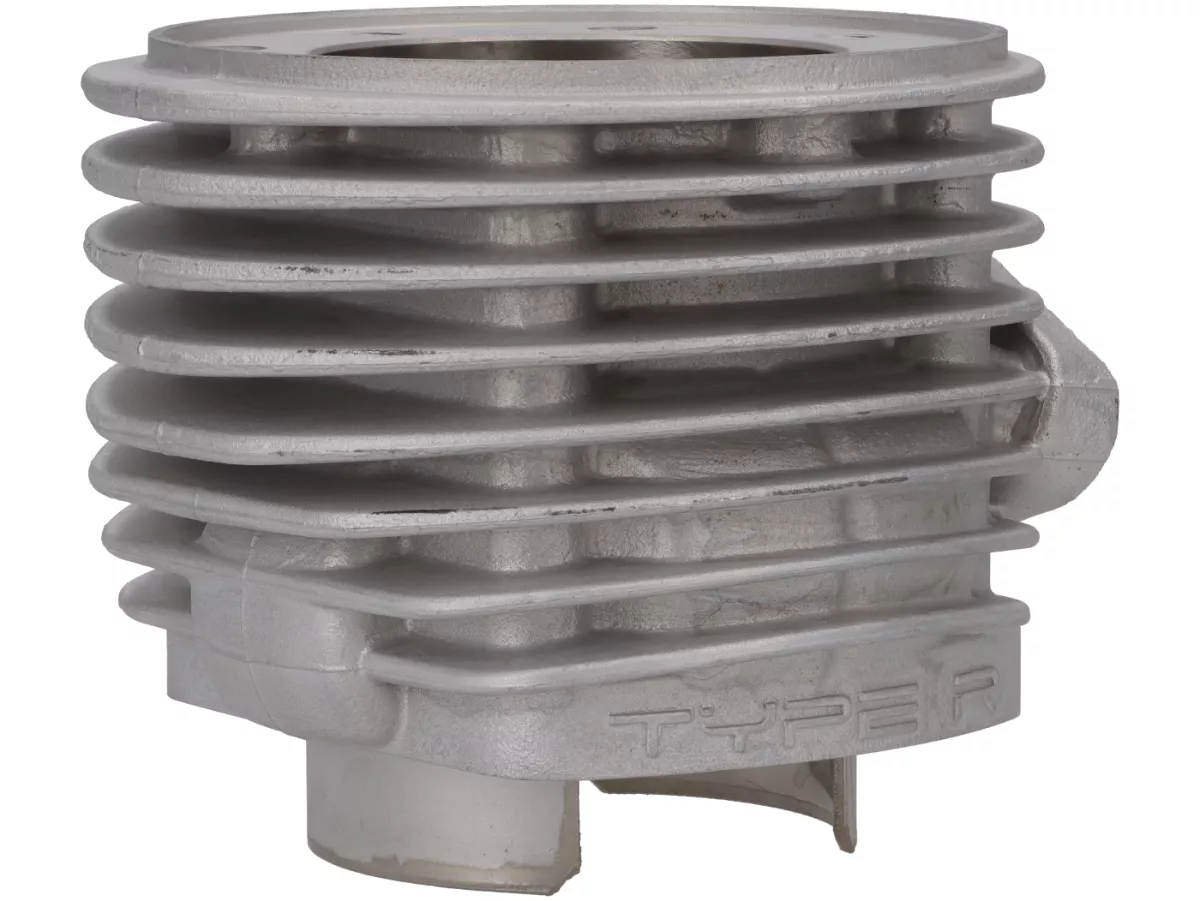
The VMC Type R 58 cylinder kit increases the displacement of a Vespa 50 short-stroke engine to approximately 114 cm³ without requiring a conversion to a long-stroke crankshaft. The combination of a 58 mm bore, 43 mm crankshaft stroke, six transfer ports, and a Nikasil-coated aluminum cylinder liner is designed to deliver strong torque at low and mid-range RPMs.
VMC developed the Type R as a modern alternative to classic Vespa small-frame short-stroke engines. The focus is not solely on high RPM, but rather on a power band that is available early on, with strong acceleration and engine characteristics suitable for everyday use.
With valve timing of approximately 124° intake and 172° exhaust, the layout remains relatively moderate. This makes the cylinder particularly suitable for street engines, where the engine is expected to accelerate smoothly from low RPMs and not be constantly kept in the upper RPM range.
VMC Type R 58 114 cc 43 mm short-stroke Aluminum Nikasil 6 over-flow without machining the dust protection contour
Many versions of the Vespa V50 and PK50 use a short-stroke crankshaft with a 43-mm stroke. The VMC Type R retains this stroke and achieves the additional displacement through its large 58-mm bore.
This results in a displacement of approximately 114 cm³. This places the Type R well above classic 75- to 102-cm³ short-stroke cylinders without necessarily requiring the installation of a 51-mm long-stroke crankshaft.
| Bore | Ø58 mm |
|---|---|
| Crankshaft stroke | 43 mm |
| Displacement | approx. 114 cm³ |
| Engine design | Vespa small-frame short-stroke |
The port design of the Type R was not engineered solely for the highest possible RPMs. The cylinder is designed to fill powerfully even at low and mid-range RPMs, thereby producing a torque curve that’s easy to utilize.
This is particularly noticeable during street riding. The engine doesn’t need to be revved as high to shift into the next gear. Hills, headwinds, and frequent acceleration can be handled more confidently with a properly tuned engine than with a smaller, more rpm-dependent cylinder.
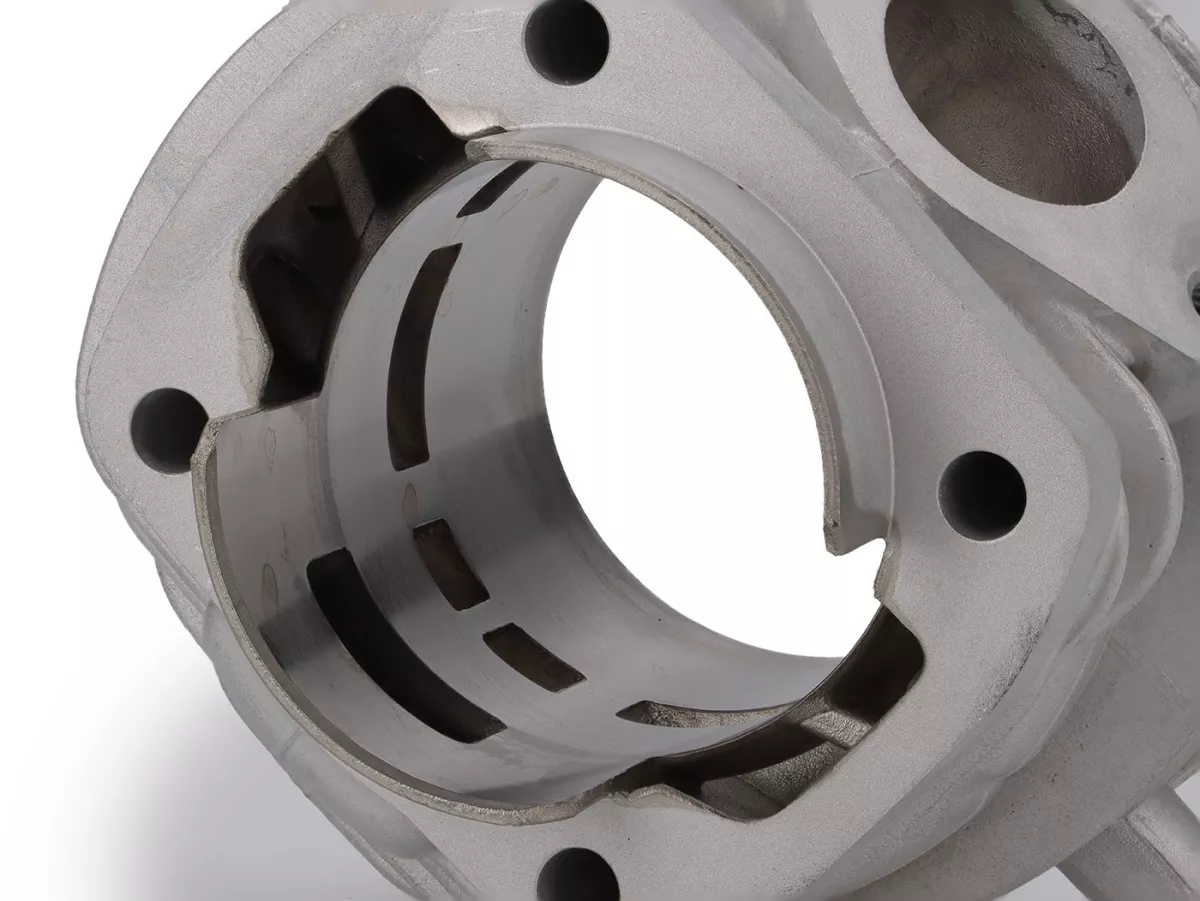
The VMC Type R features six transfer ports. Their function is to guide the fresh fuel-air mixture from the crankcase into the combustion chamber while displacing the remaining exhaust gases toward the exhaust port.
A modern channel design is more important than the sheer number of channels. The cross-section, angle, and inlet direction must all be properly matched to ensure the cylinder is filled efficiently across a wide RPM range.
The Type R’s layout is designed for strong flow at low and mid-range RPMs. This is intended to make the engine respond quickly to throttle inputs rather than waiting until high RPMs to deliver power.
VMC specifies an intake duration of approximately 124° and an exhaust duration of 172° for the Type R. This results in a calculated early exhaust of approximately 24°.
These values align with the cylinder’s torque-oriented design. The exhaust valve does not open extremely early, and the usable power band is therefore not unnecessarily shifted into high RPM ranges.
| Overflow angle | approx. 124° |
|---|---|
| Exhaust timing | approx. 172° |
| Calculated advance angle | approx. 24° |
| Basic Characteristics | Early torque and a wide usable mid-range |
Actual valve timing may vary slightly due to manufacturing tolerances, gasket thickness, and the engine components used.
The Type R features an aluminum cylinder block with a Nikasil coating. Aluminum conducts heat faster than gray cast iron and distributes the heat of combustion across the cylinder block to the cooling fins.
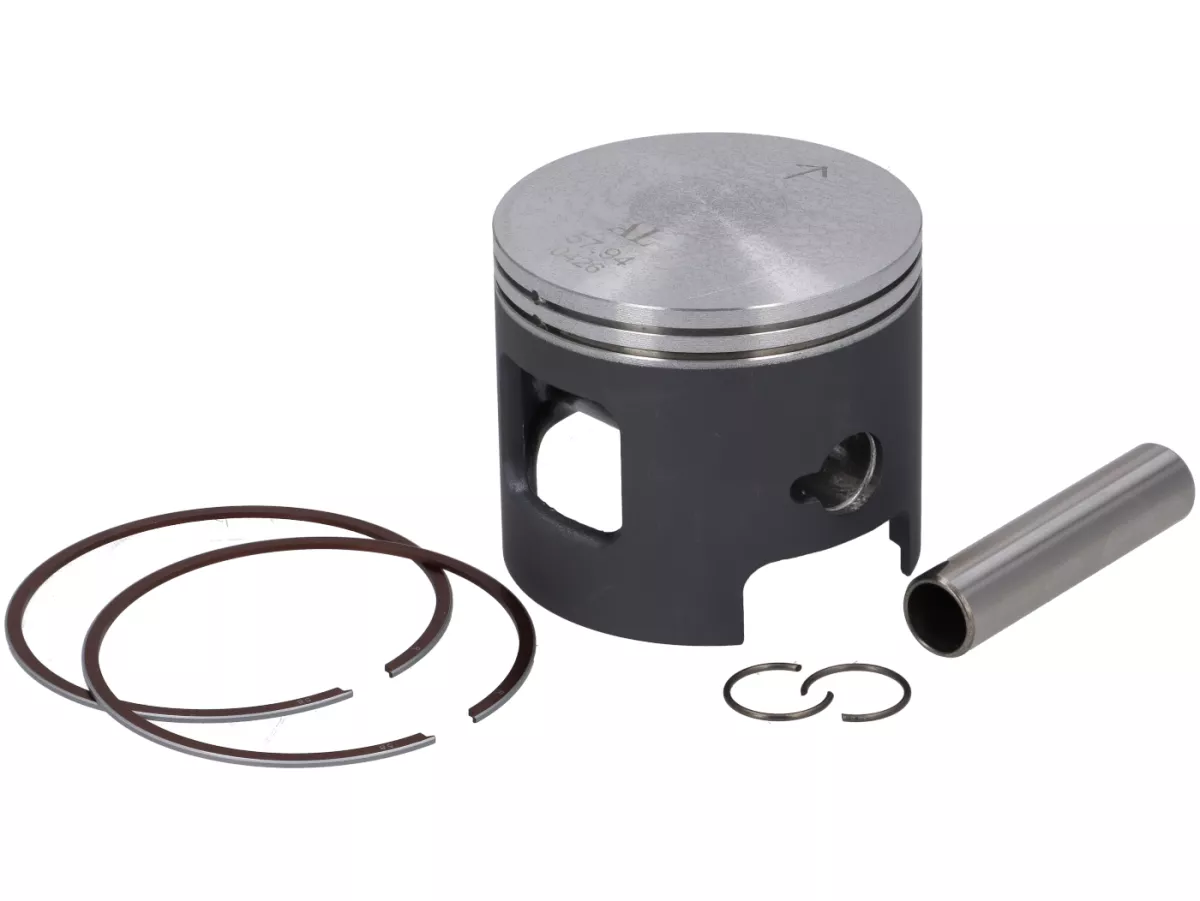
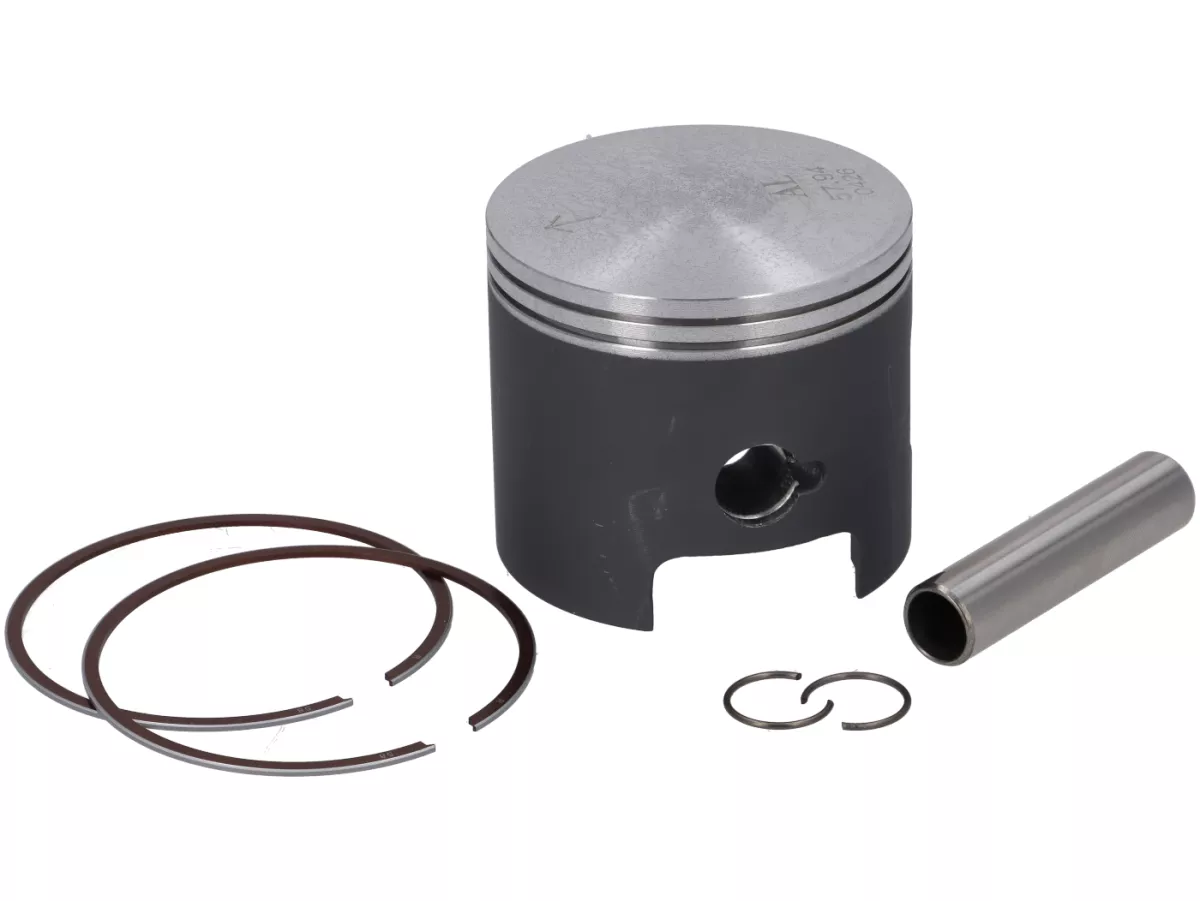
The Nikasil coating forms the actual running surface for the piston and piston rings. It combines a hard surface with a thin coating thickness, thereby supporting controlled heat transfer between the piston, the running surface, and the cylinder block.
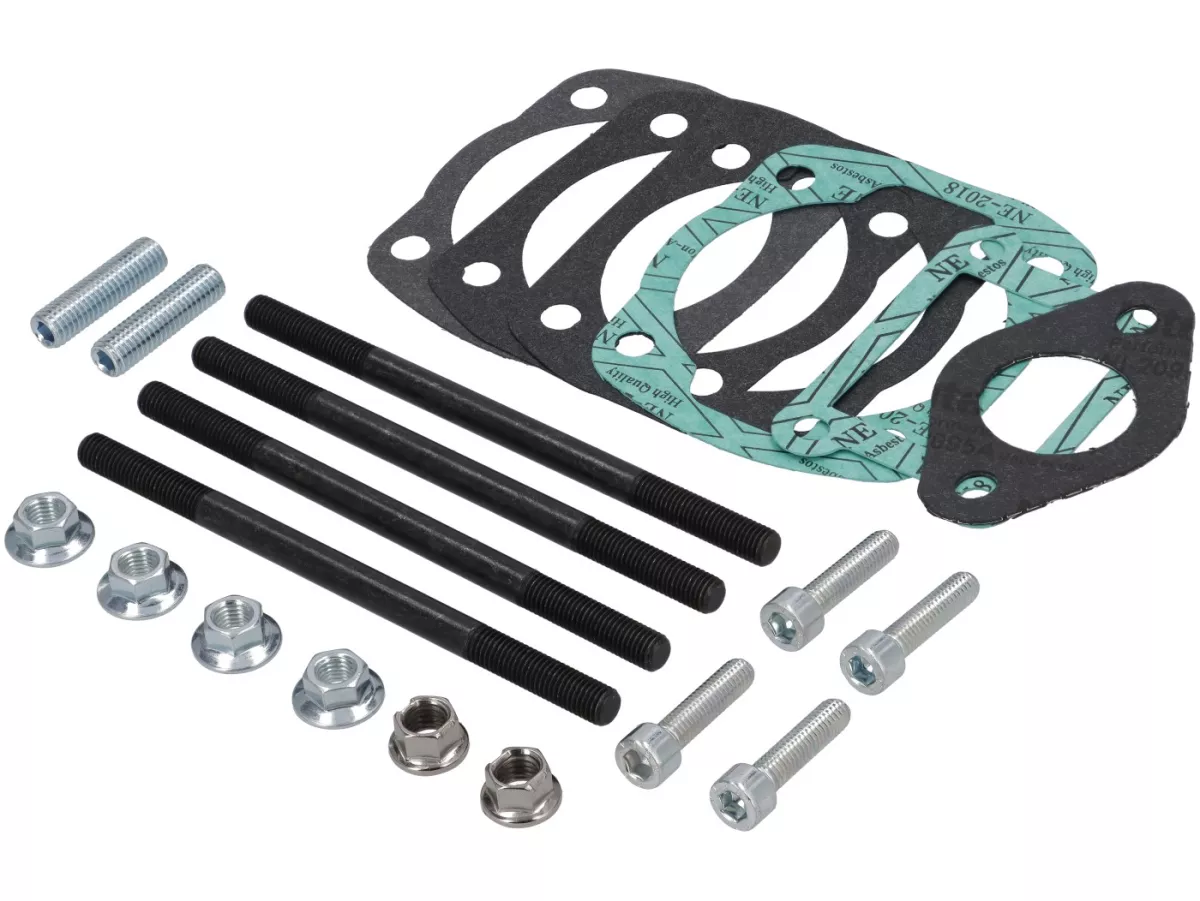
A distinctive feature of the VMC Type R is the cylinder head mounting. The head is bolted directly to the cylinder using four M6 Allen screws. Additionally, the kit includes four specific M7 studs for securing the cylinder to the engine block.
In this way, VMC avoids the mounting solution used in various other short-stroke cylinders, in which the cylinder and head are clamped together using long studs. The separate bolting arrangement simplifies the identification of the fasteners and enables precise clamping of the cylinder head.
The cylinder head included in the kit is made of cast aluminum. The spark plug is mounted on the side and is secured via a long thread.
When selecting the spark plug, the thread length, heat range, and electrode configuration must be compatible with the cylinder head and the planned engine configuration. A spark plug with an unsuitable thread length can result in incorrect positioning within the combustion chamber or cause mechanical problems.
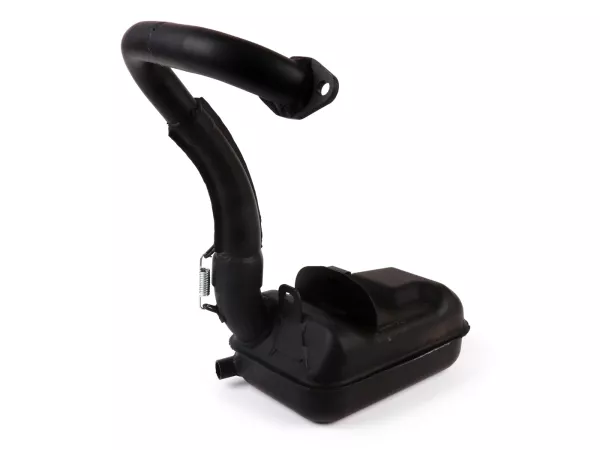
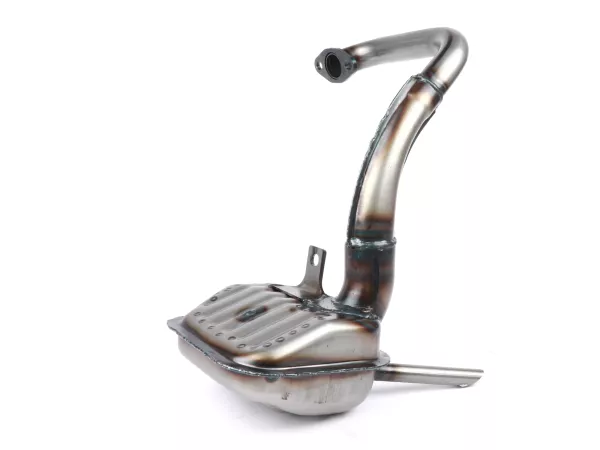
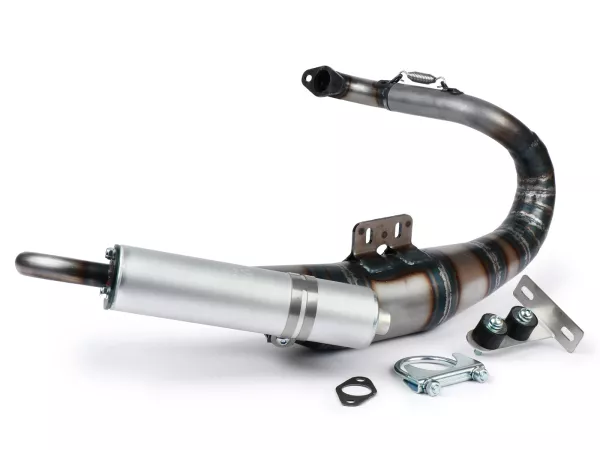
The exhaust outlet has a connection diameter of 28 mm. The distance between the two exhaust studs is 52 mm.
The exhaust system must be mechanically compatible with these dimensions and, in terms of performance, suited to the cylinder. Given the torque-oriented nature of the Type R, a system that operates effectively even at low and mid-range RPMs is recommended.
With certain short-stroke cylinders featuring large bore diameters, the crescent-shaped dust protection contour on the motor housing may interfere with the cylinder base or the cylinder contour. In such cases, this area normally requires machining.
According to the manufacturer, the VMC Type R is designed so that this machining is not necessary. The existing crescent-shaped dust protection contour at the base of the motor housing can remain in place.
The Type R can be configured differently depending on the carburetor, crankshaft, exhaust, and gear ratio. Its basic design remains torque-oriented.
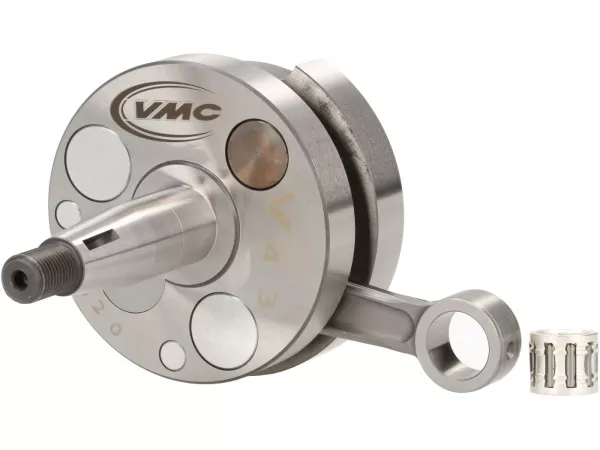
The key factor is the engine base used, which must have a 43-mm short-stroke crankshaft. The model designation, engine number, and any modifications already made should be verified before ordering.
| Manufacturer | VMC |
|---|---|
| Series | Type R 58 |
| Type | Cylinder kit |
| Displacement | approx. 114 cm³ |
| Bore | Ø58 mm |
| Crankpin diameter | 43 mm |
| Cylinder material | Aluminum |
| Bearing surface | Nikasil coating |
| Bypass channels | 6 |
| Overflow time | approx. 124° |
| Exhaust timing | approx. 172° |
| Calculated advance angle | approx. 24° |
| Exhaust valve diameter | Ø28 mm |
| Exhaust stud spacing | 52 mm |
| Cylinder head | Cast aluminum |
| Spark plug position | Side |
| Spark plug thread | Long thread |
| Head fastening | 4 M6 Allen screws |
| Cylinder studs | 4 specific M7 studs |
| Housing machining | No machining of the crescent-shaped dust protection contour is required |
| Compatible with | Vespa V50 and PK50 with 43-mm short-stroke engine |
Other components included in the package are not explicitly listed in this information. The specific listing for the respective shop item is authoritative.
The VMC Type R 58 features a Vespa small-frame short-stroke design with a 43 mm stroke, resulting in a displacement of approximately 114 cm³. Its aluminum cylinder with a Nikasil coating, the six transfer ports, and the moderate valve timing of approximately 124°/172° are designed to deliver an early-peaking and smooth torque curve.
This makes the kit ideal for riders who want to give their V50 or PK50 engine significantly more displacement and low-end torque without necessarily having to convert to a long-stroke crankshaft. The separate cylinder head mounting with four M6 bolts and the included M7 cylinder studs provide a clearly defined mounting.
Another design advantage is that installation does not require machining the crescent-shaped dust protection contour on the engine case. However, the carburetor, exhaust, ignition, and gear ratio must still be tuned as a complete system to accommodate the increased displacement.