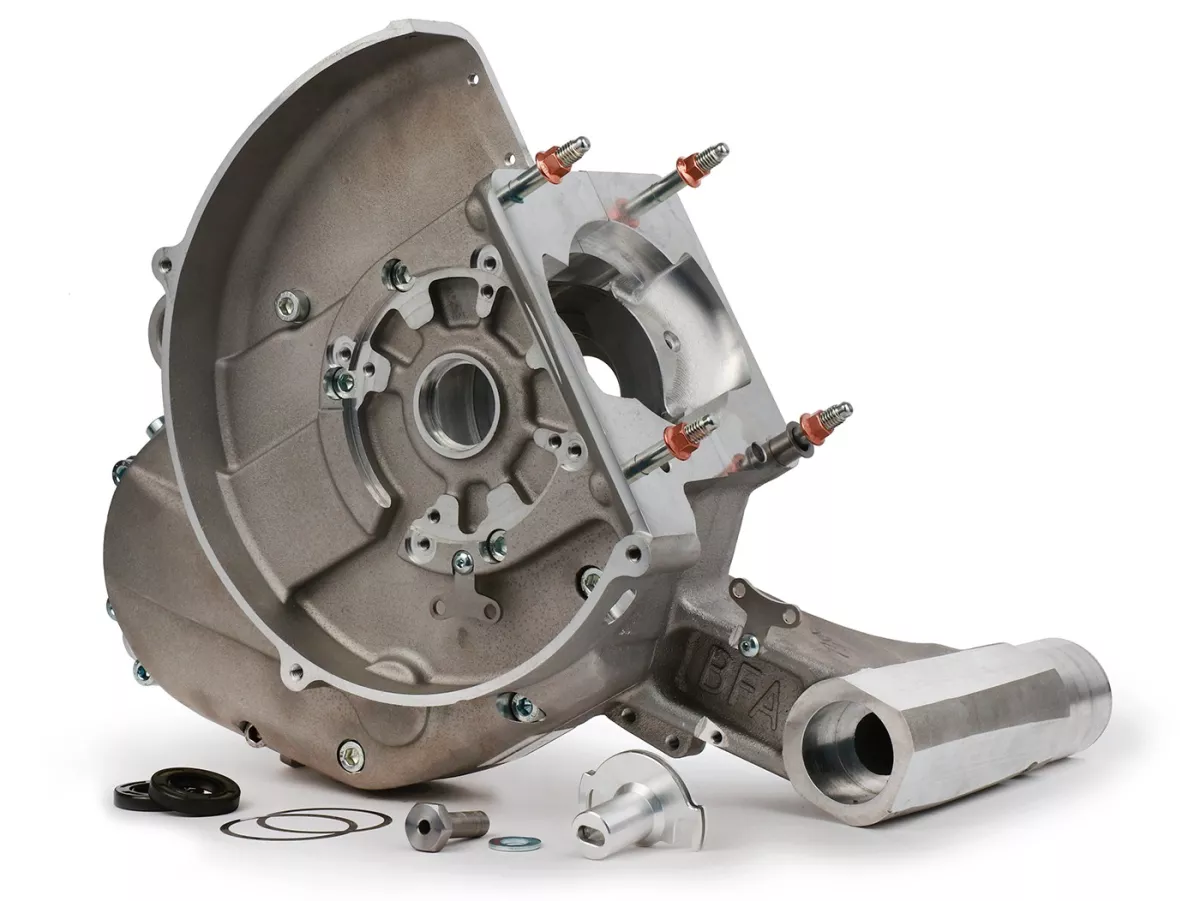
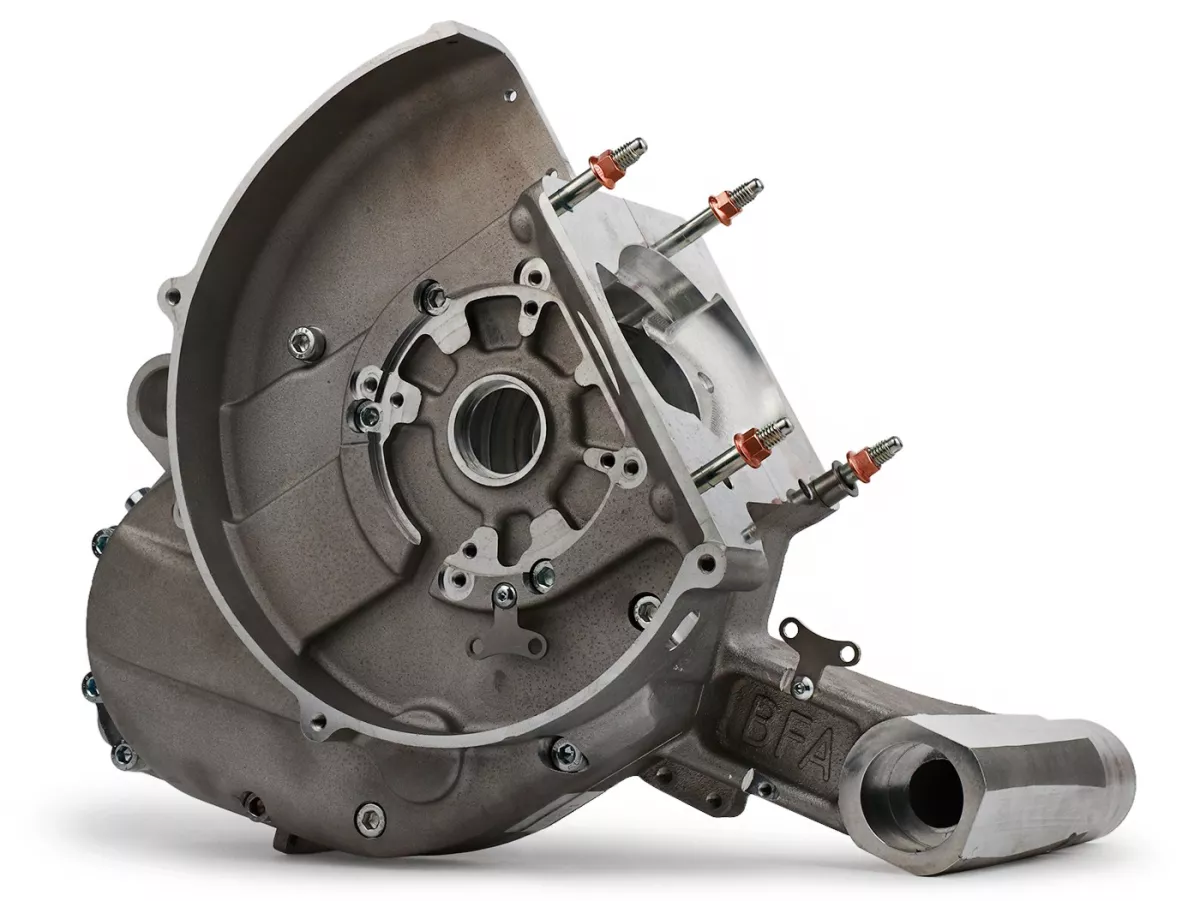
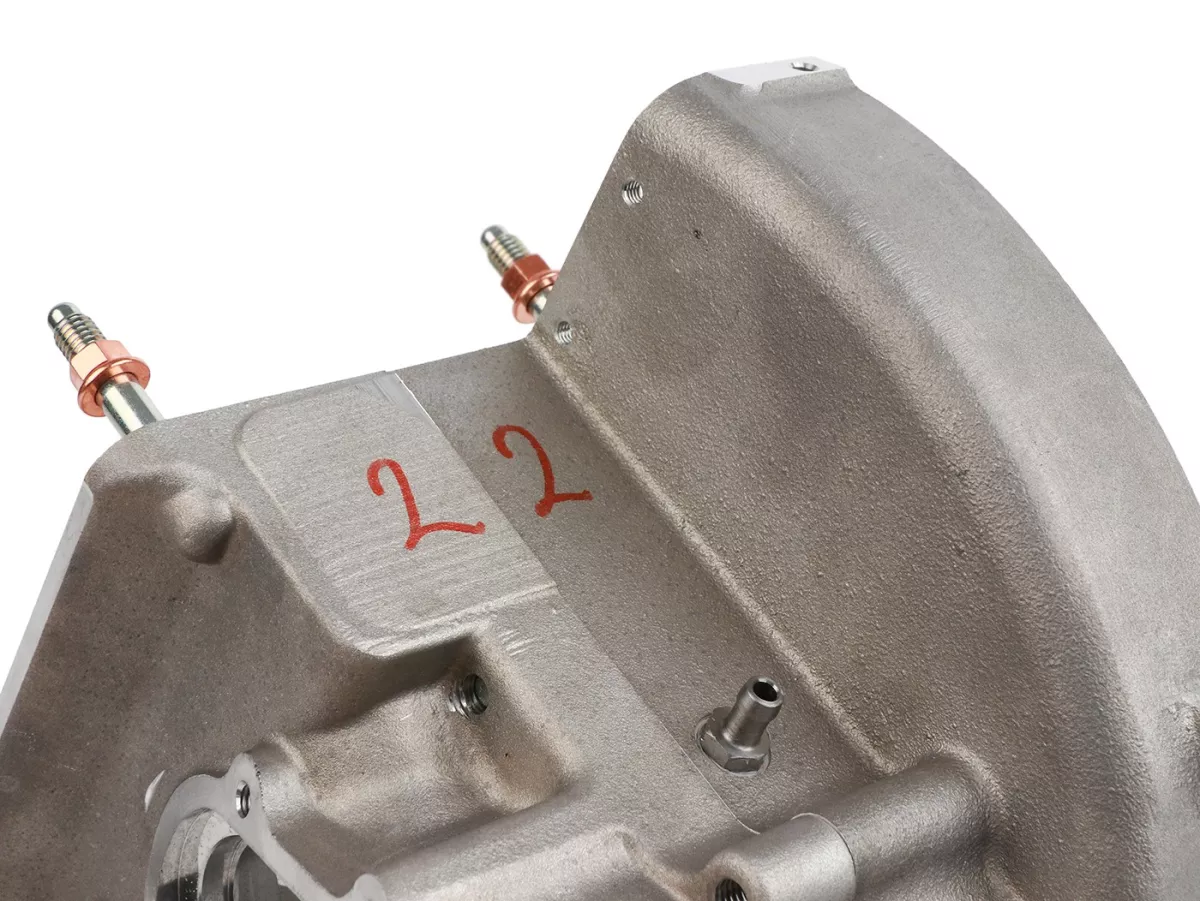
BFA288 Engine Case – High-End Engine Design for Vespa Smallframe
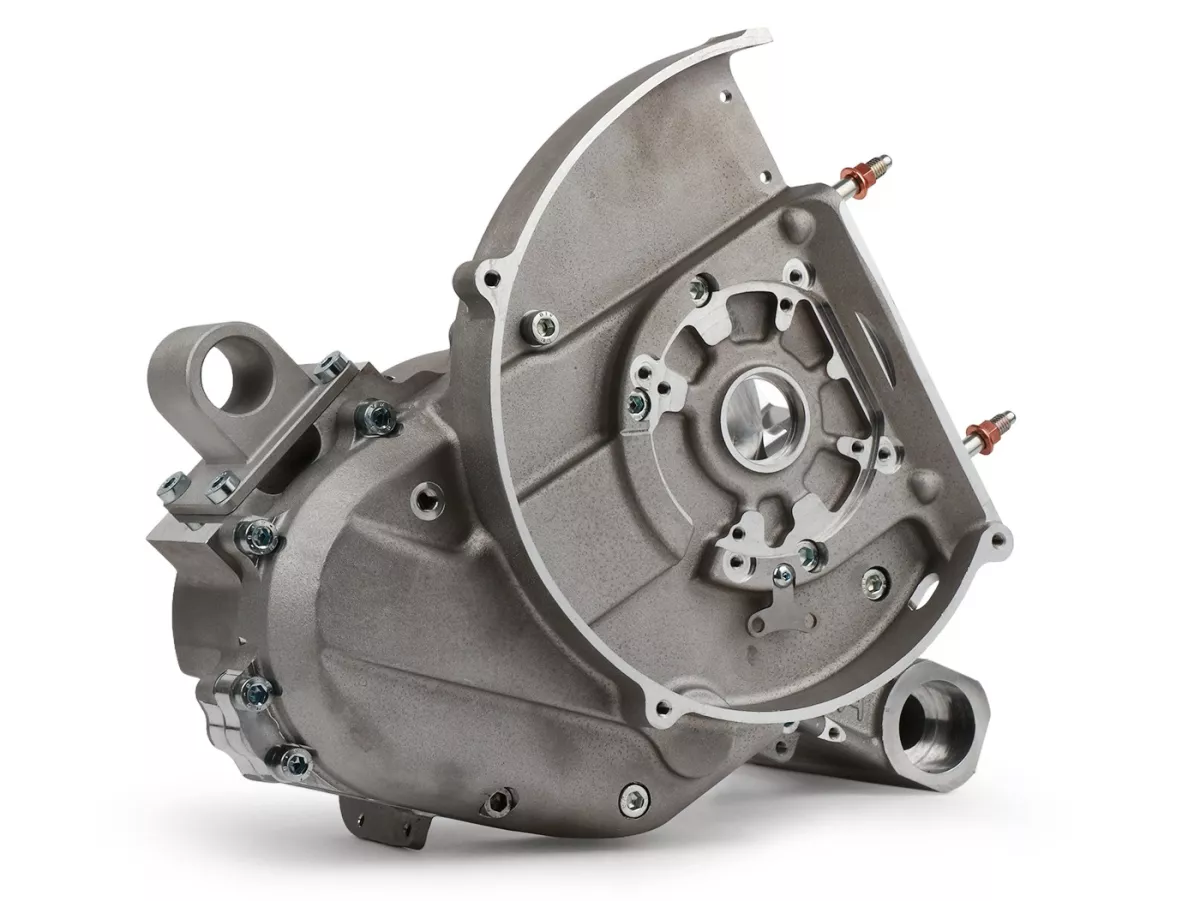
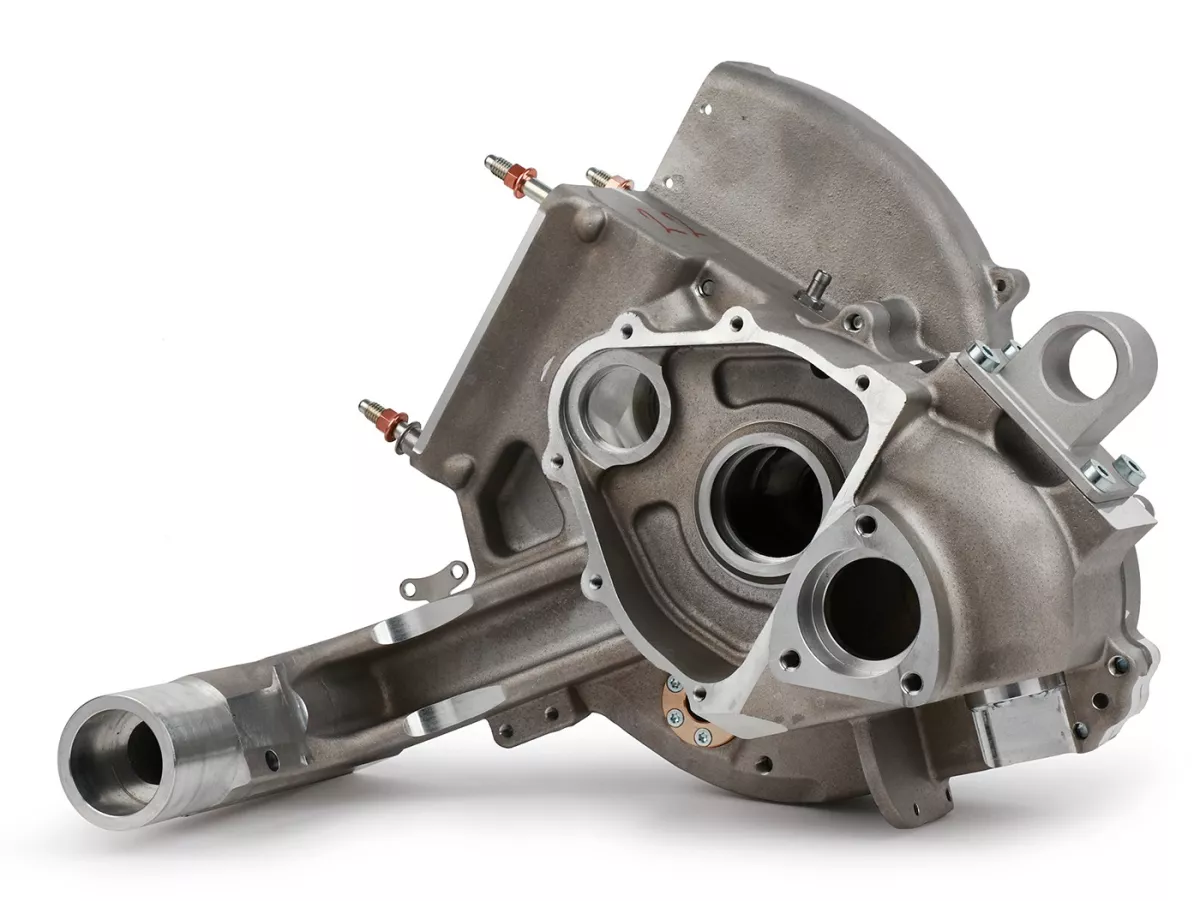
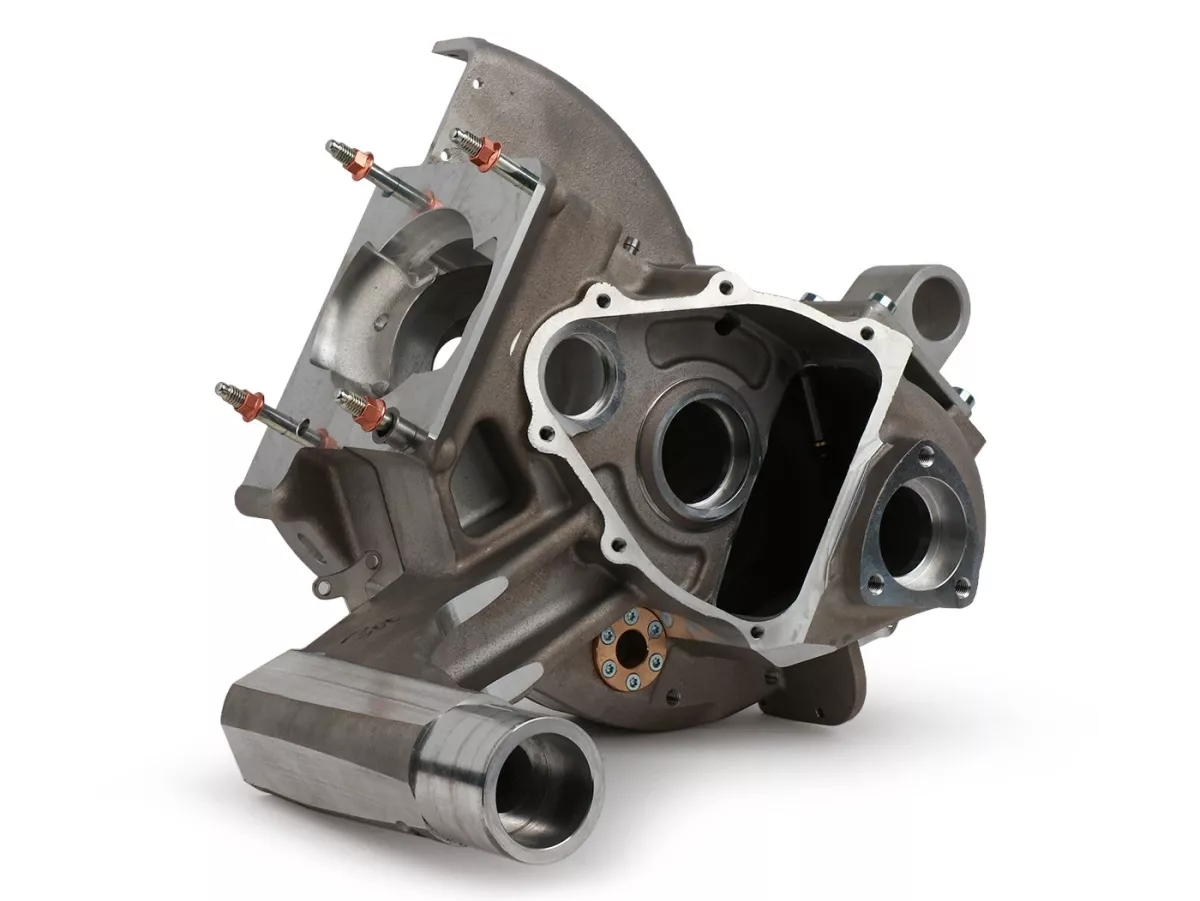
Nearly 300 cm³ of displacement in a Vespa Smallframe—with an engine design developed from the ground up for this performance class. The BFA 288 engine case forms the foundation for one of the most uncompromising air-cooled two-stroke concepts in the Vespa Smallframe segment.
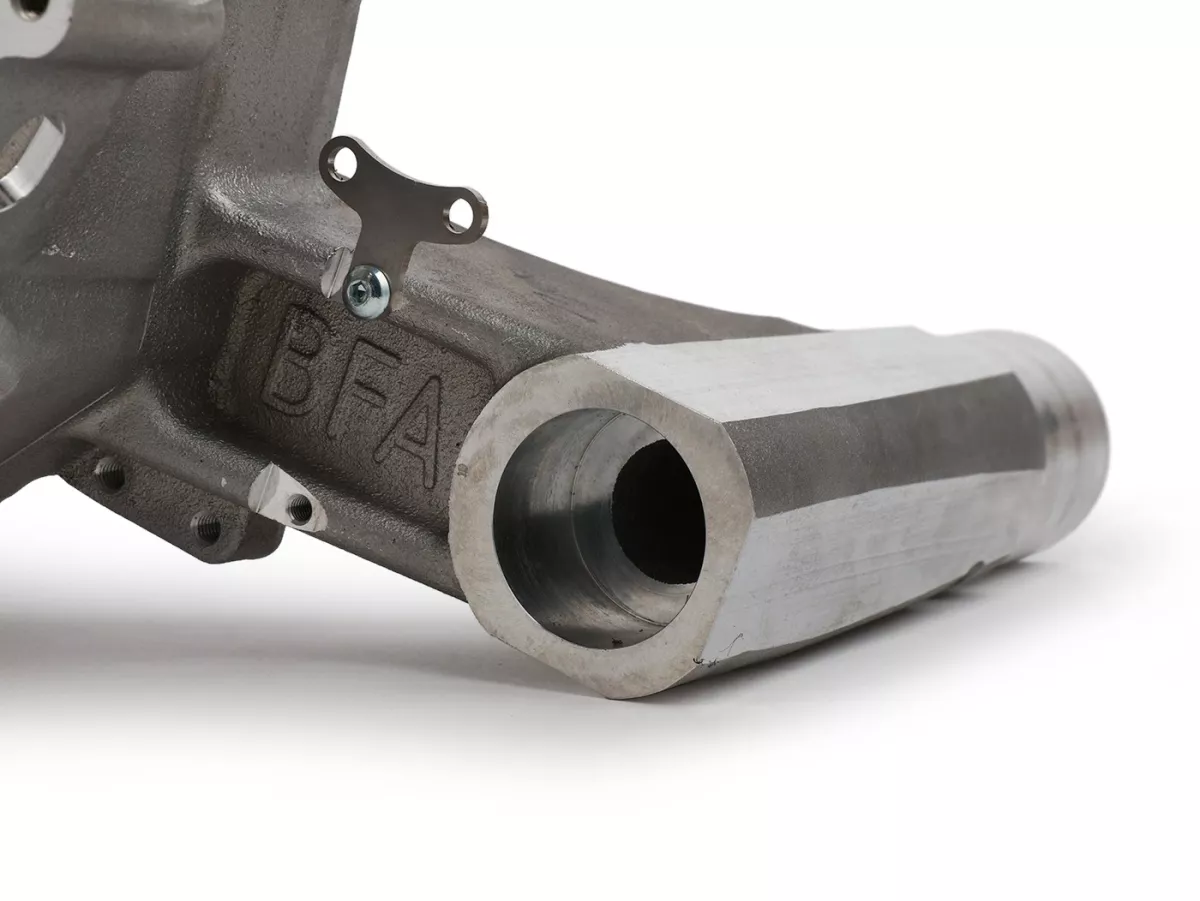
Where conventional Piaggio engine cases reach their design limits, the BFA introduces a completely independent concept: solidly dimensioned cast aluminum case halves, generously sized bearing housings, and ample installation space for a specially developed, exceptionally durable crankshaft.
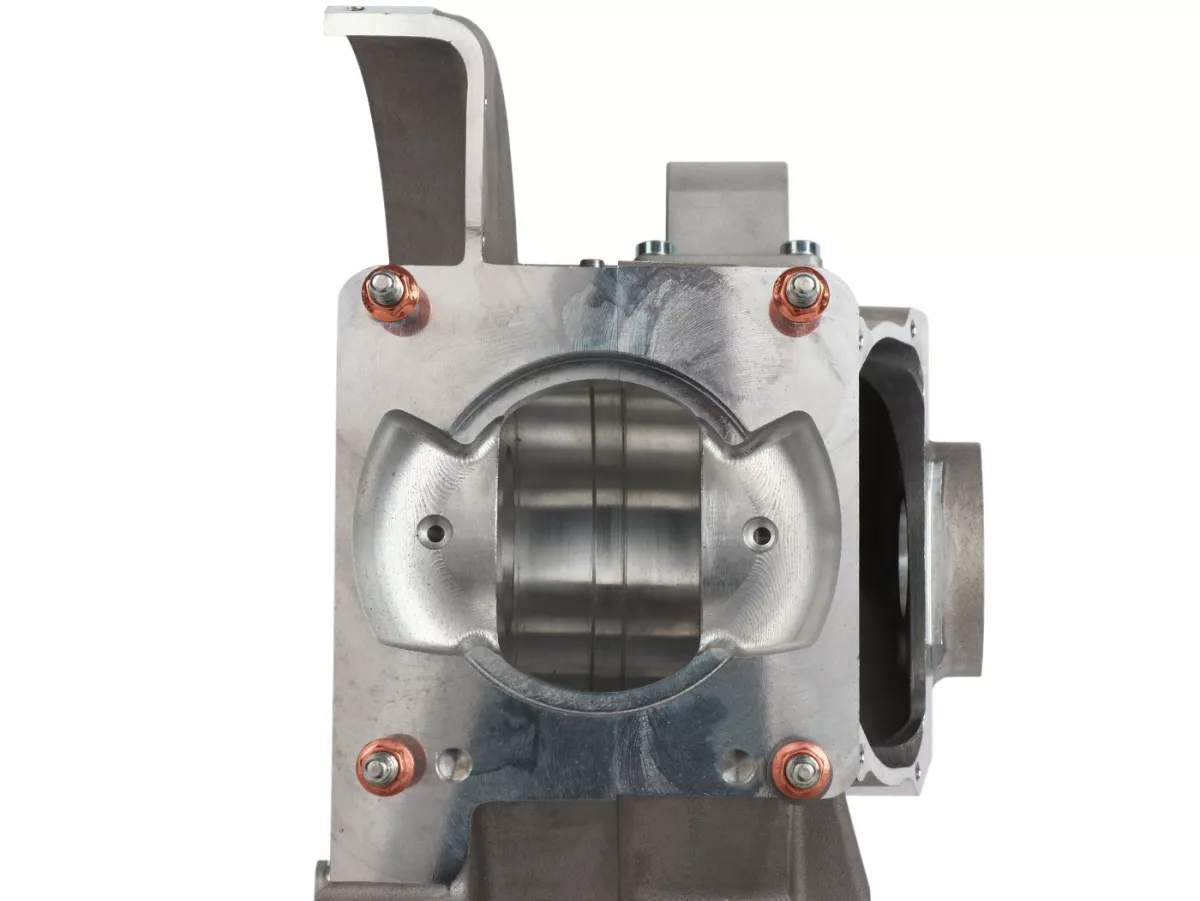
The casing is already prepared to accommodate the BFA-288 direct-diaphragm cylinder. This eliminates the need for the time-consuming fundamental modification of a stock engine casing to accommodate the extraordinary dimensions of this cylinder.
Original Design Instead of a Reinforced Stock Crankcase
The BFA housing is not a modified copy of the original Piaggio design. It was specifically engineered for high-displacement, high-performance engines, where the loads on the crankshaft assembly, bearings, and power transmission are significantly greater than those of a standard small-frame engine.
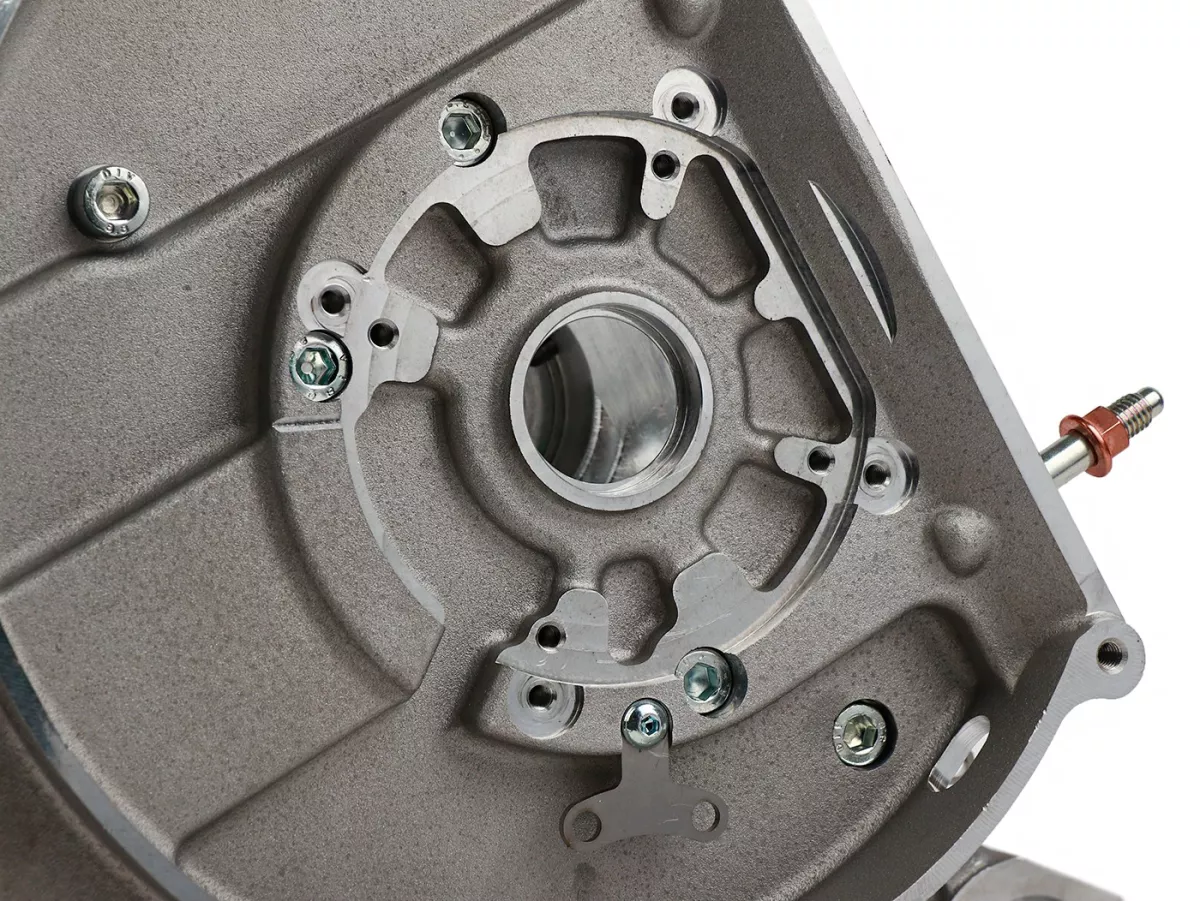
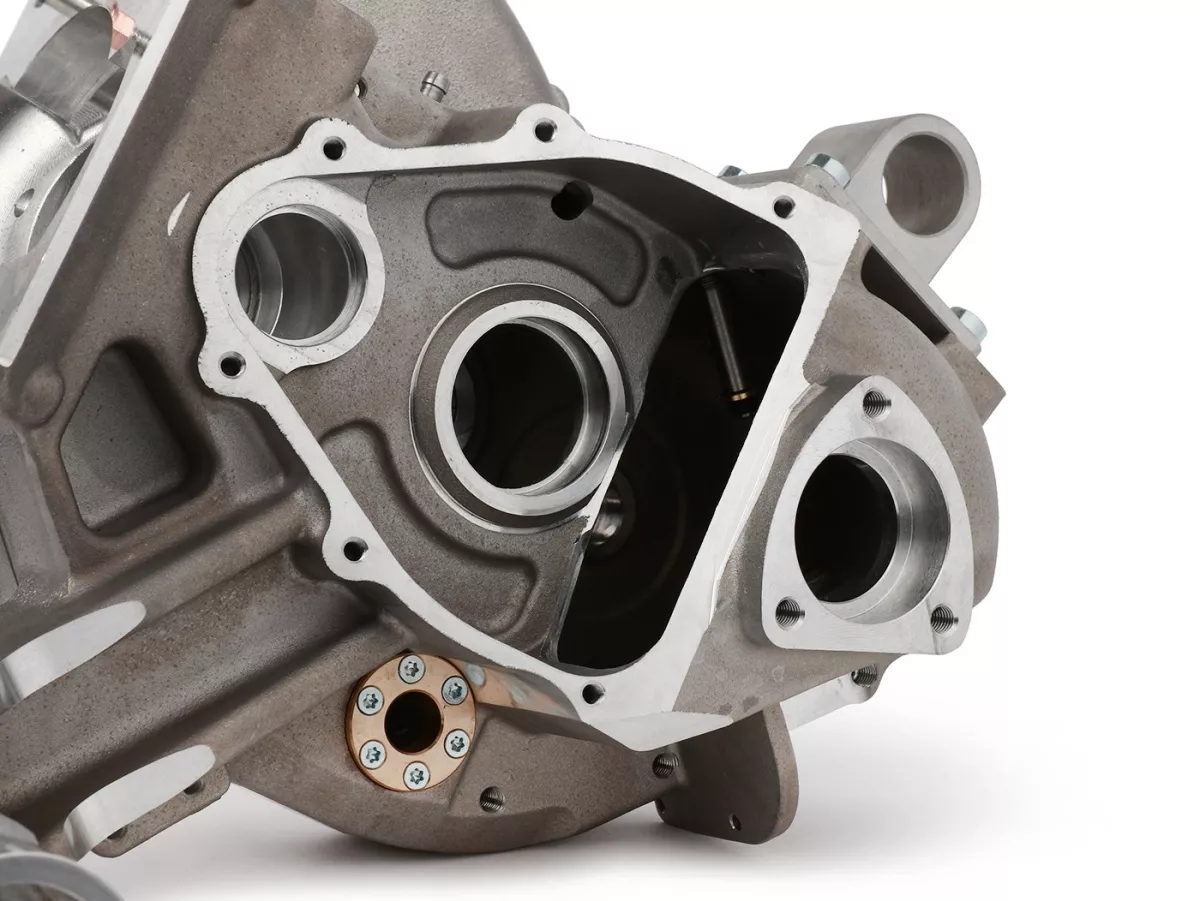
The solid cast aluminum construction features generous material thicknesses in the area of the crankshaft bearings and the high-stress sections of the housing. Precisely machined bearing and mating surfaces form the basis for a stable and durable engine structure.
A distinctive design feature is the installation space for the exceptionally wide solid-flange crankshaft. The additional crankshaft width enables a stable design with high rotating mass, which is housed within the crankshaft bearings.
At the same time, the overall design remains tailored to the installation requirements of classic Vespa small-frame vehicles. This makes it possible to create an air-cooled high-performance engine that, despite its enormous displacement, can generally be accommodated within a small-frame chassis.
Prepared for the BFA 288 cylinder
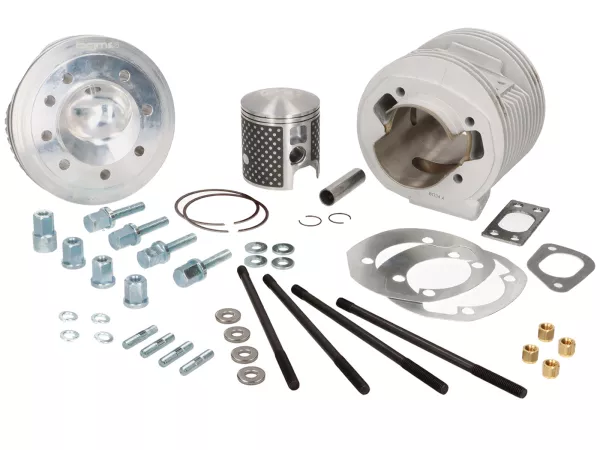
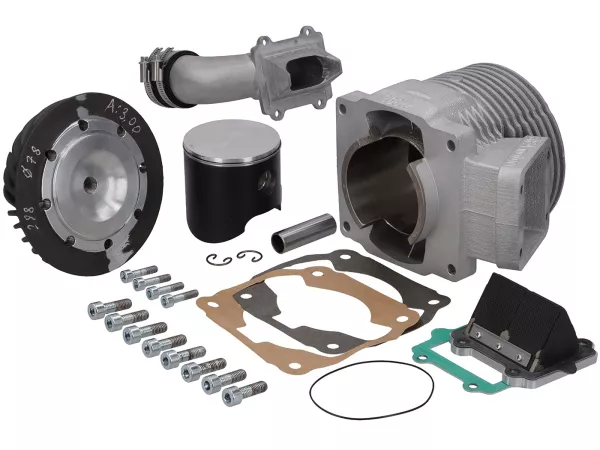
The housing features the appropriate cylinder mount for the air-cooled BFA 288. The corresponding aluminum cylinder has a bore of 78 mm and a crankshaft stroke of 60 mm, and features five overflow channels as well as a three-part exhaust port.
A key feature is the diaphragm intake located directly on the cylinder. Fresh air enters the cylinder directly via the diaphragm intake manifold, meaning the intake is not restricted by the classic rotary valve geometry of a Piaggio engine housing.
This design freedom enables performance-oriented engine concepts with a large intake cross-section, a generous overflow layout, and a correspondingly designed exhaust system.
Crankshaft and Power Transmission
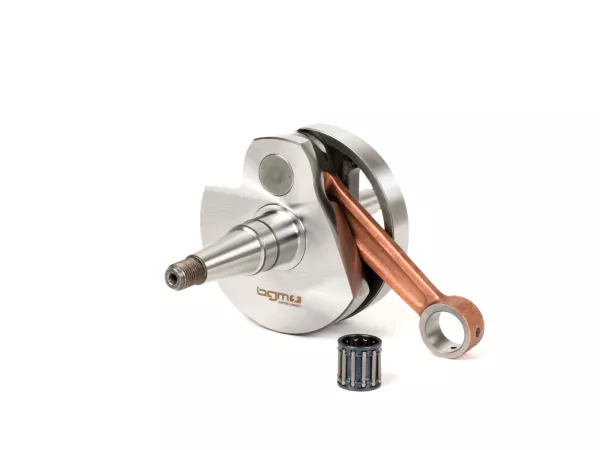
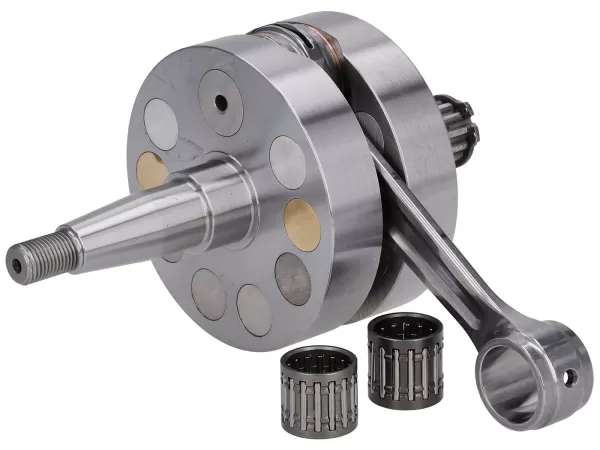
A specially developed solid-flange crankshaft with a 60 mm stroke and 120 mm connecting rod length is designed for the BFA 288. The wide design and sophisticated balancing—featuring up to 16 heavy-metal inserts—are tailored to the high inertial forces of the large-displacement two-stroke engine.
Another distinctive feature is the positive-lock connection between the primary pinion and the crankshaft. Instead of a conventional small-frame mounting, the BFA concept uses a special gear teeth design.
When assembling the engine, the crankshaft, primary drive, and clutch must therefore be considered as a coordinated system. A standard Piaggio small-frame crankshaft or a conventional primary pinion cannot simply be used as-is.
Transmission and Clutch for High Torque
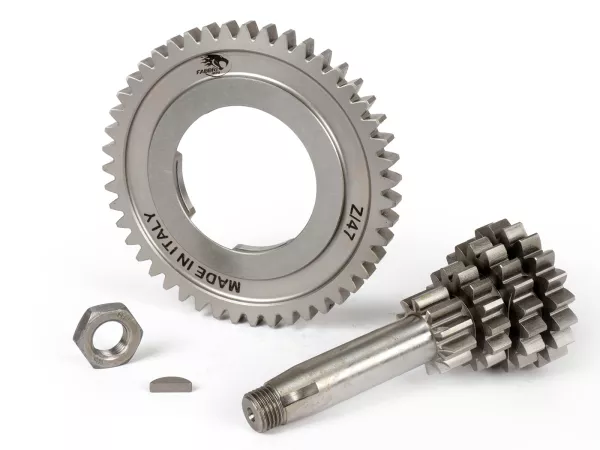
The performance potential of the BFA 288 also places the highest demands on the transmission. BFA offers specially developed four- and five-speed transmissions with reinforced construction for this purpose.
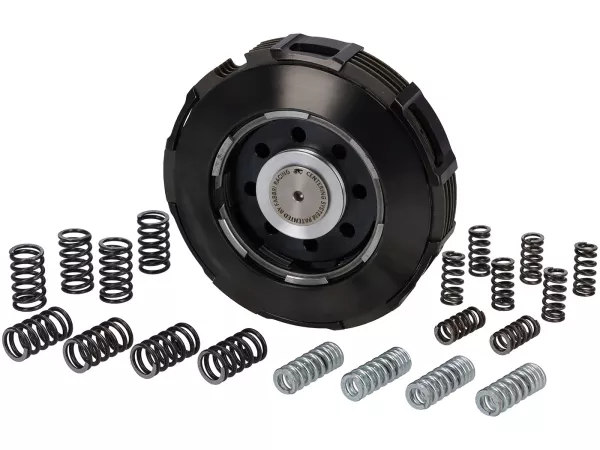
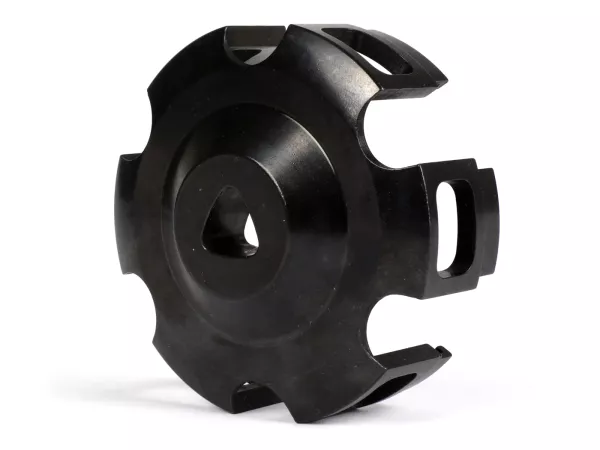
A particularly interesting solution is the BFA power transmission system with a positive-lock square or polygonal connection between the secondary shaft and the clutch hub. Instead of a small key, torque is transmitted via a larger contact surface.
This allows the high motor power to be transmitted more reliably. A prerequisite is the use of components that are compatible with one another. The shift pawl, gear ratio, and clutch linings should also be matched to the intended application.
Technical Data
| Feature |
Value |
| Manufacturer | BFA |
| Component | High-end motor housing |
| Material | Cast aluminum |
| Cylinder Mounting | BFA 288 |
| Cylinder cooling | Air-cooled |
| Intake system | Direct diaphragm on the cylinder |
| Specified Crankshaft | BFA Special Crankshaft |
| BFA 288 crankshaft stroke | 60 mm |
| Connecting rod length BFA 288 | 120 mm |
| Bore BFA 288 | Ø78 mm |
| Transmission | Compatible 4-/5-speed systems |
| Shift lever | Included in delivery |
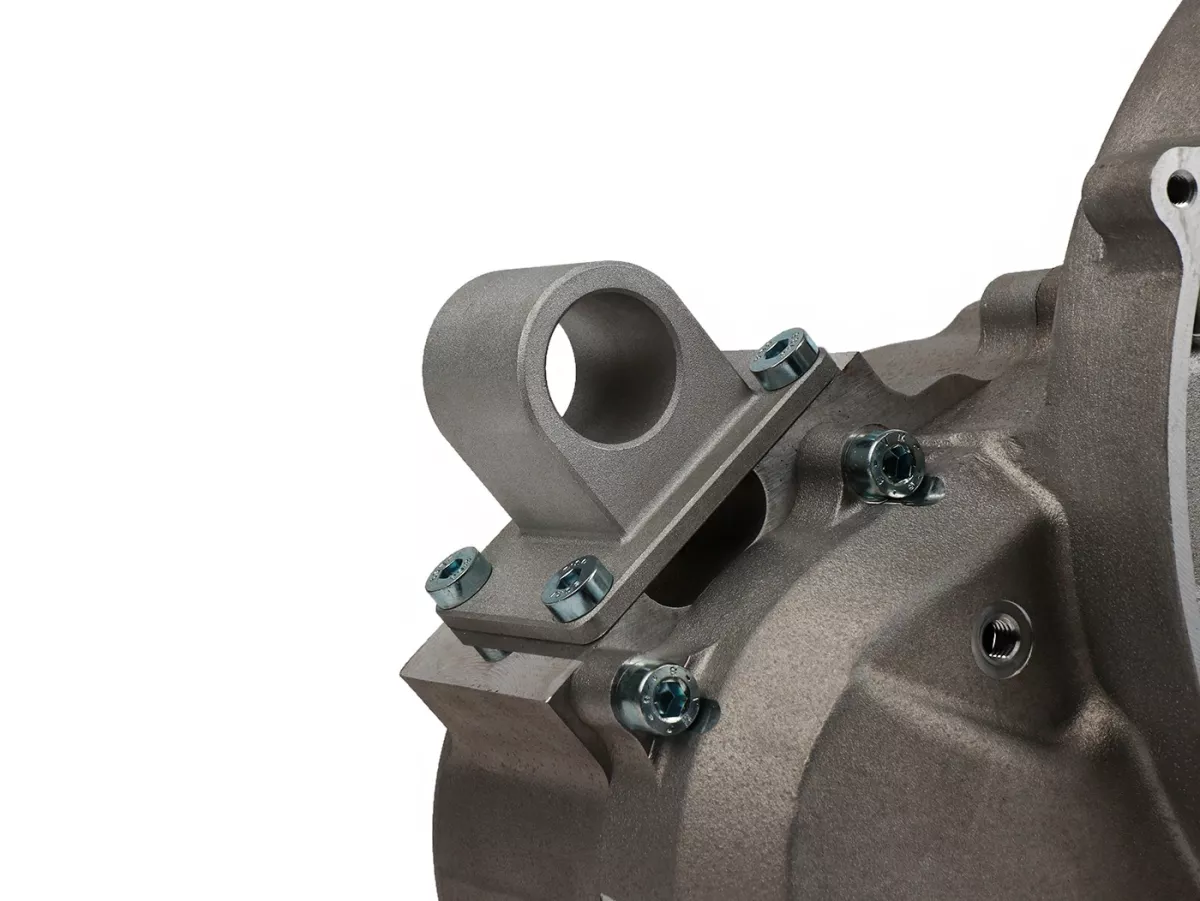
| Shock absorber mount | Included in delivery |
| Bearings / Shaft seals | Not included |
| Applications | Racing / High-End Tuning |
Contents
- BFA engine housing for BFA 288
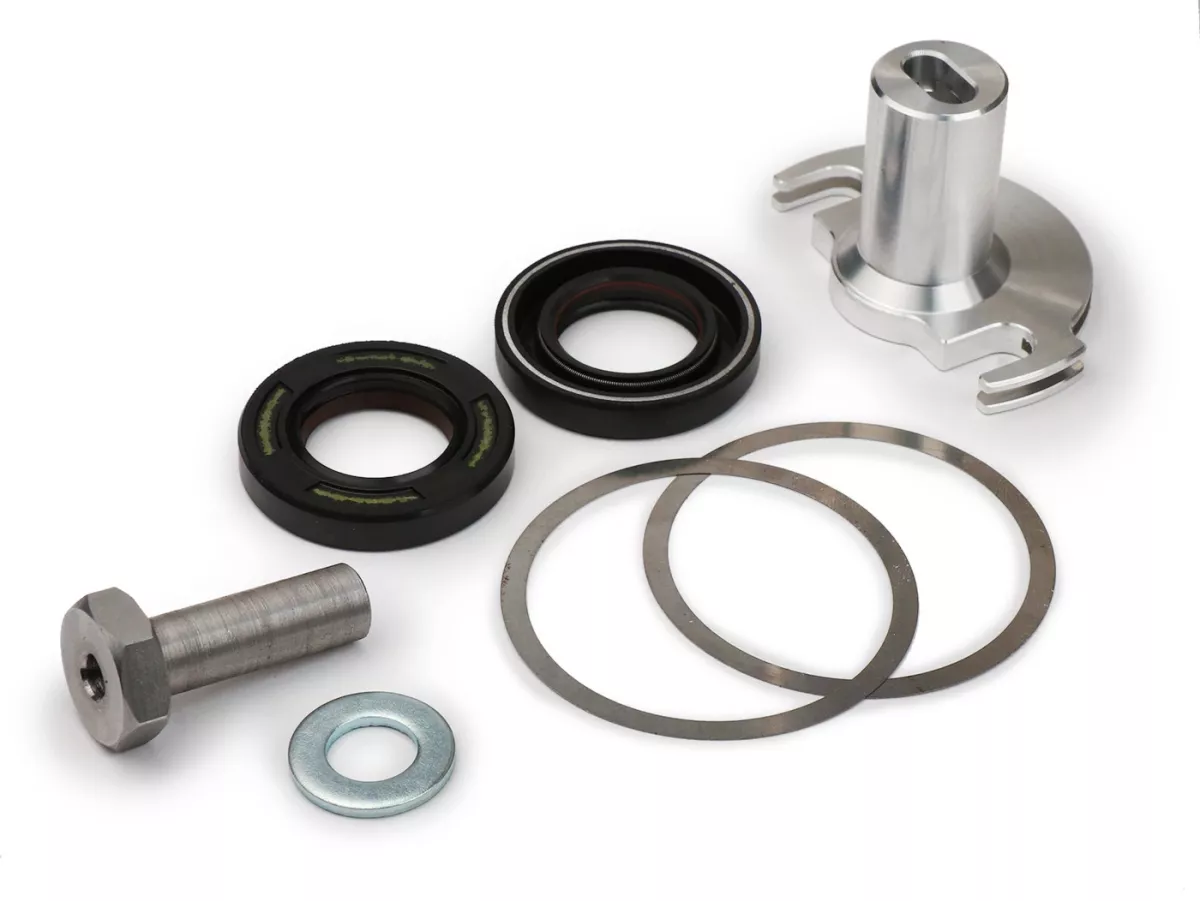
- Shift actuator
- Shock absorber mount
Important: The engine case is shipped without bearings or shaft seals. These must be ordered separately for engine assembly.
Also not included are the cylinder, crankshaft, transmission, clutch, primary drive, intake system, ignition, and exhaust.
Tips for engine assembly
1. Use the correct bearings and shaft seals
The particularly robust crankshaft design places high demands on the bearings. For assembly, bearings and shaft seals compatible with the BFA housing must be ordered separately. Due to the special bearing dimensions, the components should be selected according to the BFA manufacturer’s specifications. Simply using the bearings from a standard Piaggio small-frame engine is not recommended.
2. Plan the crankshaft and primary drive as a single unit
The special crankshaft mounting for the primary pinion requires early coordination of the components. The crankshaft, primary gear ratio, and clutch must be mechanically compatible. A positive-lock power transmission is particularly advantageous at high torques.
3. Carefully space the transmission components
Regardless of whether a four- or five-speed transmission is used, axial play, gear fit, and the function of the shift pawl must be carefully checked. In this power class, the gear ratios should also match the actual usable RPM range.
4. Consider the installation space within the frame
The large cylinder and intake system requires significantly more space than a conventional small-frame engine. In particular, the positions of the carburetor, shock absorbers, cylinder head cover, and exhaust, as well as the clearance to the side cover, should be checked before final assembly.
5. Don’t Neglect Cooling
The large air-cooled cylinder requires an effective cooling airflow. A suitable fan shroud, cylinder head cover, and a high-performance fan are therefore just as important as the actual cylinder tuning. Thermal reserves must be taken into account, especially during prolonged operation.
6. Choose engine characteristics suited to the application
A displacement of nearly 300 cm³ offers considerable torque potential even with moderate valve timing. For an engine that drives well, smooth power delivery, appropriate gear ratios, and reliable thermal tuning are often more sensible than a configuration designed exclusively for maximum RPM.
Compatible Vehicles
The housing is designed for installing compatible BFA engines in classic Vespa small-frame vehicles:
- Vespa 50 / N / L / R / Special
- Vespa 90 / 100
- Vespa 125 Primavera (PV125)
- Vespa 125 Primavera ET3
- Vespa PK 50 / 80 / 125
- Vespa PK S / XL / XL2
The vehicle compatibility information describes the general application for use with corresponding small-frame models. Depending on the model, exhaust system, intake configuration, and suspension setup, additional modifications may be required.
Frequently Asked Questions (FAQ)
Is the BFA engine case truly plug-and-play?
The housing design is prepared to accommodate the intended BFA-288 cylinder and the associated system components. This eliminates the need for major modifications to a stock engine housing to accommodate the exceptionally large cylinder.
However, building a complete engine still requires careful selection and tuning of the crankshaft assembly, transmission, clutch, intake, ignition, and cooling system. Depending on the vehicle and the components being installed, additional modifications may be necessary.
Are bearings and shaft seals included?
No. The engine block is expressly supplied without bearings or shaft seals. These must be ordered separately in the dimensions that match the BFA block.
Is the shift actuator included?
Yes. The shift actuator, along with the shock absorber mount, is included with this engine housing.
Can a BFA cylinder with a displacement of approximately 300 cm³ also be used?
The housing is designed for the BFA-288 small-frame concept. For other displacement variants—such as versions designated as 293 or 300 cm³—compatibility must be verified based on the specific cylinder and crankshaft geometry. There is no blanket approval for all BFA cylinders in this displacement class.
Can a BFA 306 Largeframe cylinder be used?
The BFA 306 was developed for a different engine design with a 64 mm stroke. Direct plug-and-play compatibility with this Smallframe housing has not been documented.
Can I use an original Vespa Smallframe crankshaft?
No. The BFA 288 requires a crankshaft specifically developed for this engine design, with a 60 mm stroke and a 120 mm connecting rod length. The mounting for the primary sprocket also differs from that of a standard Piaggio crankshaft.
Is a five-speed transmission absolutely necessary?
No. In principle, four-speed systems with sufficient load capacity are also possible. However, a properly spaced five-speed transmission can help make better use of the power band of a high-performance engine. The load capacity and compatibility of the selected components are crucial.
Can a stock small-frame transmission be used?
Due to the high torque potential, a transmission specifically designed for this purpose is recommended. The secondary shaft, primary drive, clutch, and shift mechanism must also be compatible. There is no blanket approval for all stock transmission components.
Is the engine case approved for use on public roads?
No. The BFA high-performance engine case is intended for motorsports and does not have general approval for use on public roads.


 DE | €
 Tip of the day