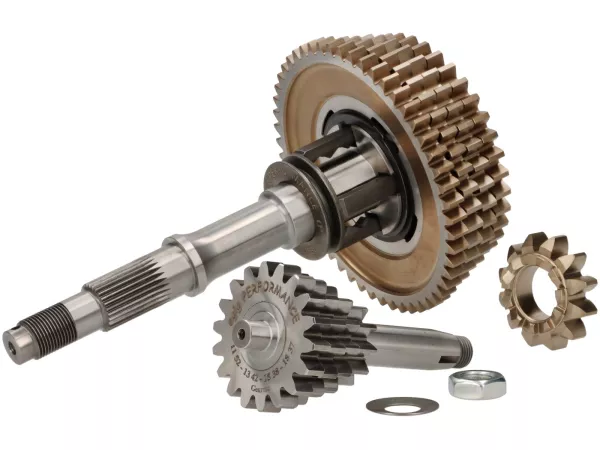
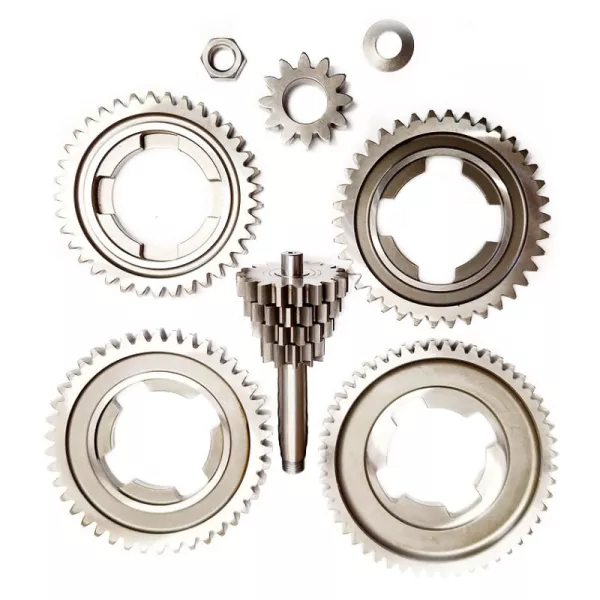
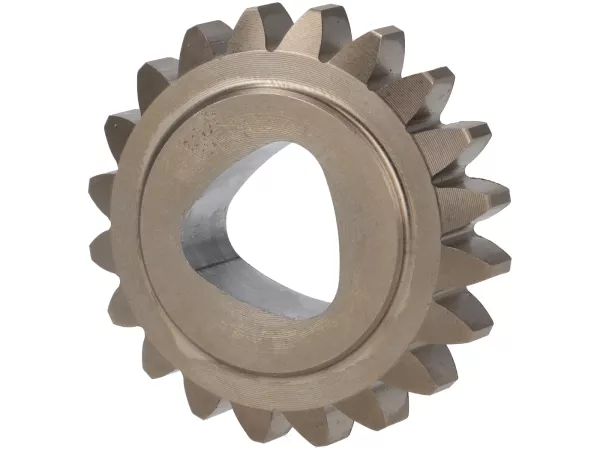
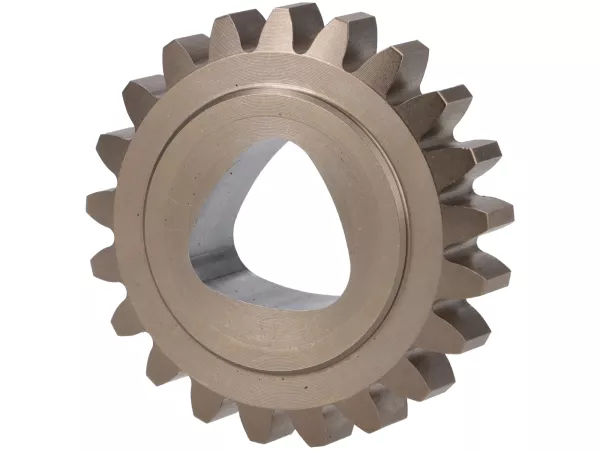
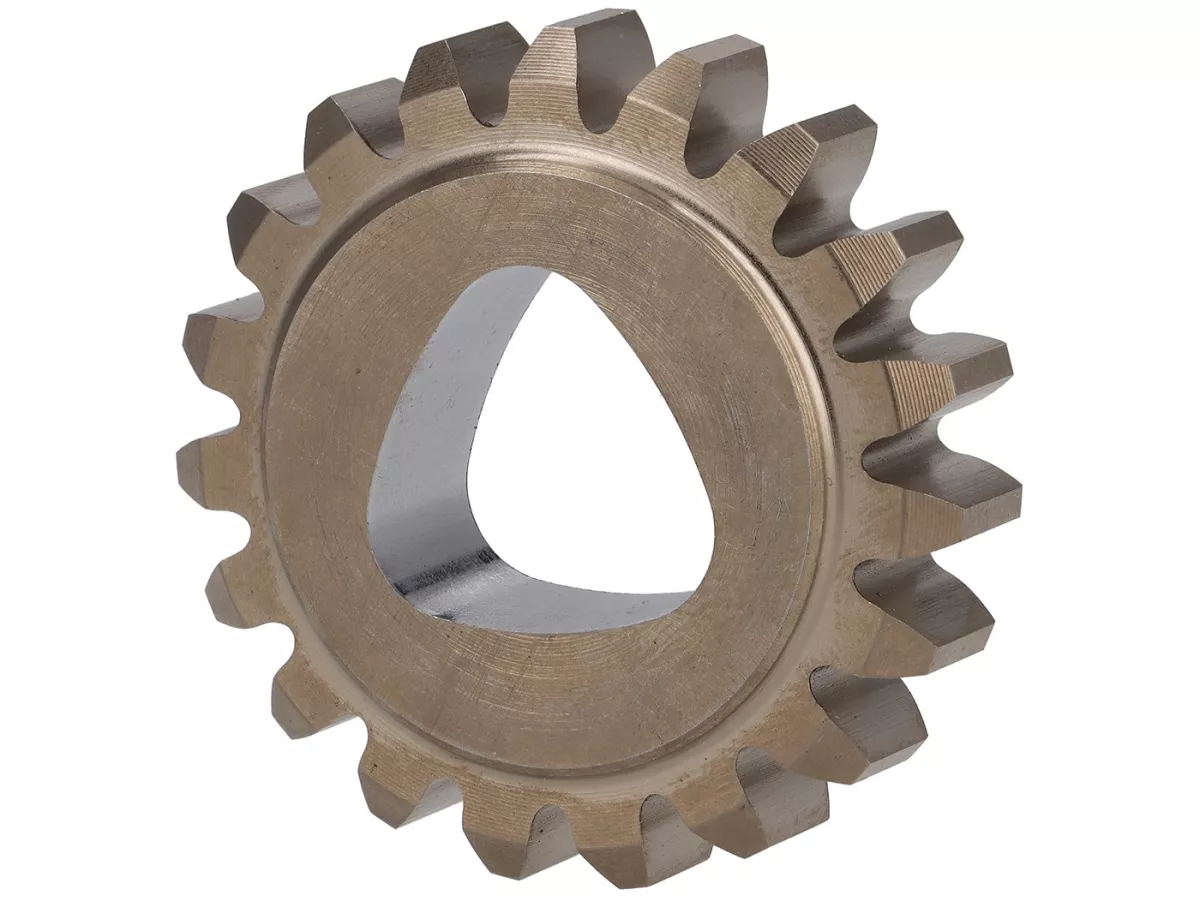
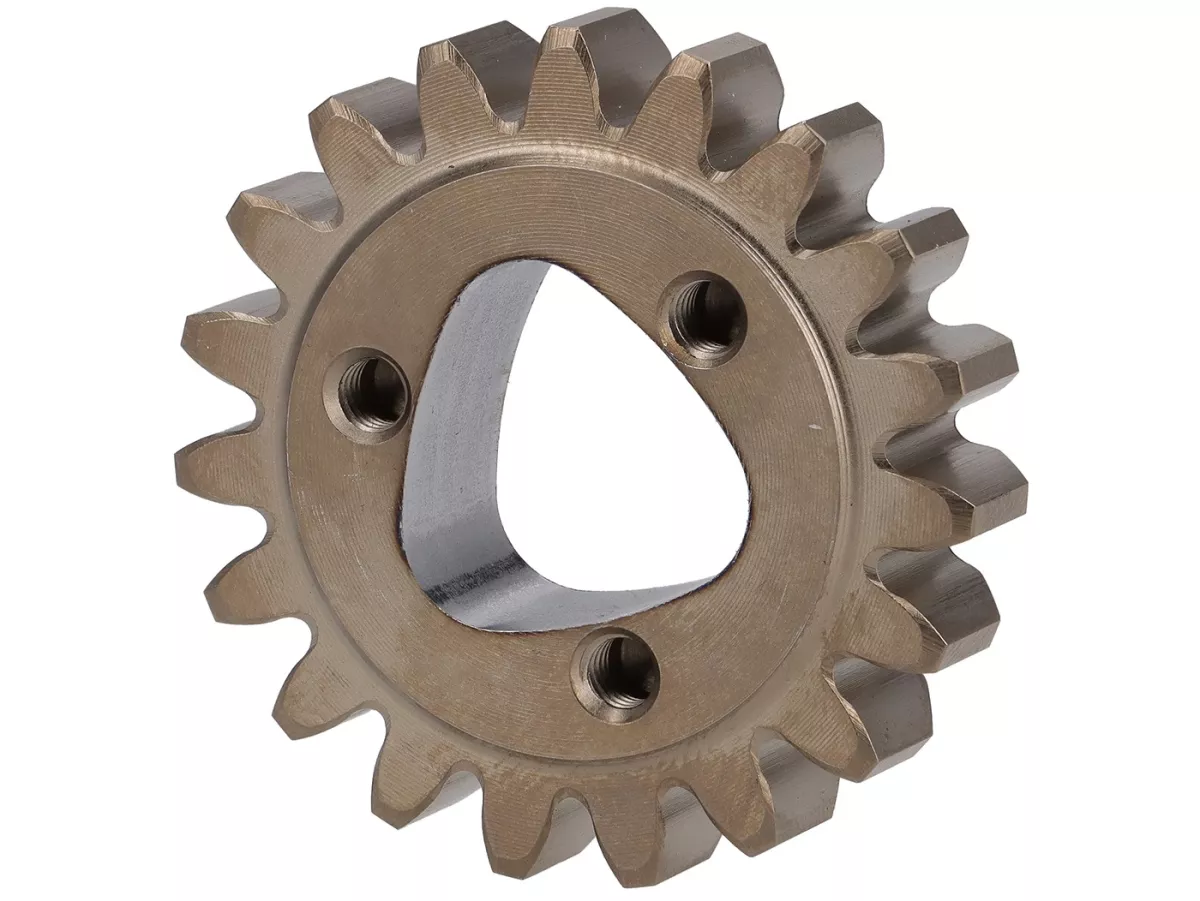
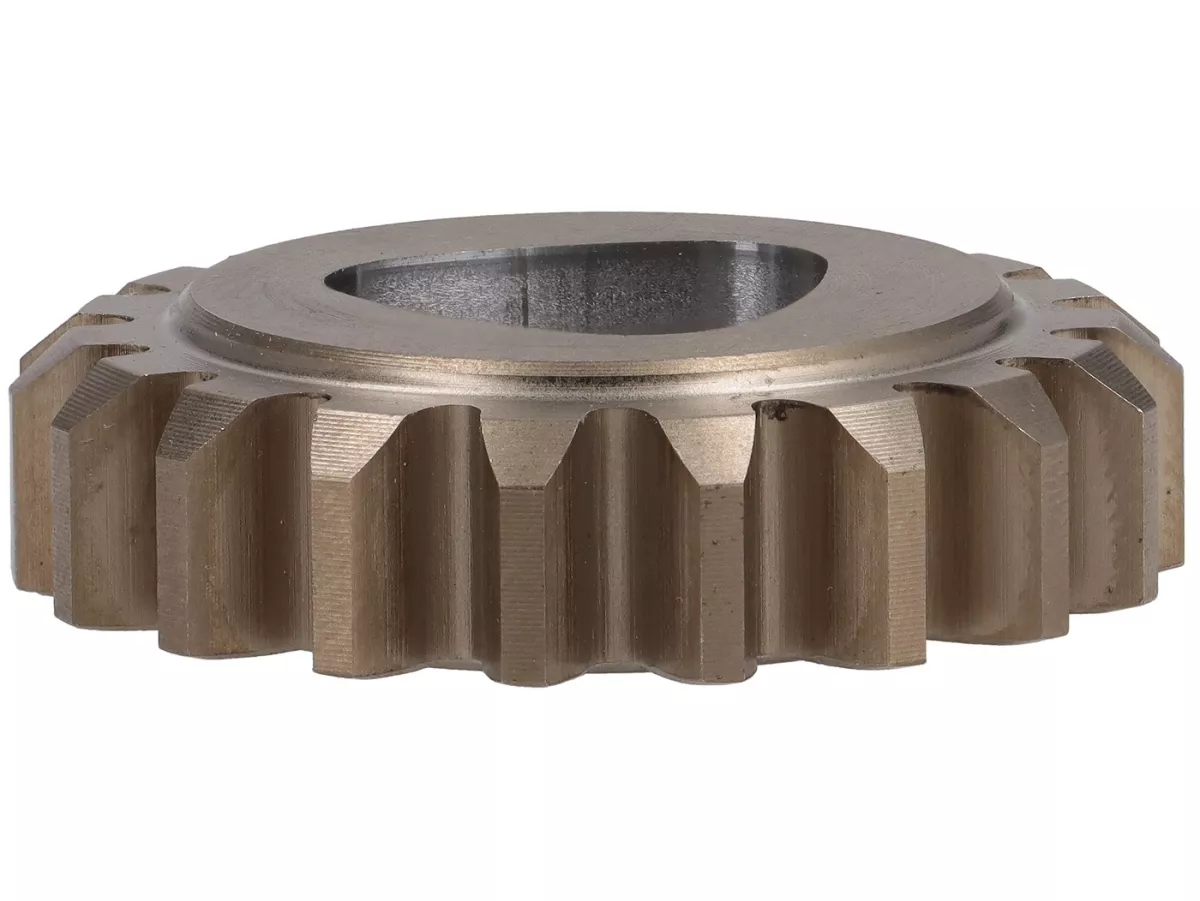
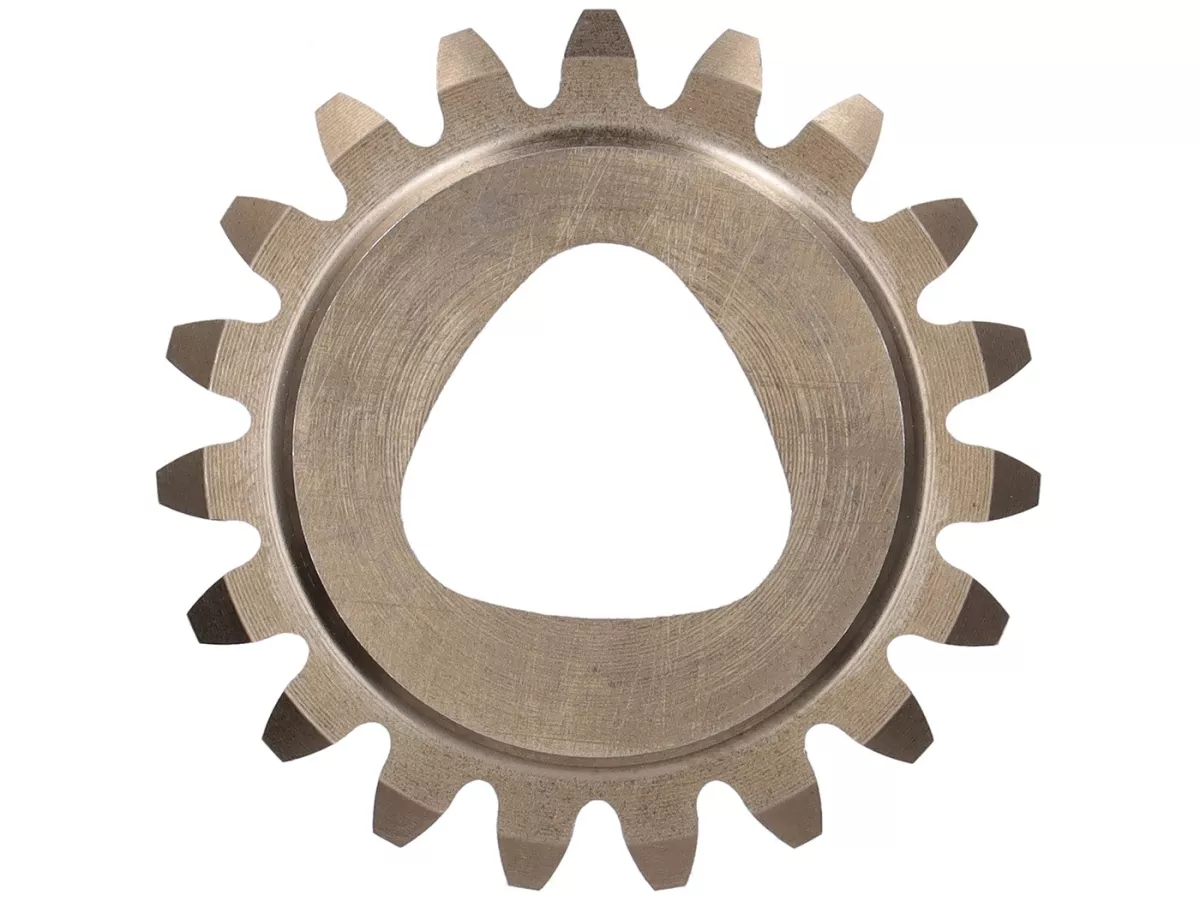
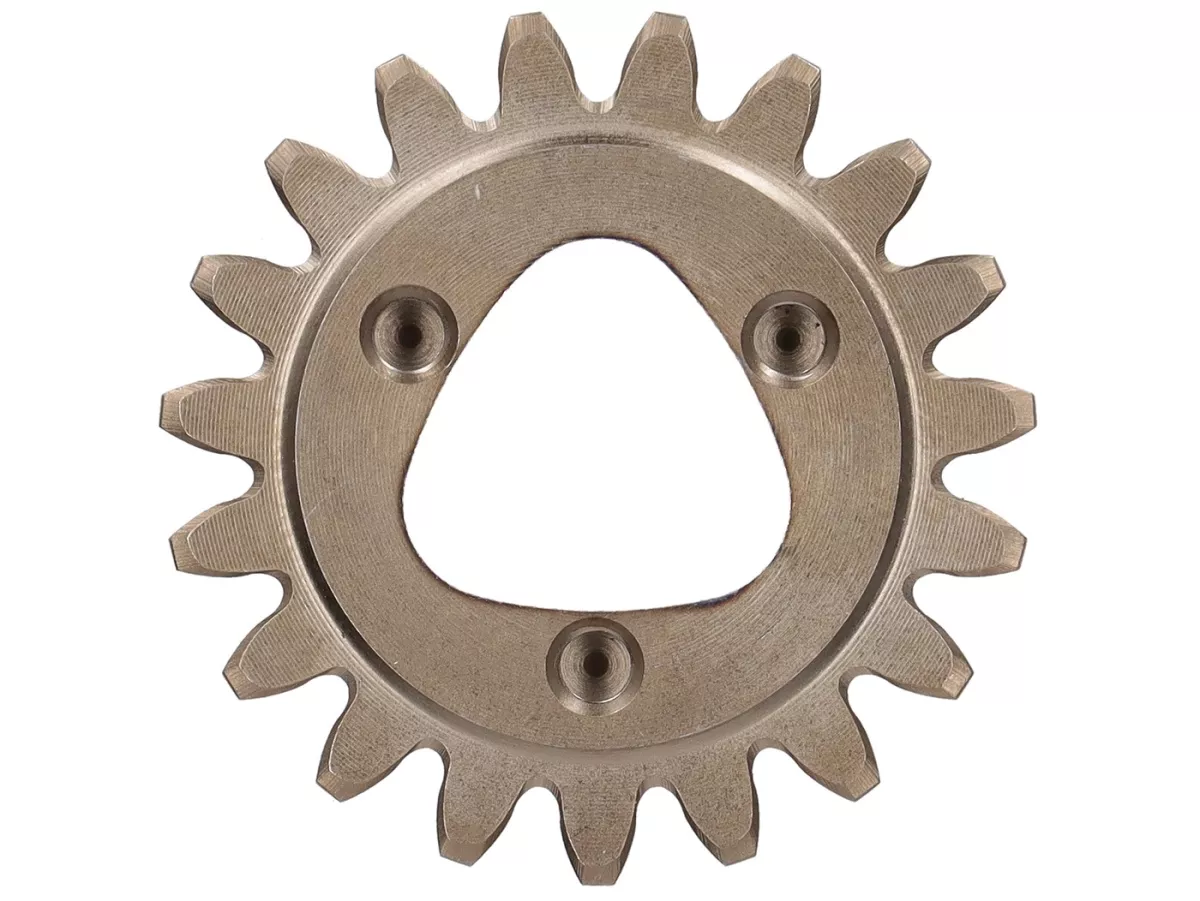
FAIO / EGIG PERFORMANCE Polygon Primary Sprocket for Z52 Primary Wheel
Straight-toothed for Vespa V50, PV125, ET3, PK50, PK80, and PK125
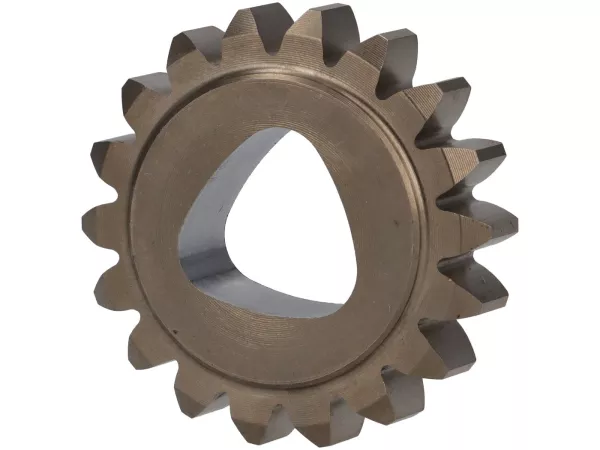
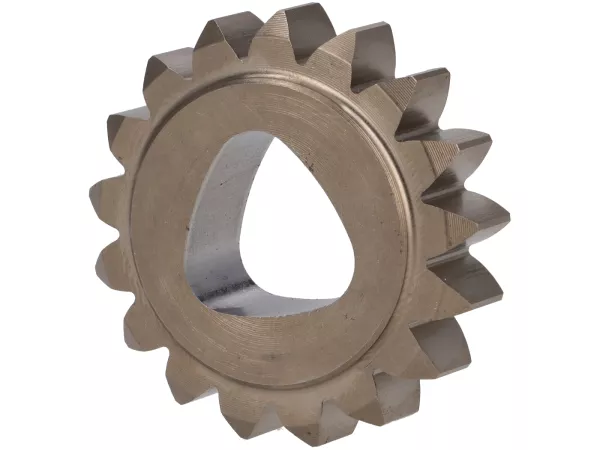
The FAIO / EGIG PERFORMANCE Poligon primary pinions with 17, 18, or 19 teeth are designed for the straight-toothed FAIO / EGIG Z52 primary sprocket. Depending on the variant selected, this results in a primary gear ratio of 3.06, 2.89, or 2.74.
The unusually low number of teeth allows for a robust tooth geometry with a wide tooth base. At the same time, the Poligon connection transmits engine torque via a positive-lock engagement between the crankshaft and the primary pinion. As a result, the extremely high tightening torque required to generate the necessary frictional engagement in a conventional tapered connection is not necessary.
FAIO / EGIG PERFORMANCE
Z17 / Z18 / Z19
for Z52 primary sprocket
Polygonal Mounting
straight-toothed
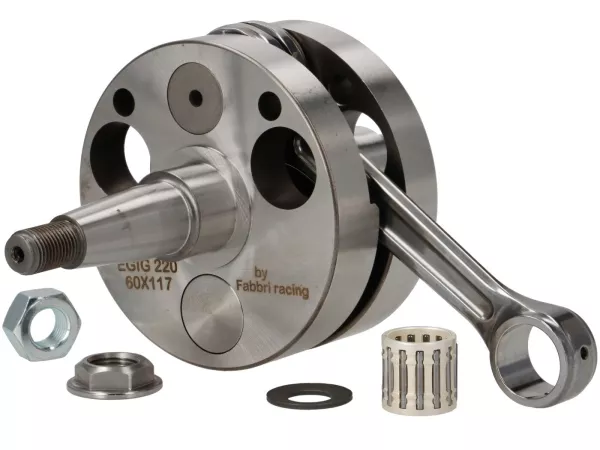
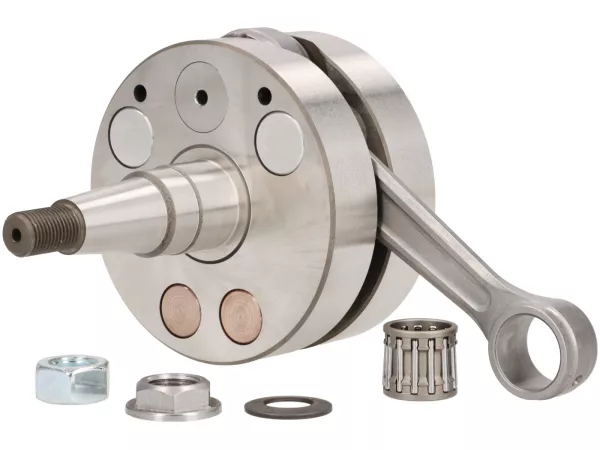
Polygon crankshaft required
Advantages and Features
Available with 17, 18, or 19 teeth
Intended exclusively for the FAIO / EGIG PERFORMANCE Z52 primary sprocket
Primary gear ratios from 3.06 to 2.74 possible
Large individual teeth due to the reduced total number of teeth
Robust tooth base for high torques and severe load cycling
Straight-tooth design without additional axial tooth forces
Positive-lock torque transmission via the polygonal mounting
Significantly lower tightening torque than with a highly preloaded tapered connection
Less stress on the comparatively slender crankshaft thread
For high-displacement, high-torque Vespa Smallframe engines
Three gear ratios for the Z52 primary sprocket
With the three primary sprockets, the Z52 primary sprocket can be specifically adapted to the engine’s character, RPM range, gear ratios, tire size, and intended use.
Variants Compared
| Primary Sprockets |
Primary sprocket |
Calculation |
Gear Ratio |
Basic Characteristics |
| Z17 |
Z52 |
52/17 |
3.06 |
Shortest pitch with high tensile strength and easier connection to the track |
| Z18 |
Z52 |
52/18 |
2.89 |
A well-balanced mid-range option for many high-performance street engines |
| Z19 |
Z52 |
52/19 |
2.74 |
Longest gear ratio for engines with a wide power band and high torque |
The gear ratio is calculated by dividing the number of teeth on the primary sprocket by the number of teeth on the primary pinion. A higher number indicates a shorter gear ratio.
Z17 – short primary gear ratio 3.06
The 17-tooth primary pinion, when paired with the Z52 primary sprocket, results in a gear ratio of 3.06. This makes it the shortest of the three possible variants.
The shorter gear ratio enhances acceleration and gear engagement. It is particularly advantageous when the engine does not reach its usable torque until higher RPMs, when the vehicle is driven in a sporty manner, or when a longer gear ratio in fourth gear cannot be safely maintained.
Z18 – Balanced Primary Gear Ratio 2.89
The Z18 pinion, when paired with the Z52 primary sprocket, results in a gear ratio of 2.89. It falls between the other two variants and offers a balanced compromise between acceleration, gear engagement, and final drive ratio.
This ratio is suitable for many high-performance street and touring engines that have sufficient torque but do not require a ratio as long as that provided by the Z19 pinion.
Z19 – Long Primary Gear Ratio 2.74
The Z19 primary sprocket results in a gear ratio of 2.74. It is the longest combination within the Z52 system.
This variant requires an engine with a wide usable RPM range and sufficient torque. With the appropriate gear ratio, the longer primary gear ratio can reduce engine RPM at cruising speeds and better utilize the engine’s speed potential.
Do Not Select the Gear Ratio Based Solely on Peak Power
The appropriate primary gear ratio does not depend solely on the engine’s maximum power output. The decisive factors are how early the engine delivers its torque and over what RPM range.
Take the exhaust’s usable RPM range into account
Check the gear transition between third and fourth gears
Include the fourth-gear ratio
Take tire size and rolling circumference into account
Take vehicle weight and intended use into account
Z19 requires more usable engine torque than Z17 or Z18
Robust tooth geometry achieved through a reduced number of teeth
Classic Vespa small-frame primary gear ratios often use significantly higher numbers of teeth. The FAIO/EGIG system deliberately uses fewer, but larger, teeth.
With the center distance remaining unchanged, this allows the individual teeth to be designed to be stronger. In particular, the tooth root receives more material. It is precisely this area that is subjected to heavy stress during high torque and rapid load changes.
Advantages of the reduced number of teeth
Larger individual teeth: sturdier geometry than in finely divided gear pairs
Stable tooth root: more material in the highly stressed root area
High-load-capacity tooth flanks: suitable for high motor torques
Compact pinion diameter: additional clearance in the motor housing
Less machining required: depending on the motor housing, the smaller pinion diameter can reduce housing modifications
Straight-toothed
The primary pinions have straight-tooth profiles and must only be combined with the corresponding straight-tooth FAIO / EGIG primary gear Z52.
Unlike helical gearing, straight-toothed gear pairs do not generate additional axial forces. As a result, the crankshaft bearings, clutch, and locking elements are not subjected to lateral forces caused by the gearing.
Conventional Mounting via a Cone
In a conventional Vespa small-frame primary pinion, torque is transmitted via the interference fit between the pinion and the crankshaft cone. The two conical surfaces must be pressed together with high axial preload.
When the connection is installed correctly, the disc spring—often called a half-moon spring—does not transmit engine torque. It positions the primary pinion during installation and prevents it from twisting on the crankshaft when the mounting nut is tightened.
Up to 90 Nm on the crankshaft thread
To establish sufficient frictional engagement on the taper for high-performance engines, tightening torques of up to approximately 90 Nm may be required, depending on the specific design used.
This high preload is generated via the retaining nut and the relatively fine thread of the crankshaft. This places significant stress on the thread, especially during repeated assembly and disassembly.
Torque transmission via the frictional fit of the tapered surfaces
High axial preload is required for a secure fit
Preload is generated via the nut and the crankshaft thread
The disc spring serves solely for positioning during assembly
Polygonal mounting: Force transmission via positive locking
The FAIO/EGIG polygonal design does not rely on a force-fit conical seat. The primary pinion and crankshaft engage in a form-fit via a precisely shaped polygonal contour.
The engine torque is transmitted directly via this profile. The mounting nut must primarily hold the primary pinion in position axially. It does not first need to generate the frictional engagement required for torque transmission on a cone by applying an extremely high tightening torque.
Advantages of the polygonal connection
Positive fit: direct torque transmission via the polygonal contour
Lower tightening torque: no highly preloaded tapered seat required
Reduced stress onthe thread: less strain on the crankshaft thread
Defined fit: the profile unambiguously determines the position of the primary pinion
For high-performance engines: ideal for high torques and frequent load changes
The specified tightening torque for the polygonal fastening must be observed in accordance with the manufacturer’s instructions.
Crankshaft with polygonal mounting required
Poligon primary sprockets require a crankshaft with the matching polygonal counter-contour. They cannot be mounted on a conventional Vespa small-frame crankshaft with a tapered mount.
Use Poligon primary sprockets only with a matching Poligon crankshaft
Do not combine with a conventional crankshaft with a tapered mount
Do not use primary sprockets from other gear sets
Combine only with the FAIO / EGIG PERFORMANCE Z52 primary sprocket
For high-performance Vespa Smallframe engines
The primary pinions are designed for primary drives that must withstand significantly higher loads than a stock Vespa engine. Typical applications include high-displacement, high-torque engines based on the EGIG 220, Quattrini M200, and comparable designs.
EGIG 220
Quattrini M200
Other high-displacement Vespa small-frame engines
High-performance street and touring engines
Sport and racing engines with high primary drive loads
Do not combine the Z50 and Z52
| Primary sprocket |
Matching primary pinions |
Possible gear ratios |
| Z50 |
Z20 or Z21 |
2.50 or 2.38 |
| Z52 |
Z17, Z18, or Z19 |
3.06 / 2.89 / 2.74 |
The Z17, Z18, and Z19 primary pinions must not be combined with the Z50 primary sprocket. Similarly, the Z20 and Z21 pinions are not intended for use with the Z52 primary sprocket.
Compatible vehicle models
Vespa 50 / V50
Vespa 50 Special
Vespa Primavera 125 / PV125
Vespa 125 ET3
Vespa PK50
Vespa PK80
Vespa PK125
The key component is the Vespa small-frame engine, equipped with a matching crankshaft featuring a polygonal mounting and the FAIO / EGIG PERFORMANCE Z52 primary sprocket.
Technical Specifications
| Manufacturer |
FAIO / EGIG PERFORMANCE |
| Component |
Primary Sprocket |
| Variants |
Z17, Z18, and Z19 |
| Matching primary sprocket |
Z52 |
| Tooth Profile |
straight-toothed |
| Mounting |
Polygon |
| Gear Ratio Z17 |
52/17 = 3.06 |
| Gear ratio Z18 |
52/18 = 2.89 |
| Gear Ratio Z19 |
52/19 = 2.74 |
| Required crankshaft |
Crankshaft with compatible FAIO/EGIG polygon mounting |
| Vehicle range |
Vespa Smallframe |
| Models |
V50, PV125, ET3, PK50, PK80, and PK125 |
| Typical engines |
EGIG 220, Quattrini M200, and comparable high-performance small-frame engines |
| Advantage of the Mounting |
Positive-lock torque transmission with reduced tightening torque and less stress on the crankshaft thread |
Installation Instructions
Select the appropriate variant: Z17, Z18, or Z19
Use only with the FAIO / EGIG PERFORMANCE primary sprocket Z52
Use a crankshaft with a compatible polygon mounting
Clean the polygonal profile and inspect it for damage before installation
Fully seat the primary pinion onto the polygonal contour of the crankshaft
Observe the manufacturer’s specified tightening torque
Check for tooth flank clearance and smooth running
Check for free movement relative to the engine housing and surrounding components
Do not mix the primary sprocket and pinion with components from the Z50 system
Conclusion
The FAIO / EGIG PERFORMANCE Poligon primary pinions Z17, Z18, and Z19, when used with the Z52 primary sprocket, provide three stepped gear ratios ranging from 3.06 to 2.74. This allows the primary drive to be specifically tailored to the torque, RPM range, and gear ratios of a high-performance Vespa small-frame engine.
Large individual teeth, straight-cut gearing, and the form-fit Poligon mounting make the system particularly suitable for high-displacement engines. Thanks to the form-fit connection between the crankshaft and the primary pinion, no extremely high tightening torque is required to create a tapered fit. This reduces the stress on the crankshaft thread.
FAQ
All three primary pinions are designed exclusively for the straight-toothed FAIO / EGIG PERFORMANCE primary sprocket with 52 teeth.
When paired with the Z52 primary sprocket, the Z17 pinion results in a primary gear ratio of 52/17, or 3.06. It is the shortest of the three possible combinations.
When paired with the Z52 primary sprocket, the Z18 pinion results in a primary gear ratio of 52/18, or 2.89.
The Z19 sprocket, when paired with the Z52 primary sprocket, results in a primary gear ratio of 52/19, or 2.74. It is the longest combination in the Z52 system.
Yes. The primary sprockets have a polygonal mounting and require a crankshaft with the corresponding polygonal counter-contour.
No. Polygonal and tapered versions have different mounting designs and cannot be combined with each other.
Engine torque is transmitted via a positive-lock connection between the crankshaft and the primary pinion through the polygonal profile. Therefore, a very high tightening torque to create a positive-lock conical fit is not required. This protects the crankshaft’s thread.
The disc spring positions the primary pinion during assembly and prevents it from twisting when the nut is tightened. In a correctly assembled tapered connection, the engine torque is transmitted via the frictional fit of the tapered surfaces and not via the disc spring.
No. The Z20 and Z21 pinions are designed for the Z50 primary gear. The Z52 primary gear is used exclusively with Z17, Z18, or Z19 pinions.
All three variants can be used depending on the engine configuration. The Z17 provides the shortest gear ratio, the Z18 the medium ratio, and the Z19 the longest ratio. The selection must be compatible with the torque curve, exhaust system, transmission, and intended application.


 DE | €