EGIG PERFORMANCE CHEB500 Cylinder Kit with 220 cm³
The winning design with a hand-machined single exhaust port for street, touring, and long-distance riding
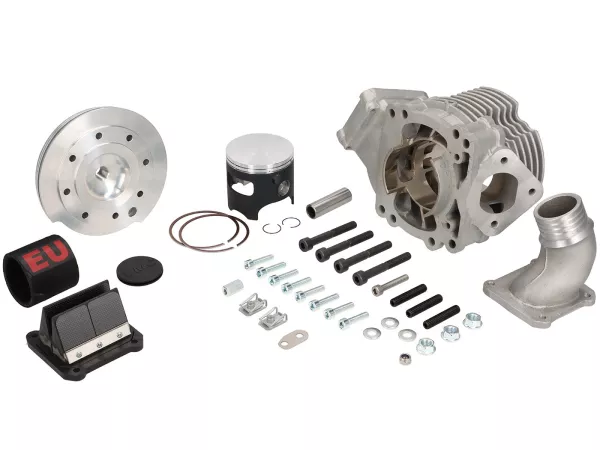
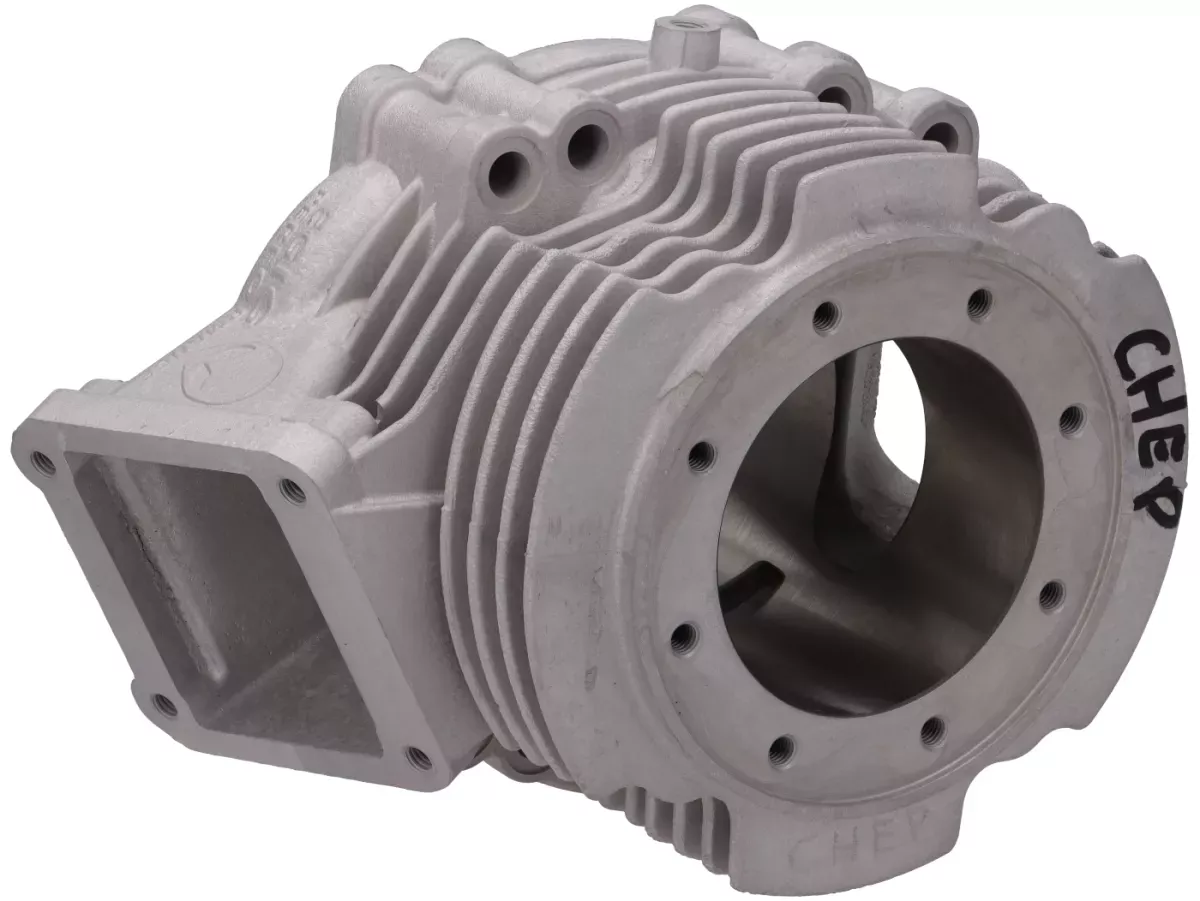
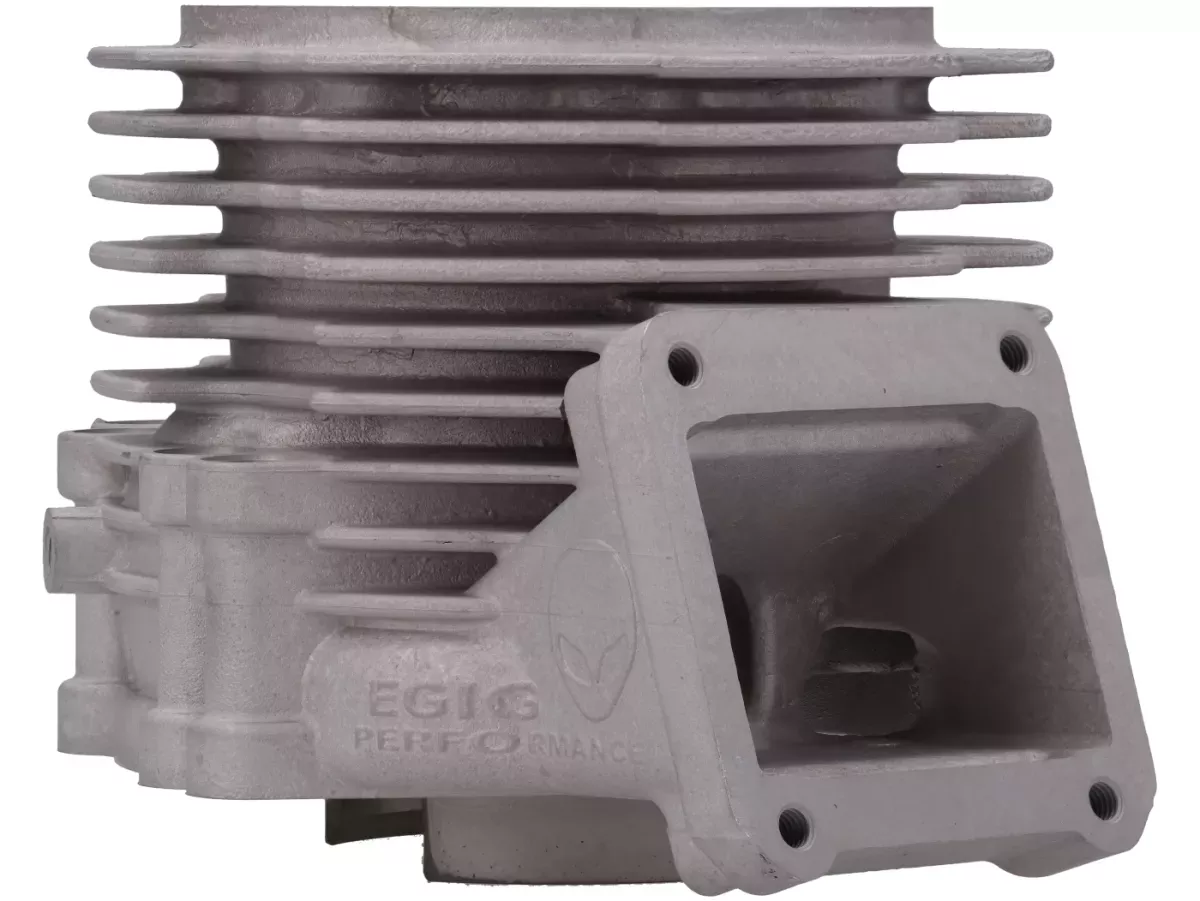
The EGIG PERFORMANCE CHEB500 cylinder kit combines a 220 cm³ displacement with an unusually early and smooth power delivery. The hand-machined single exhaust port, the Ø68-mm Wössner forged piston, the central spark plug head, and the Italkit 8-valve diaphragm form a finely tuned cylinder concept for high-performance Vespa small-frame engines.
The name CHEB500 is not just a made-up product name. EGIG Performance won the famous CHEB500 race with this setup. The name thus directly refers to the cylinder concept’s motorsports origins and to a design in which peak power isn’t the only factor that matters.
The goal is an engine that builds torque early, delivers power smoothly across a wide rpm range, and remains easy to tune even under varying conditions. As a result, the CHEB500 concept bridges the gap between racing and street cylinders: powerful enough for sporty riding, yet more predictable and less extreme than a triple-exhaust system designed uncompromisingly for peak power.
EGIG PERFORMANCE
CHEB500 Winning Concept
220 cc
Single Exhaust Port
Wössner forged pistons
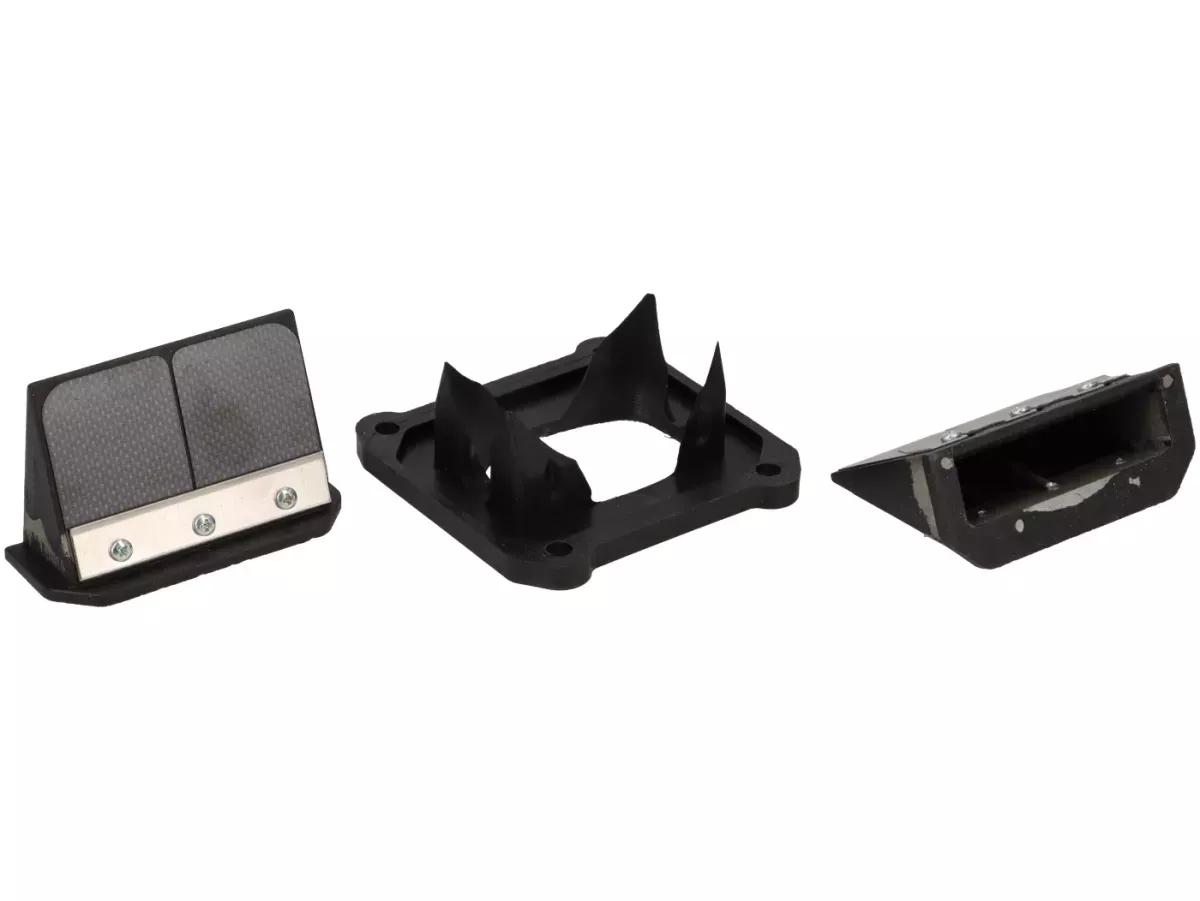
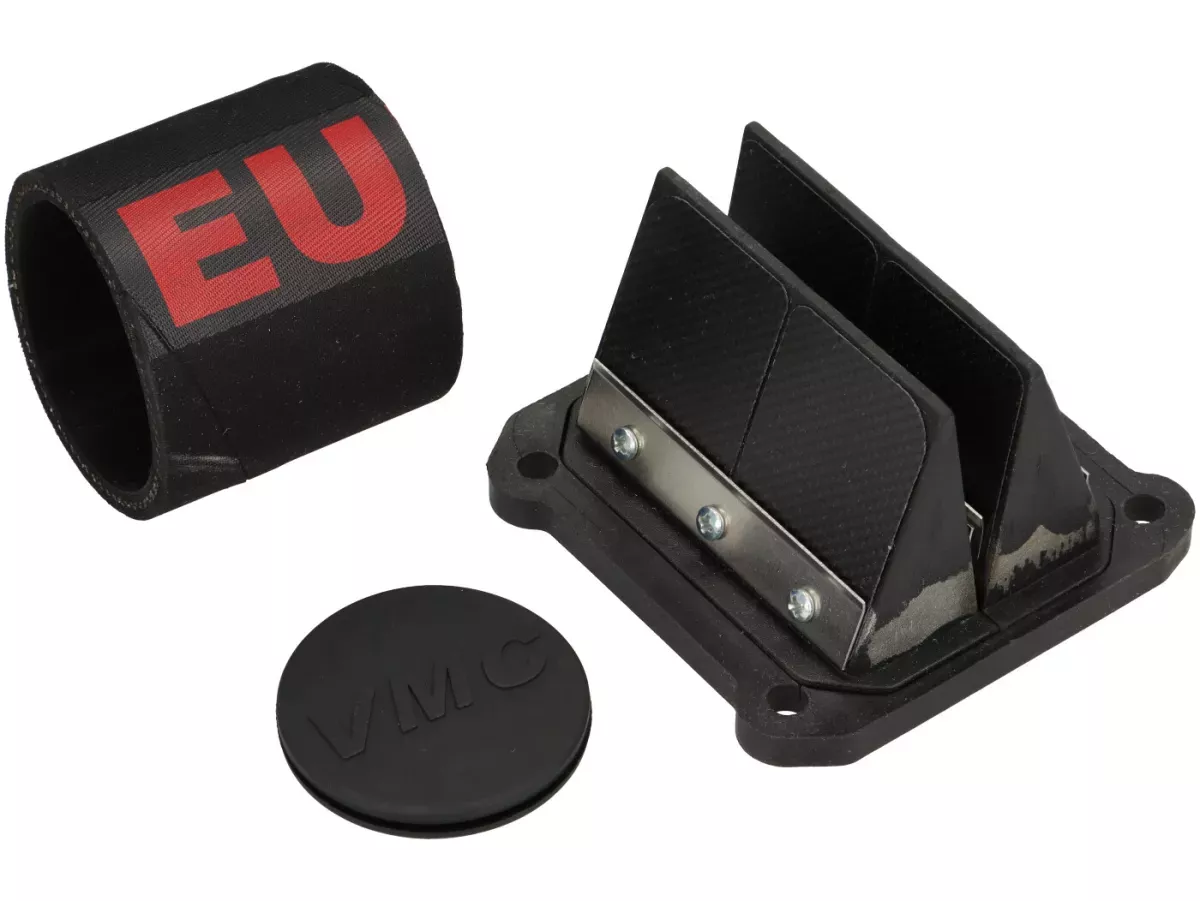
Italkit 8-Valve Diaphragm
Central Spark Plug
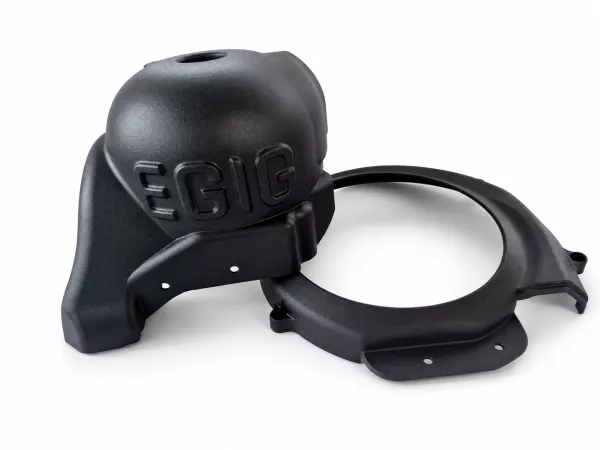
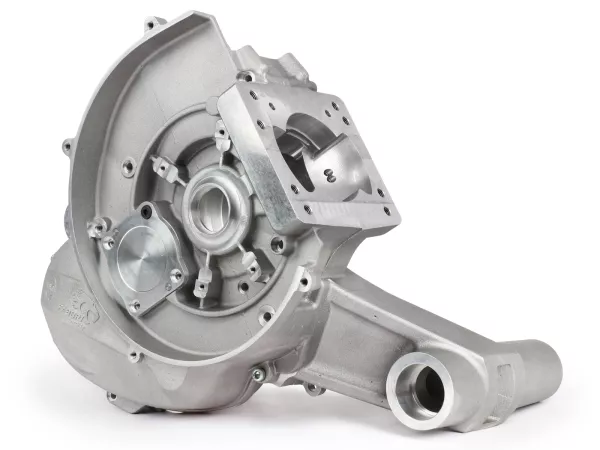
Note: EGIG/Fabbri housing
The CHEB500 Cylinder Kit at a Glance
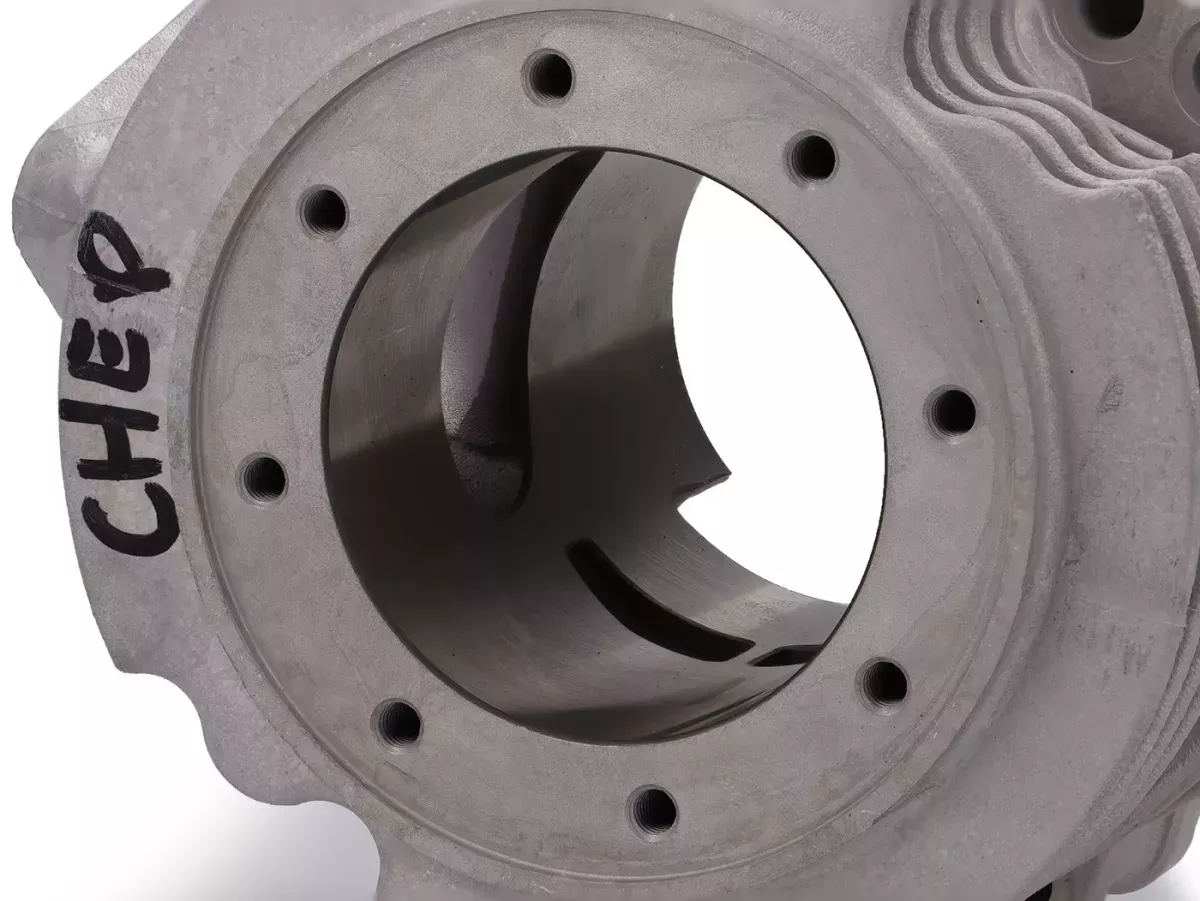
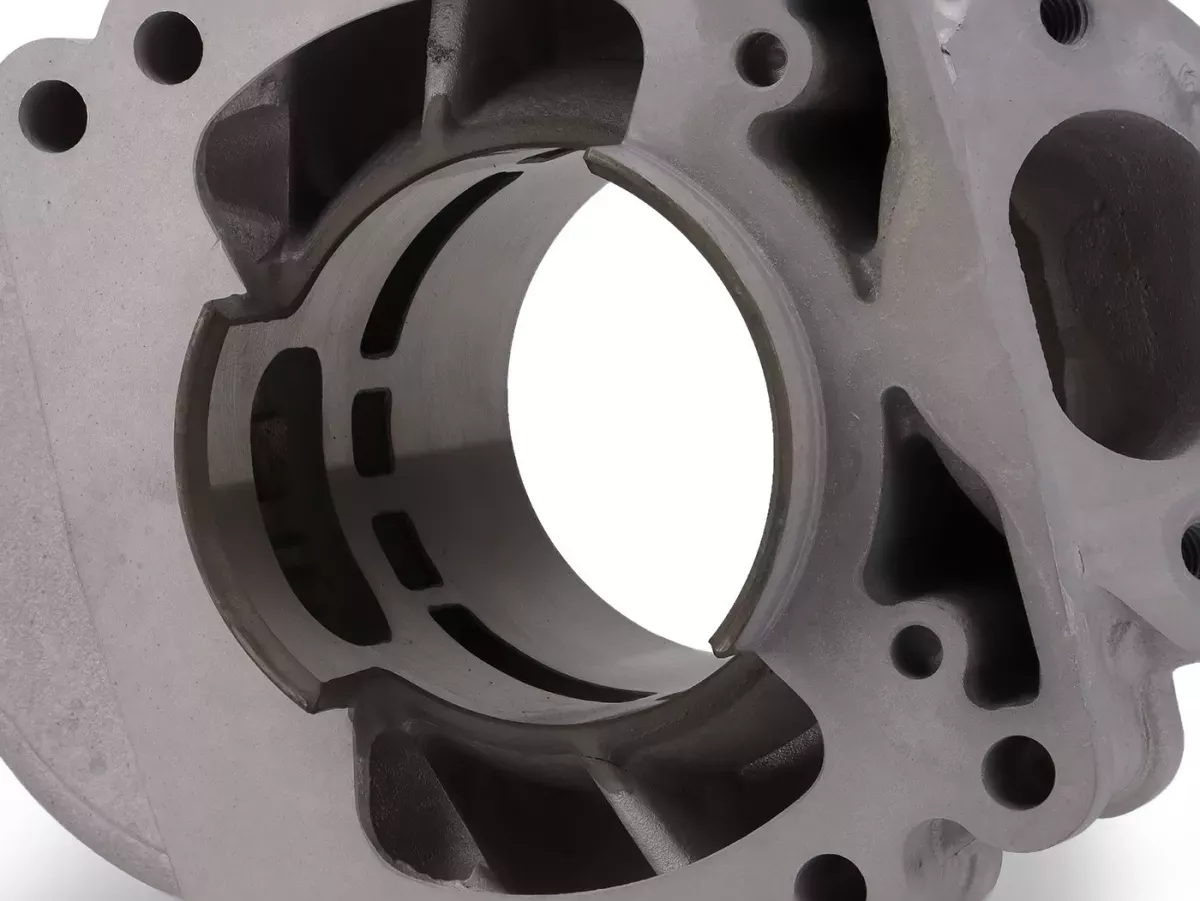
CHEB500 version: one-piece, hand-machined exhaust port with early and even power delivery
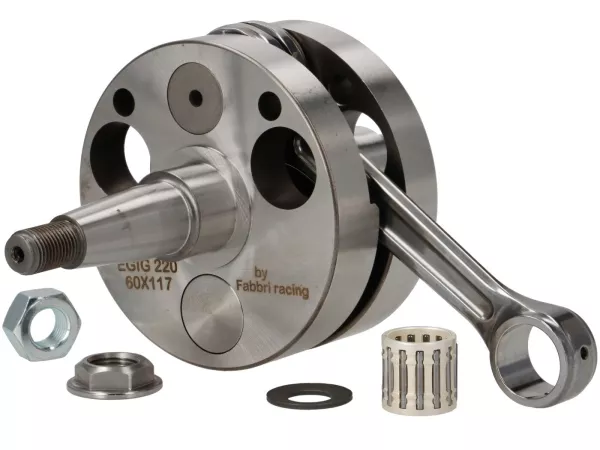
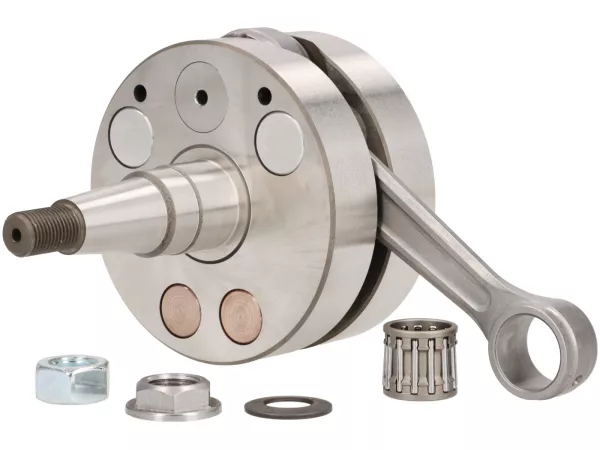
220-cm³ configuration: Ø68 mm bore combined with a 60 mm stroke and 117 mm connecting rod
Wössner forged piston: high-strength Ø68-mm piston for performance-oriented engine builds
Aluminum cylinder: good heat dissipation and Nikasil coating for a durable running surface
Central spark plug head: centrally positioned spark plug for even combustion
Temperature monitoring: M4.5 thread in the head for a SIP temperature sensor
Diaphragm intake: Italkit 8-valve diaphragm for high airflow
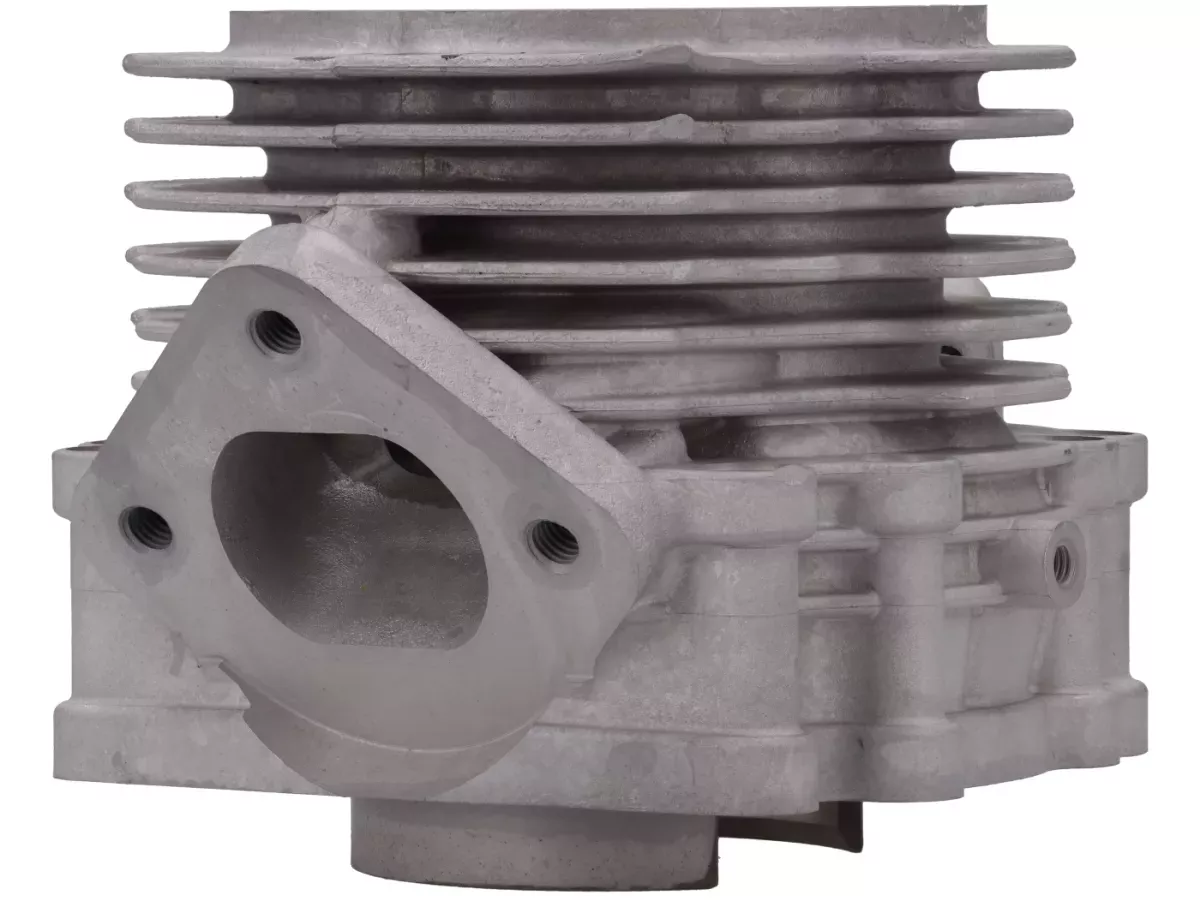
Frame-friendly intake: 34-mm design compatible with the original frame hole
Wide range of applications: from high-torque touring engines to endurance and sport engines
CHEB500 – named after a race victory
The cylinder’s name is derived from the CHEB500 race, which EGIG Performance won with this setup. An endurance race places different demands on an engine than a short dynamometer run or a drag race.
In addition to raw power, the key factors there are rideability, thermal stability, controllable power delivery, and an engine character that remains predictable over many laps. It is precisely in these areas that the one-piece CHEB500 exhaust shows its strengths.
More Than Just a High Number on the Test Stand
Early-on power makes it easier to accelerate out of corners
A smooth power delivery makes the vehicle easier to control
A wide usable RPM range reduces the number of unnecessary gear shifts
Less sensitive carburetor tuning makes it easier to use under varying conditions
High torque output supports longer gear ratios and smoother engine operation
Hand-machined single exhaust port
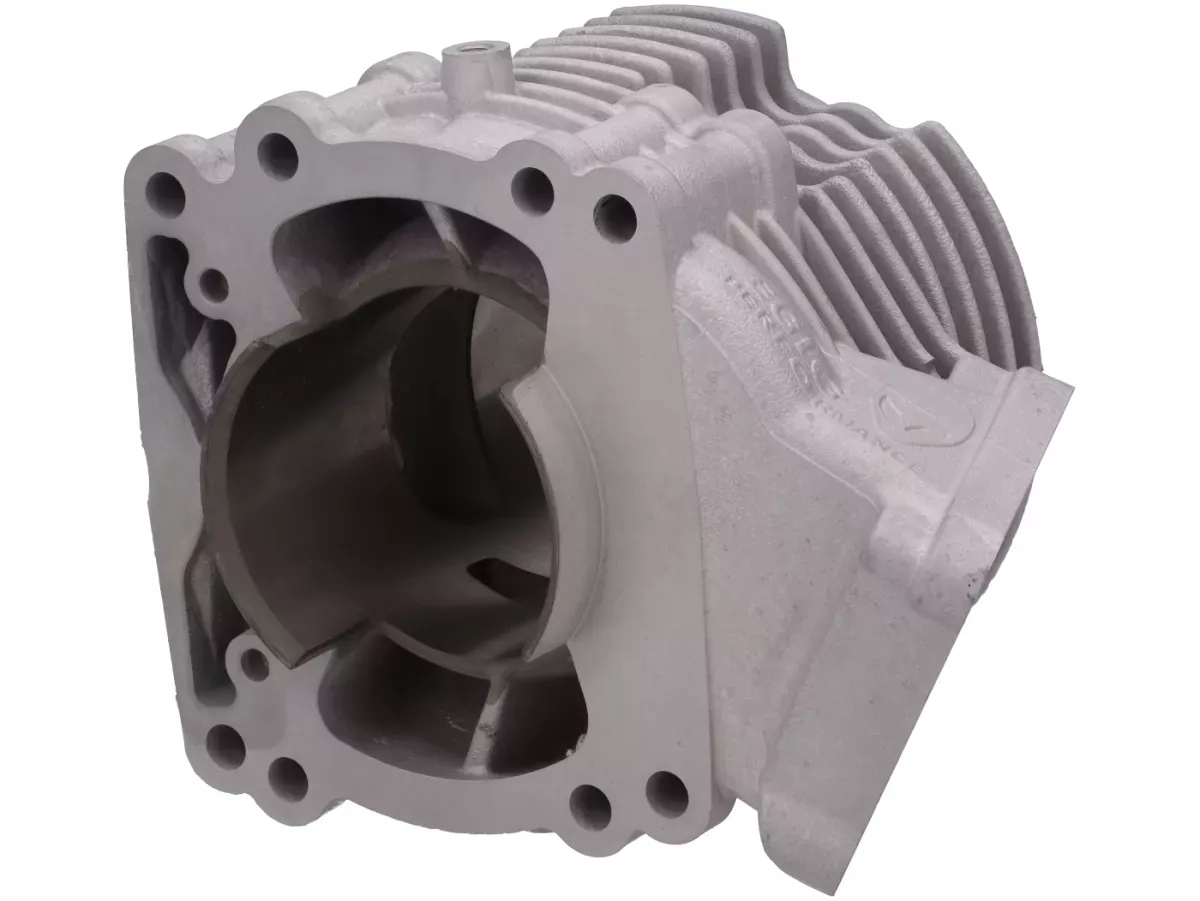
The CHEB500 uses a large, one-piece exhaust port. The exhaust flow is thus not distributed across a main port and additional side ports, but is channeled through a single, continuous exhaust opening.
The outlet contour is machined by hand to the CHEB500 specification. Machining takes place before the Nikasil coating is applied, so that the finished channel and window areas are subsequently coated as well.
With a properly matched complete system, power outputs up to approximately 35 PS and 35 Nm are possible. These values are not guaranteed individual values for the cylinder but depend, among other factors, on the crankshaft, cylinder head, compression ratio, diaphragm, carburetor, exhaust, ignition, and tuning.
Advantages of the CHEB500 single-exhaust port
Early power delivery: powerful engine even below the upper resonance range
Smooth power delivery: controllable transition into the resonance power band
Powerful up to about 7,500 rpm: often more powerful than comparable multi-piece exhausts in the low and mid-rpm ranges
Simpler carburetor tuning: less sensitive to minor deviations in carburetor tuning
Less tendency toward pre-resonance stalling: even an overly rich mixture often has a less pronounced effect on the transition
Weather-stable performance: Changes in temperature, air pressure, or altitude have less of an impact on drivability
High torque output: a solid foundation for street, touring, and long-distance riding
CHEB500 Single vs. Triple Exhaust
The single-piece and three-piece EGIG exhaust systems are designed with different objectives in mind. The triple exhaust offers a larger exhaust cross-sectional area and thus additional potential for peak power and a wider rev range. However, its power delivery typically kicks in later and is significantly more abrupt.
Compared to the triple-outlet version, the CHEB500 single-outlet sacrifices approximately 3 to 4 PS of potential peak power and about 500 U/min of usable RPM range. In return, power is delivered earlier, the torque curve is smoother, and tuning is less complex.
Direct Comparison of Single and Triple
| Feature |
CHEB500 Single |
Triple |
| Exhaust layout |
One-piece |
Three-piece with auxiliary outlets |
| Possible Power Output |
Up to about 35 PS |
Up to about 40 PS |
| Possible torque |
Up to about 35 Nm |
Up to about 35 Nm |
| Power delivery |
Early and even |
Later and more forceful |
| Low-end torque |
More pronounced |
Less pronounced |
| RPM range |
Wide and available early |
About 500 rpm more possible in the upper range |
| Carburetor tuning |
Less sensitive |
More complex and sensitive |
| Pre-choke |
Less prone to issues |
More likely to occur with improper jet settings |
| Response to weather and altitude |
Relatively uncritical |
More dependent on calibration |
| Application |
Street, touring, long-distance, and sporty all-around engines |
Sport, sprint, and engines more focused on peak performance |
The performance figures listed describe the potential of a fully tuned engine. They should not be interpreted as guaranteed performance of the cylinder kit.
A concept for different engine characteristics
Not every rider has the same idea of what makes a good engine. While one rider may seek early torque and low cruising RPMs, another may want to build a sporty setup for fast country roads or long-distance races.
The EGIG cylinder concept was therefore designed to allow for various stroke, connecting rod, exhaust, and intake configurations. Within this modular system, the CHEB500 represents the high-performance yet easily controllable single-exhaust version.
Possible Applications
Touring engine: early torque, long gear ratios, and comparatively low RPMs
Street engine: powerful acceleration with a broad usable power band
Sport engine: high power without the abrupt delivery characteristic of a pronounced triple-cylinder setup
Endurance engine: controllable power delivery and lower sensitivity to changing conditions
Racing engine: competitive overall design with a proven CHEB500 race win
Aluminum cylinder with Nikasil coating
The cylinder block is made of aluminum and features a Nikasil coating. The aluminum rapidly transfers combustion heat from the cylinder bore to the cooling fins. The coating forms a hard, wear-resistant running surface for the piston and piston rings.
The CHEB500 exhaust port is machined manually prior to coating. This ensures that the coating is not machined through afterward; instead, the cylinder is coated with its final port geometry already in place.
Ø68 mm bore
Aluminum cylinder body
Nikasil-coated raceway
Hand-machined single outlet
Machining prior to the final coating process
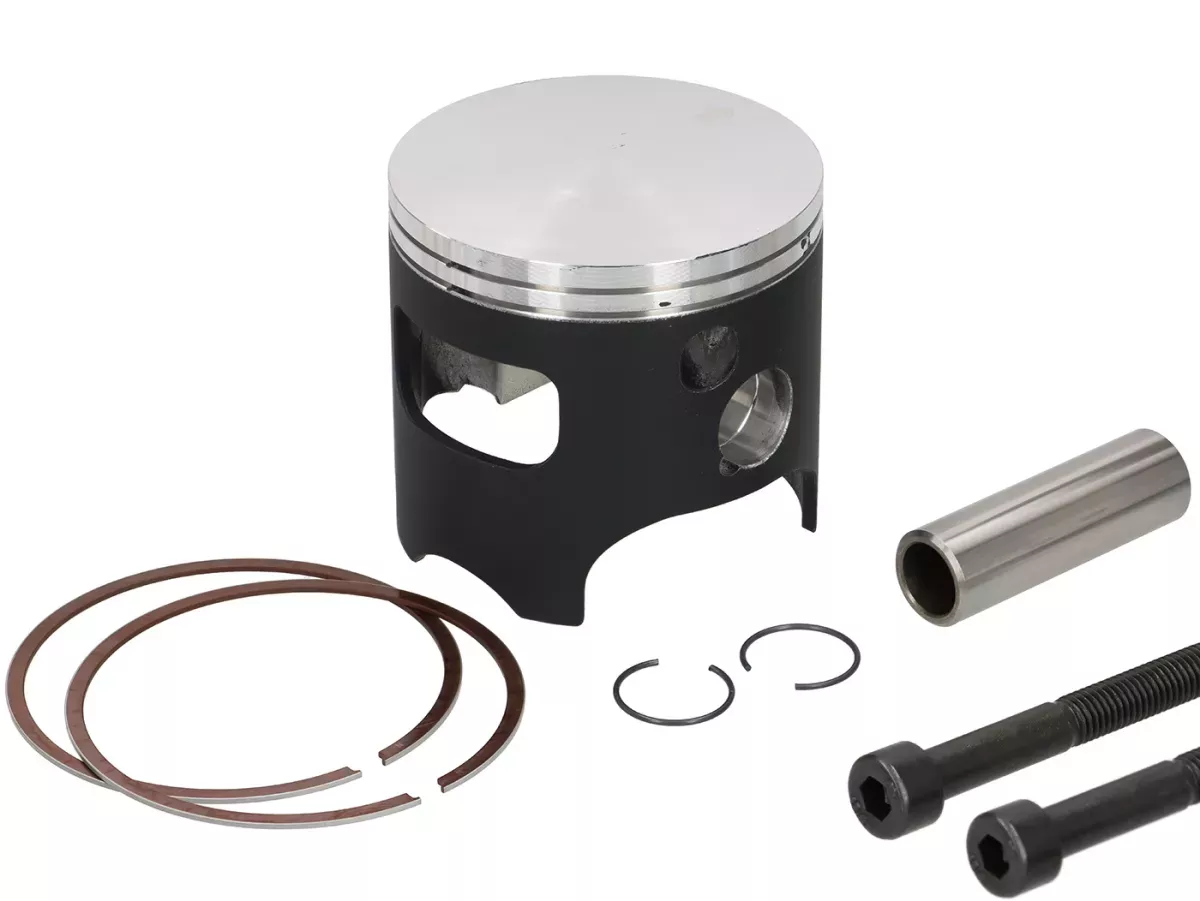
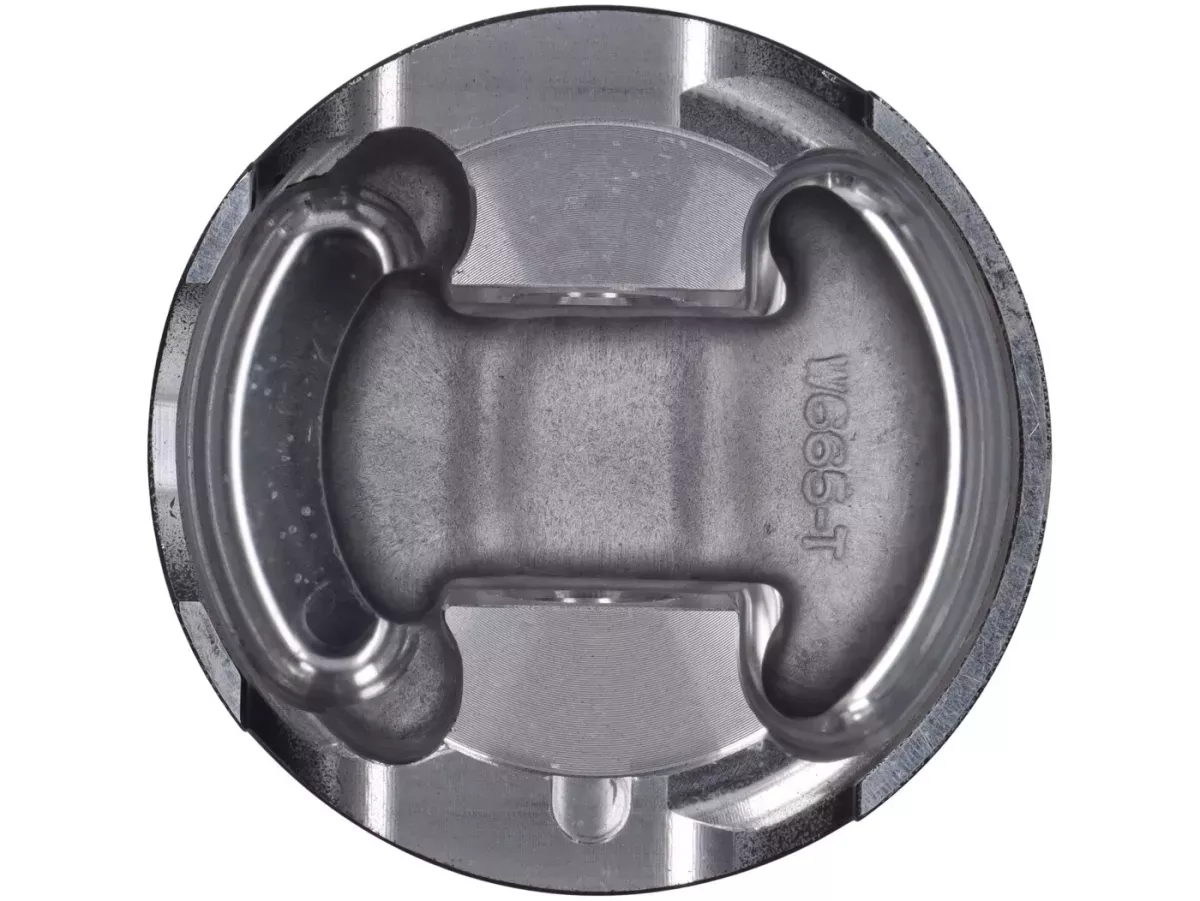
Ø68-mm Wössner forged piston
The cylinder kit includes a Ø68-mm forged piston from Wössner. Forged pistons are formed from an aluminum blank under high pressure. The compacted material structure is suitable for the high mechanical and thermal stresses of a high-performance 205- to 220-cm³ engine.
However, piston dimensions, piston clearance, ring end play, and free movement must still be checked before final assembly. Even with a system supplied as a kit, this inspection is part of a thorough engine build.
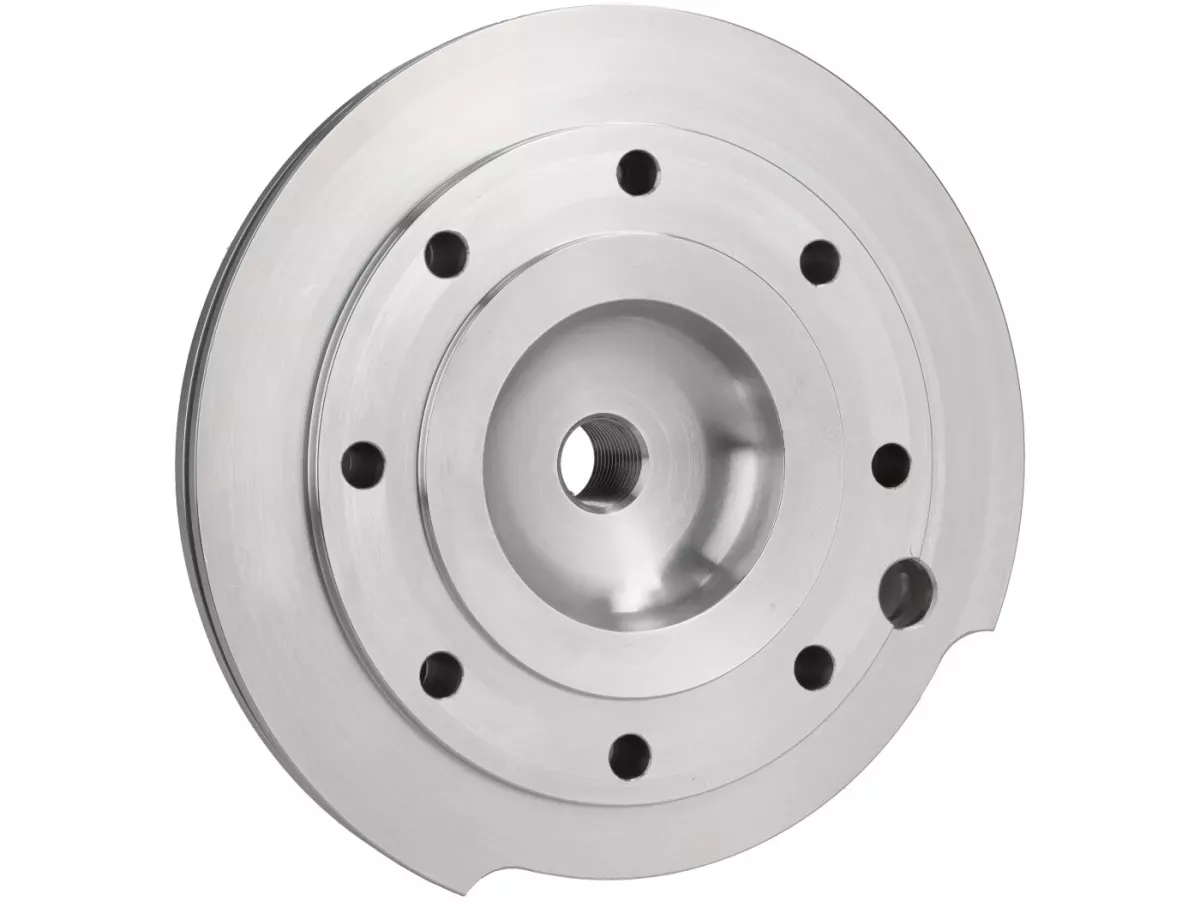
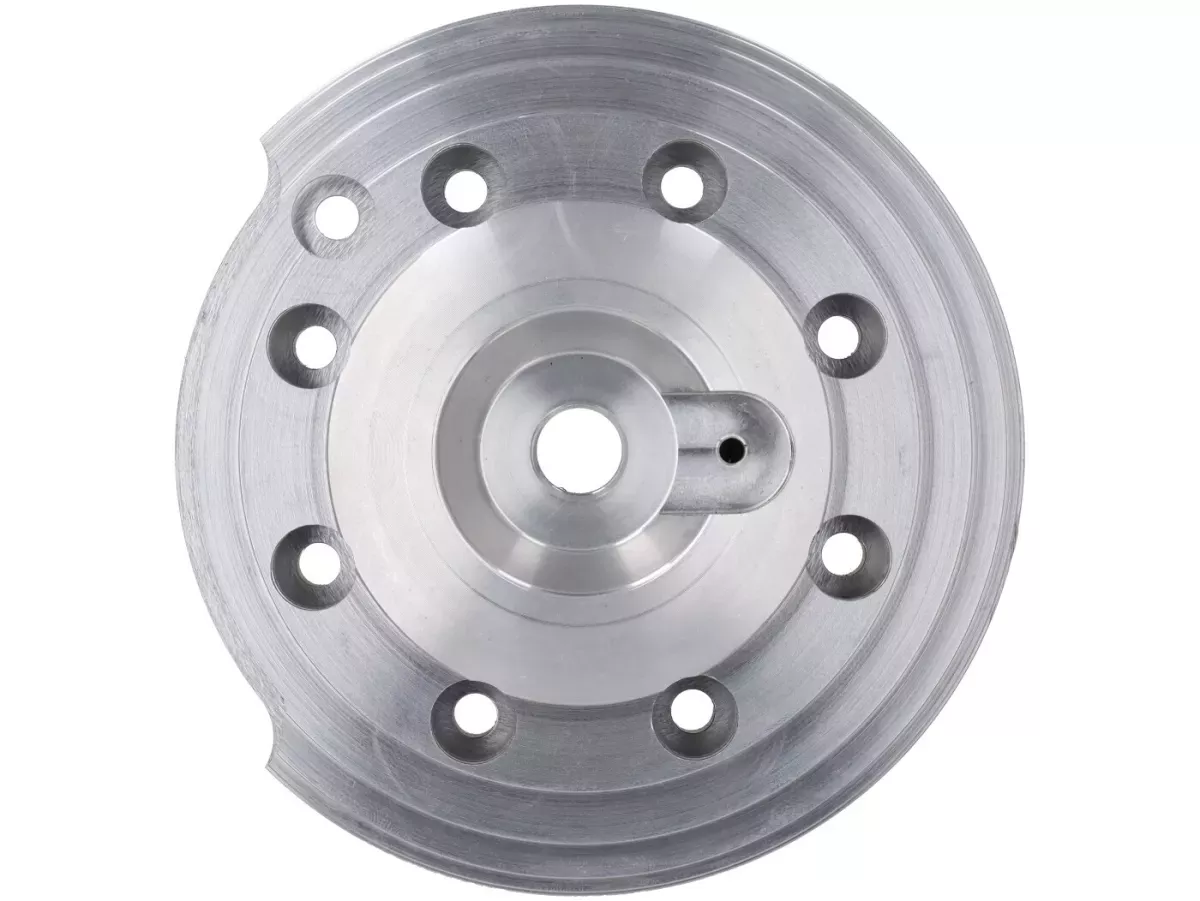
Central spark plug head for even combustion
The cylinder head features a centrally located spark plug. Because of its position near the center of the combustion chamber, the flame front can spread more evenly throughout the chamber. A short and symmetrical combustion process is particularly advantageous with a large 68-mm bore.
In addition , the head features an M4.5 thread for a SIP temperature sensor. This allows the cylinder head temperature to be monitored while riding. In a high-performance air-cooled engine, the temperature reading provides important additional information regarding fuel injection, ignition, and thermal stress.
Features of the Cylinder Head
Centrally located spark plug
Uniform flame propagation in the combustion chamber
M4.5 thread for SIP temperature probe
Compression ratio matched to the cylinder design
Designed for a squish edge of approximately 1.2 to 1.3 mm
Compression ratio and squish edge
With a squish edge of approximately 1.2 to 1.3 mm, the compression ratio is about 12.5:1, depending on the actual configuration. This value should be considered a guideline.
The actual compression ratio is influenced by the cylinder position, piston position, combustion chamber volume, the gaskets used, and any spacers. The squish edge and compression ratio must therefore be verified on the fully assembled engine.
Always check the compression ratio on your own engine
Measure the squish edge with the cylinder head installed
Take piston protrusion or piston setback into account
Check the combustion chamber volume if the cylinder position differs
Adjust ignition timing and fuel quality to match the compression ratio
Monitor temperature and knocking tendency under load
Italkit 8-Valve Diaphragm
Intake is handled by an Italkit 8-valve diaphragm. The large diaphragm area enables high gas flow and supports uniform filling of the high-displacement engine.
Together with the cylinder layout, the diaphragm block helps keep the transition into the resonance range under control. Especially in a sport-oriented engine with a single exhaust port, the interplay between the intake area, diaphragm tongue, intake manifold, and carburetor is crucial for throttle response and power delivery.
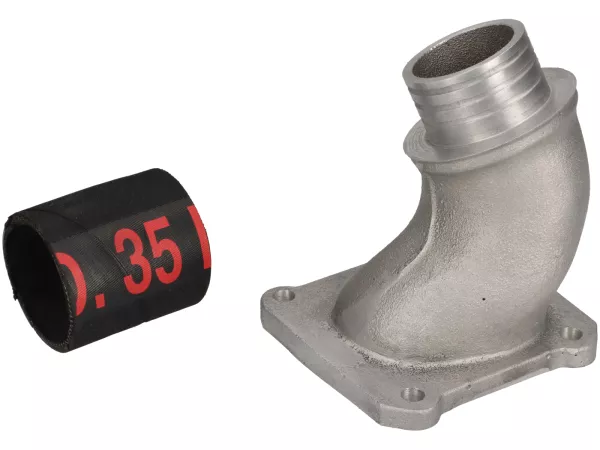
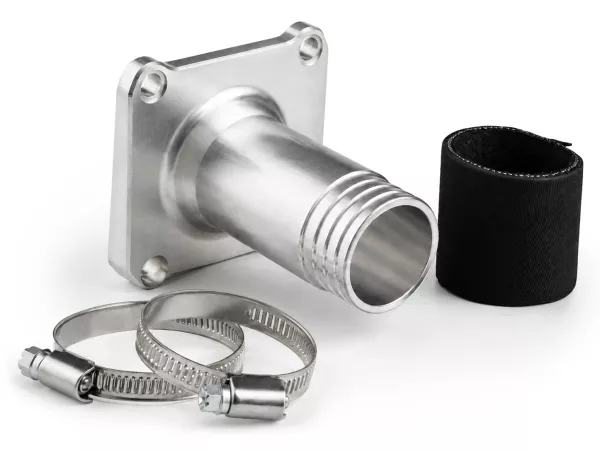
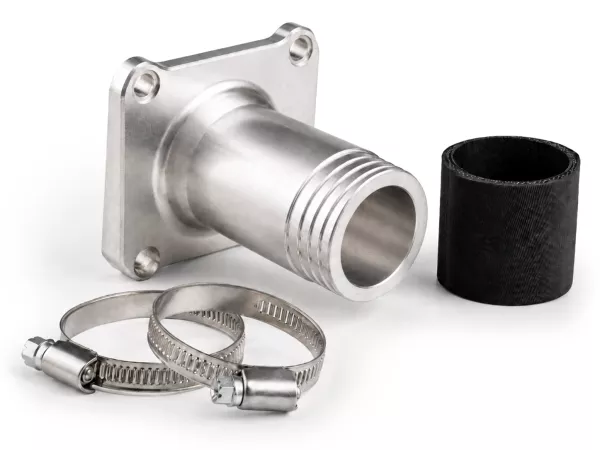
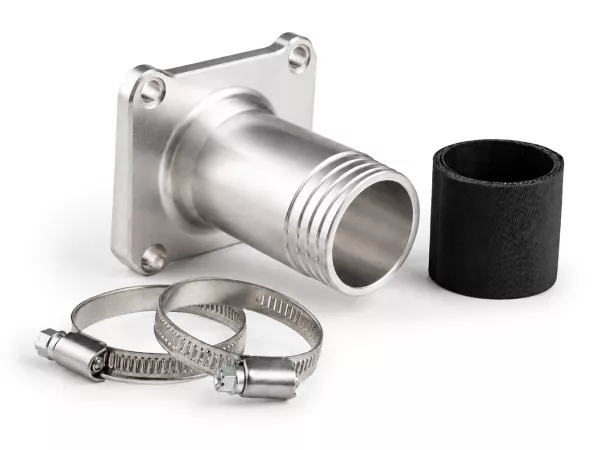
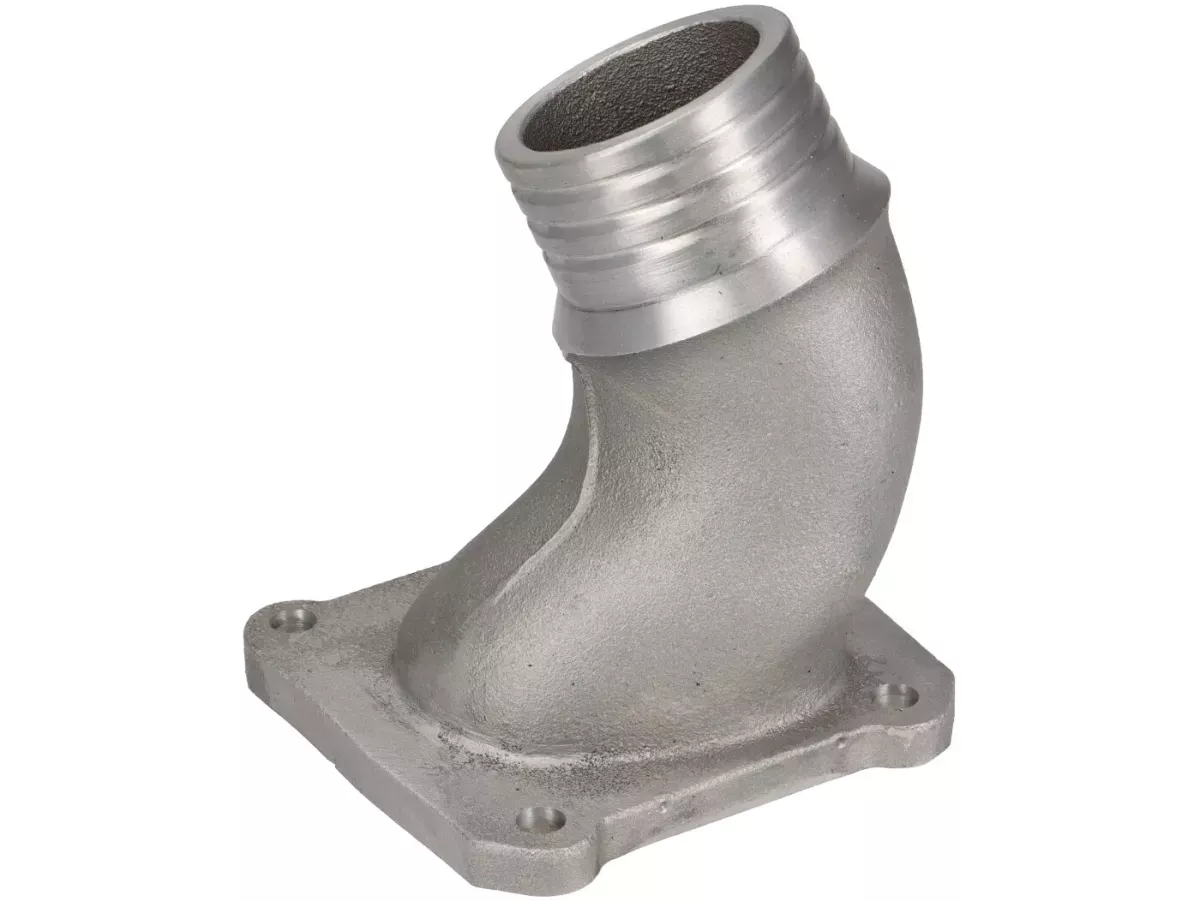
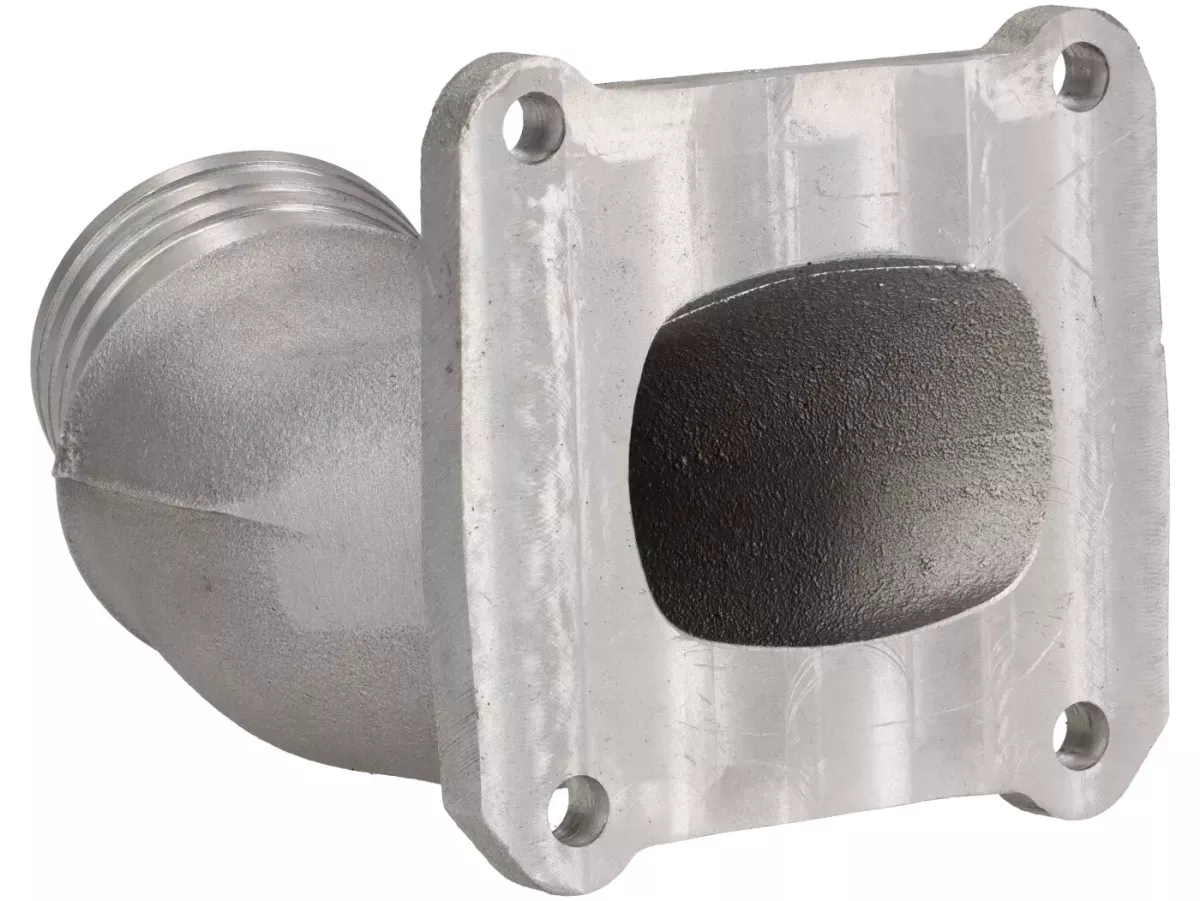
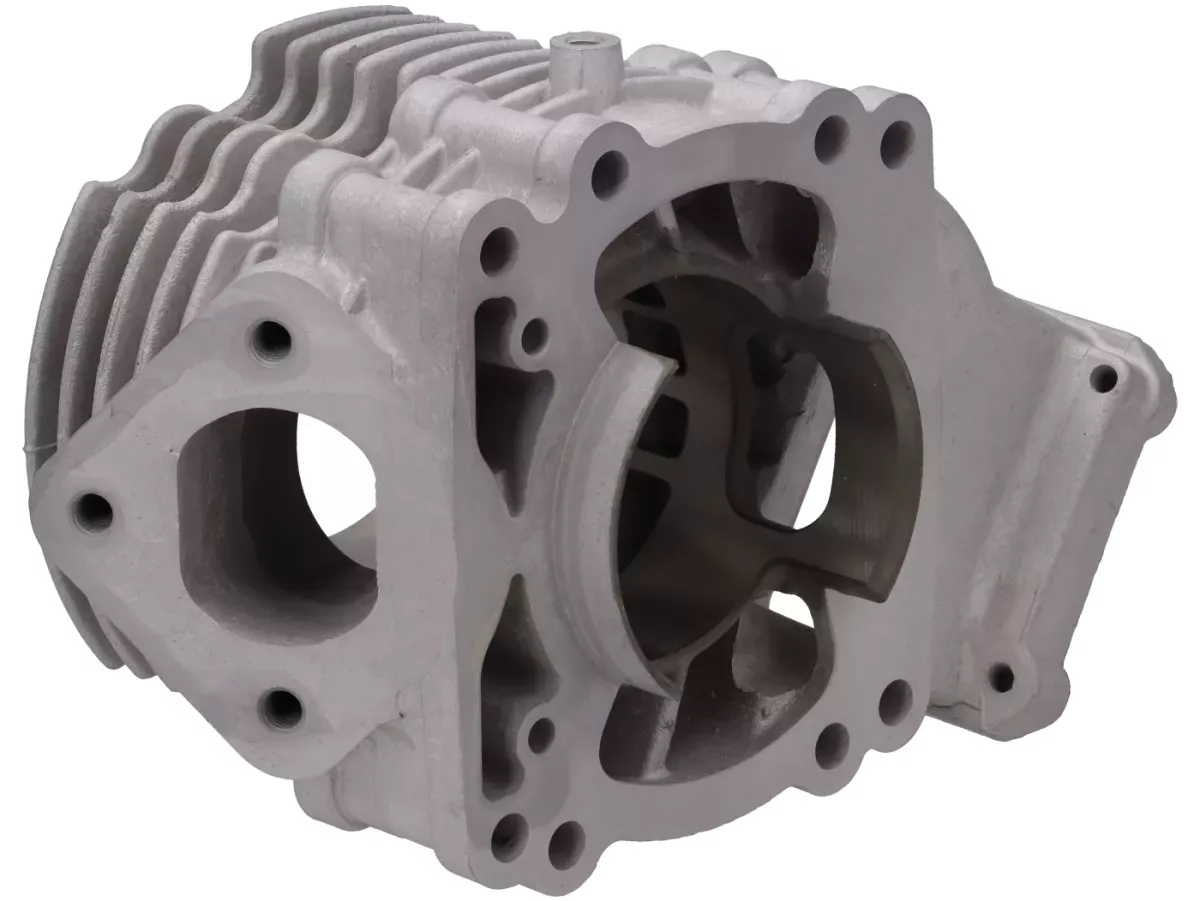
34-mm intake manifold for the original frame hole
Depending on the selected version, the cylinder design can be configured with a 30- or 34-mm intake manifold. The set includes the 34-mm intake manifold, which is better suited to the design concept. Both variants are designed so that the intake path can be routed through the original frame hole.
This keeps bodywork modifications to a minimum despite the large diaphragm block. Which intake manifold is best depends on the carburetor, exhaust system, intended use, and desired engine characteristics.
| Intake Manifolds |
Basic Characteristics |
Application Range |
| 30 mm |
High flow velocity and direct response |
Touring, street, and torque-oriented setups |
| 34 mm |
Greater air-flow capacity in the upper power range |
Sporty and more performance-oriented setups |
Three displacement variants based on a common platform
The cylinder can be configured with various stroke and connecting rod combinations. The cylinder position must match the crankshaft being used in each case.
| Displacement |
Stroke |
Connecting Rod Length |
Note |
| 205 ccm |
56.5 mm |
116 mm |
Check the cylinder position and valve timing on the engine |
| 210 cc |
58 mm |
117 mm |
Check cylinder position and valve timing on the engine |
| 220 cc |
60 mm |
117 mm |
Design of this cylinder kit |
If the connecting rod length differs, the height difference must be compensated for. Depending on the combination, the cylinder is raised using a spacer or the cylinder base is machined down accordingly.
Different stroke and connecting rod combinations
A longer connecting rod generally requires corresponding height compensation
Shorter connecting rods may require machining of the cylinder position
Spacers alter not only the compression edge but also the valve timing
Do not machine the cylinder base without first taking measurements
Check piston clearance at top and bottom dead center
Valve timing and engine characteristics
Depending on the stroke and exhaust configuration, the basic cylinder layout ranges from approximately 127° to 129° intake timing and 186° to 190° exhaust timing.
Thus, the cylinder strikes a balance between a pure racing cylinder and a wide-bore street cylinder. The valve timing allows for high power without completely shifting the usable range to very high RPMs.
| Exhaust configuration for 60 mm stroke |
Intake Duration |
Exhaust timing |
Character |
| Triple |
approx. 129° |
approx. 186° |
A broader-range triple variant |
| Single |
approx. 129° |
approx. 186° |
Early torque and smooth power delivery |
| Triple Revo |
approx. 129° |
approx. 190° |
More peak power and higher RPM range |
| Single CHEB500 |
approx. 129° |
approx. 190° |
Sporty single exhaust valve with early power build-up |
With a shorter stroke, the exhaust timing shifts most significantly, while the overlap timing changes much less. Therefore, the actual valve timing must always be measured using a degree disc on the specific engine configuration.
Stud pattern for M200 and EGIG 250/300
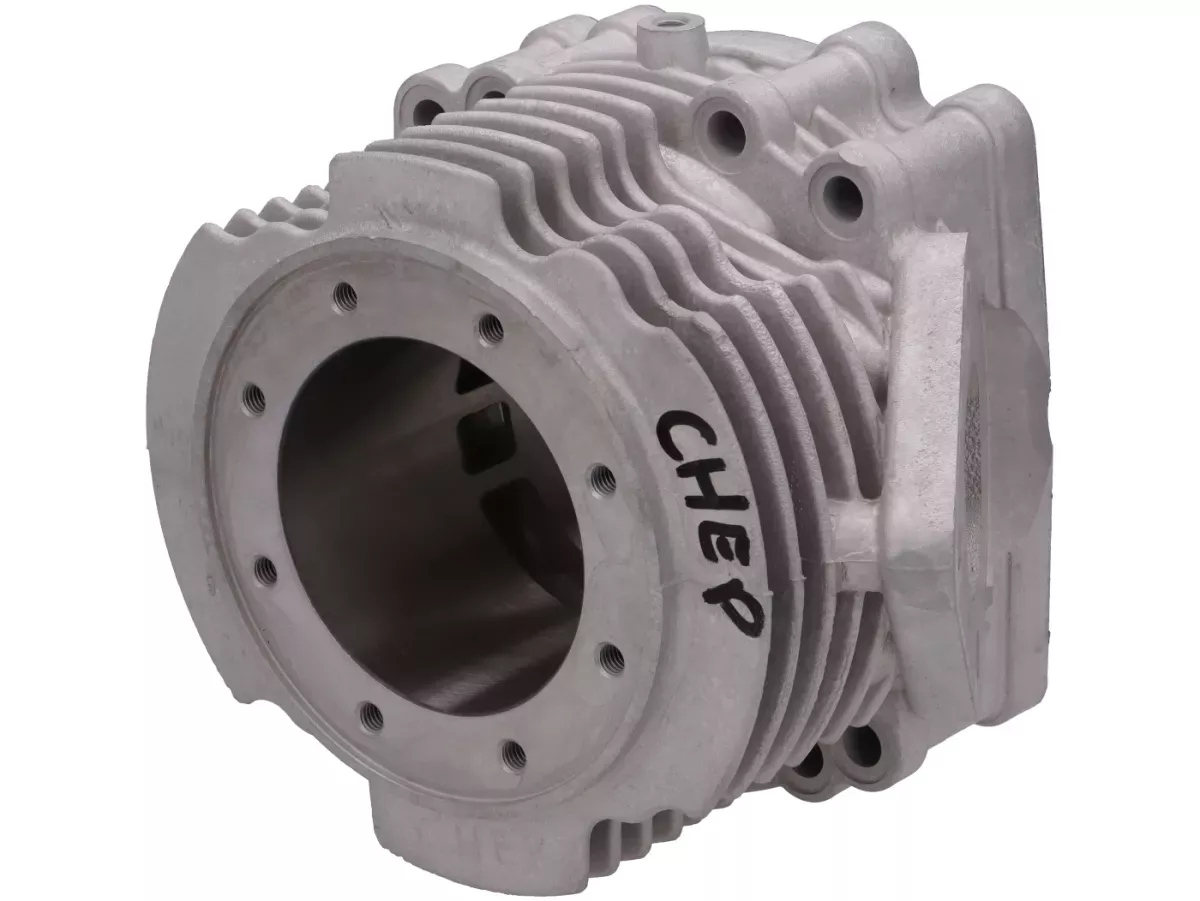
The cylinder features an eight-hole stud pattern. This covers both the M200 hole pattern and the EGIG 250/300 configuration.
This makes the cylinder design flexible for use within appropriately prepared engine cases. However, it does not mean that the cylinder can be mounted on a stock Smallframe case without further modifications.
Exhaust port with 65-mm bore
The exhaust port has a 65-mm bore and thus corresponds to the well-known M200 dimension. Additionally, there is a third M8 mounting thread in the center.
65-mm bore
Dimensions identical to the M200 connection
Additional center M8 thread
Exhaust flange must be compatible with the triple mounting
Tune the exhaust characteristics to the valve timing and intended use
Compatible with a PX125 cylinder head cover
The cylinder’s external dimensions and mounting points are designed for use with a PX125 cylinder head. This provides a generously sized cooling air duct that matches the cylinder’s volume and cooling surface area.
During engine assembly, the cover must be checked for a free fit and installed so that cooling air does not flow uncontrollably past the cylinder or cylinder head.
Centering pins are only compatible with EGIG/Fabbri housings
There are two centering pins at the base of the cylinder. These can only be used in conjunction with an EGIG/Fabbri engine housing that is prepared for this purpose.
Check the centering holes in the motor housing before installation
Do not force the cylinder onto an unsuitable housing
Check that the sealing surface is seated completely and without tension
Check that there is sufficient clearance in the housing for the cylinder base and crankshaft assembly
The cylinder is not a plug-and-play replacement for a stock engine
Compatible vehicle models
| Vespa 125 Primavera |
VMA2T, only with a properly configured EGIG/Fabbri engine |
| Vespa 125 ET3 |
VMB1T, only with a properly configured EGIG/Fabbri engine |
| Vespa PK125 |
VMX1T, check engine base and peripherals |
| Vespa PK125 S |
VMX5T, check engine base and peripherals |
| Vespa PK125 XL |
VMX6T, Check Engine Base and Peripherals |
| Vespa PK125 ETS |
VMS1T, Check engine base and peripherals |
The vehicle assignment describes the compatible small-frame vehicle base. The kit cannot be used in a stock PV, ET3, or PK125 engine without a fully assembled and modified engine.
Technical Specifications
| Manufacturer |
EGIG PERFORMANCE |
| Series |
CHEB500 |
| Type |
Complete Cylinder Kit |
| Displacement |
220 cm³ with a 60 mm stroke |
| Bore |
Ø68 mm |
| Crankpin diameter |
60 mm |
| Connecting rod length |
117 mm |
| Cylinder material |
Aluminum |
| Bearing surface |
Nikasil coating |
| Piston |
Wössner forged piston, Ø68 mm |
| Exhaust |
One-piece and hand-finished |
| Valve timing at 60 mm stroke |
approx. 129° intake / 190° exhaust |
| Calculated intake timing |
approx. 30.5° |
| Potential power output |
Up to about 35 PS and 35 Nm, depending on the overall setup |
| Cylinder head |
Central spark plug head |
| Temperature sensor |
M4.5 thread for SIP temperature sensor |
| Compression ratio |
Approximate value: 12.5:1 at 1.2 to 1.3 mm squish edge |
| Diaphragm |
Italkit, 8 flaps |
| Inlet |
34 mm inner diameter |
| Frame mounting |
Intake fitting the original frame hole |
| Stud configuration |
M200 and EGIG 250/300, with eight studs |
| Exhaust hole |
65 mm, identical to the M200 dimension |
| Additional exhaust mounting |
Center-mounted M8 thread |
| Cylinder head |
Mounting points and dimensions for PX125 cylinder head |
| Centering |
Two centering pins on the cylinder base; compatible only with EGIG/Fabbri housings |
| Compatible with |
Vespa PV125, ET3 125, and PK125 with corresponding engine configuration |
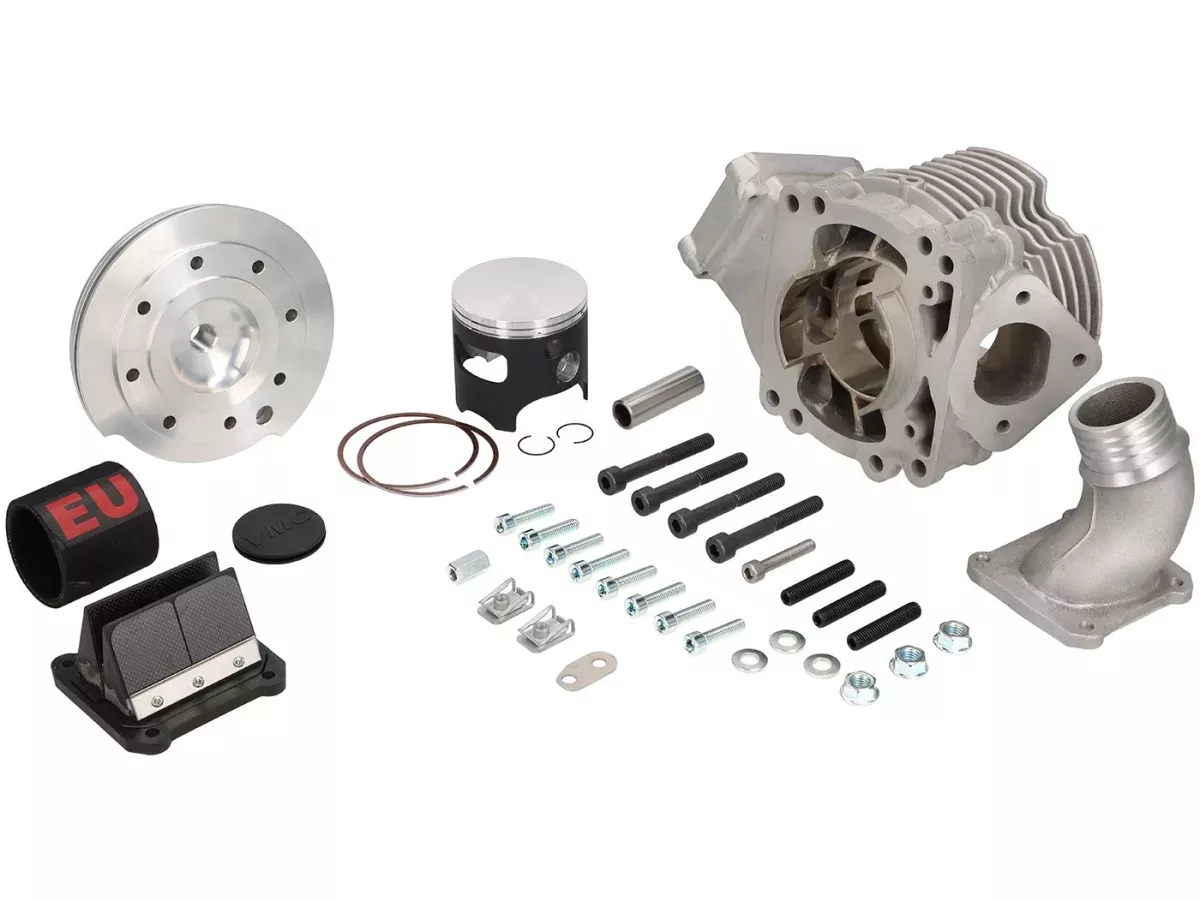
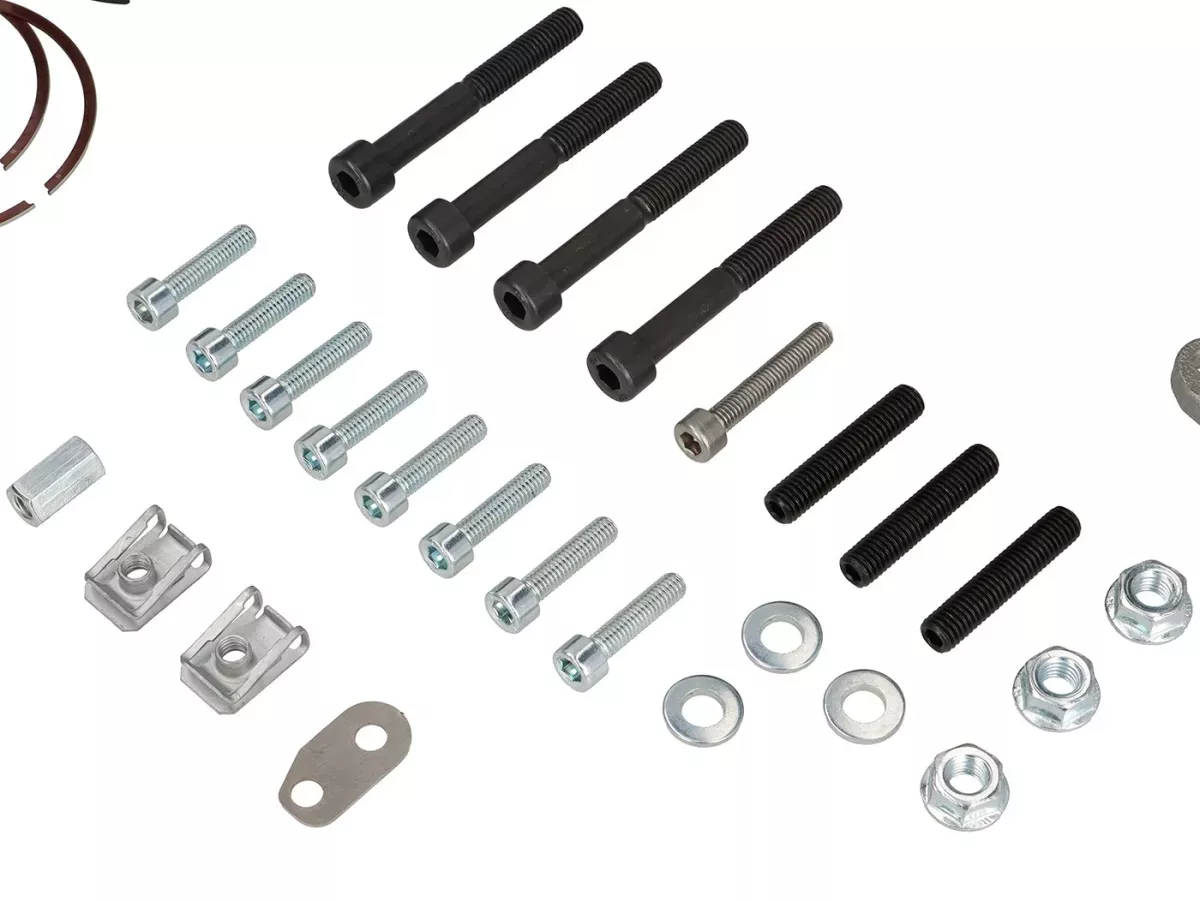
What’s Included
Components of the CHEB500 cylinder kit
EGIG PERFORMANCE CHEB500 aluminum cylinder with Nikasil coating
Hand-machined one-piece exhaust port
Wössner forged piston, Ø68 mm
Matching cylinder head with central spark plug
M4.5 port in the head for SIP temperature sensor
Italkit 8-valve diaphragm
34-mm intake manifold
The specific contents of the package may vary depending on the selected product variant. The product description in the shop is authoritative.
Check before installation
Check the crankshaft stroke of 60 mm
Check that the connecting rod length is 117 mm
Measure piston clearance according to the manufacturer’s specifications
Check the ring clearance of the piston rings
Check that the piston, crankshaft, and cylinder base move freely
Compare the center pins and center holes in the housing
Measure the squish edge on the fully assembled engine
Check the intake and exhaust timing using a degree disc
Check the exhaust flange and the 65-mm hole
Check that the intake manifold runs straight through the frame hole
Install the cylinder head so that it is airtight and free of stress
Installation and Tuning Instructions
Not a stock replacement: This kit is intended for a fully planned tuning engine
Note the engine block: Centering pins can only be used with a properly prepared EGIG/Fabbri engine block
Measure the clamping edge: Do not assume the guideline value of 1.2 to 1.3 mm without verification
Record valve timing: Actual values depend on stroke, connecting rod, gaskets, and cylinder position
Tune the carburetor: Start with a safe, sufficiently rich basic setting
Adjust the ignition: Match the ignition timing to compression, fuel, and exhaust
Monitor temperature: Use the connection for a SIP temperature sensor in the cylinder head
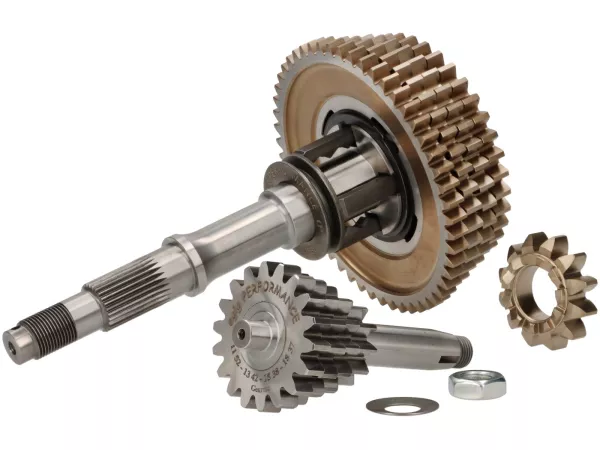
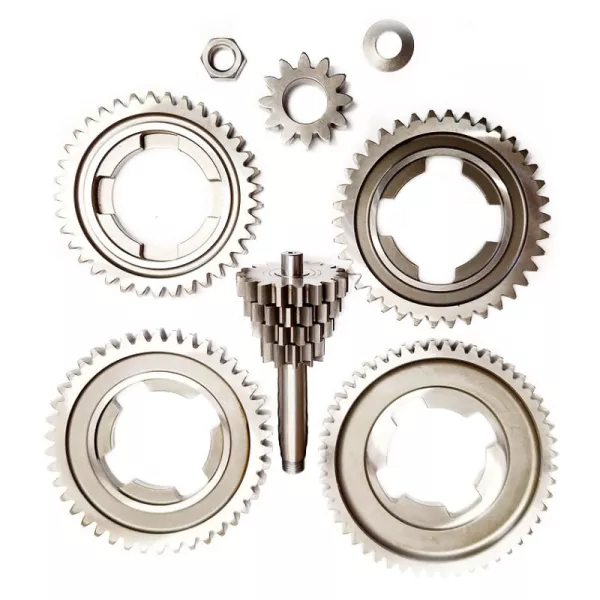
Design the drivetrain: The clutch, primary drive, and transmission must be rated for the expected torque
Tuning the exhaust: Select characteristics suitable for 129°/190° and the desired application range
Racing components: Homologation, noise levels, and registrability must be clarified separately for each vehicle
Conclusion
The EGIG PERFORMANCE CHEB500 cylinder kit is a high-performance yet deliberately controllable small-frame design. The hand-machined single exhaust port delivers power and torque early on and develops them more evenly than a triple exhaust port designed more for peak power.
Together with the Wössner forged piston, the central spark plug head, the Italkit-8valve diaphragm, and the appropriately tuned intake system, this creates a solid foundation for a wide range of engine characteristics—from a high-torque tourer to a fast street bike to an endurance race engine.
The fact that EGIG Performance was able to win the CHEB500 race with this setup explains the name and purpose of the kit: not just maximum peak power, but a combination of power, torque, rideability, and tuning reliability.
FAQ on the EGIG PERFORMANCE CHEB500 Cylinder Kit
The name refers to the CHEB500 race, which EGIG Performance won with this setup. The name thus directly reflects the motorsports origins of the cylinder concept.
The CHEB500 features a hand-machined, one-piece exhaust port. It does not use additional side ports like the Triple or Revo Triple versions.
The CHEB500 builds power earlier and more smoothly, offers more torque in the low- and mid-rpm range, and is easier to tune. A triple exhaust, on the other hand, offers higher peak power and a slightly wider upper rpm range, but delivers its power later and more abruptly.
With the right overall setup, power outputs up to approximately 35 PS and 35 Nm are possible. However, the result depends largely on the crankshaft, cylinder head, compression ratio, carburetor, diaphragm, exhaust, ignition, and tuning.
The 220-cm³ version is built with a 60 mm crankshaft stroke and a 117 mm-long connecting rod.
The cylinder design can also be configured as a 205-cm³ version with a 56.5-mm stroke and 116-mm connecting rod, or as a 210-cm³ version with a 58-mm stroke and 117-mm connecting rod. The cylinder position, compression edge, and valve timing must be individually adjusted for these configurations.
The approximate values are 129° intake timing and 190° exhaust timing. Since gaskets, spacers, the housing, and the crankshaft assembly all influence these values, the actual valve timing must be measured on the assembled engine.
A guideline value of approximately 1.2 to 1.3 mm is given. Depending on the configuration, this results in a compression ratio of approximately 12.5:1. Both values must be verified on the specific engine.
Yes. The cylinder head has an M4.5 thread for a compatible SIP temperature sensor.
The mounting points and external dimensions of the cylinder are designed for a PX125 cylinder head.
No, the kit is not a simple replacement for the stock parts. The centering pins on the cylinder base can only be used with a properly prepared EGIG/Fabbri crankcase. Additionally, the crankshaft assembly, crankcase clearance, intake system, and the entire drivetrain must be compatible with the cylinder.
No. The layout was developed as a compromise between a race cylinder and a street cylinder. Depending on the exhaust, carburetor, gear ratio, and tuning, it can be built into a high-torque touring engine, a sporty street engine, or an endurance race engine.


 DE | €